Sensation in Rome: World No. 1 Sabalenka Eliminated by World No. 39
Aryna Sabalenka lost to Sorana Cirstea 6:2, 3:6, 5:7 in the third round of the Italian Open, committing numerous unforced errors in the decisive set.
Main Event
Rome, May 10, 2026. The Foro Italico complex witnessed the biggest upset of the WTA clay season. World No. 1 Aryna Sabalenka sensationally crashed out of the WTA 1000 tournament in Rome, losing in the third round to Romanian Sorana Cirstea, ranked 39th in the world. The final score was 6:2, 3:6, 5:7 in favor of the 36-year-old Romanian.
The match lasted 2 hours and 22 minutes and was a true roller-coaster for the crowd on center court. Sabalenka started flawlessly, winning the first set almost effortlessly with a break. In the second set, the Belarusian also led 2-0, and everything pointed to a confident victory. However, an unexpected turnaround occurred—Sabalenka's level dropped sharply, Cirstea seized the initiative and began dictating play.
The Romanian, playing her farewell season on the professional tour, displayed outstanding tennis built on aggressive net approaches and constant changes of pace. According to Cirstea, this variety was the key to victory: "Against top players, you can't play safe. They won't give you the match—you have to earn it."
Details and Statistics
Match statistics reveal the drama on court. Sabalenka committed a huge number of unforced errors, which proved decisive. In the second set, her first-serve win percentage plummeted from a comfortable 68% to a critical 39%, depriving her of her main attacking weapon and triggering a cascade of mistakes.
Cirstea made six breaks in the match, matching Sabalenka's season-worst record—the world No. 1 had been broken as many times only in her Madrid match against Hailey Baptiste. In the deciding set, the Romanian converted a break in the fifth game on her fourth attempt, then closed out the match for a historic victory. In the eighth game of the second set, she also secured a crucial break that forced a third set.
Sabalenka experienced obvious physical issues. During the deciding set, she took a medical timeout due to lower back and hip pain. Microphones picked up her conversations with the physiotherapist, indicating problems with both her back and hip joint. After the match, she admitted: "I felt like my body was limiting me and not allowing me to play my best tennis."
The financial aspect adds weight to the outcome. The prize pool for the 2026 Italian Open is $8,312,293. For reaching the fourth round, Cirstea secured €79,510 in prize money, while Sabalenka earned only €46,080 for the third round—a sum hardly befitting a world No. 1.
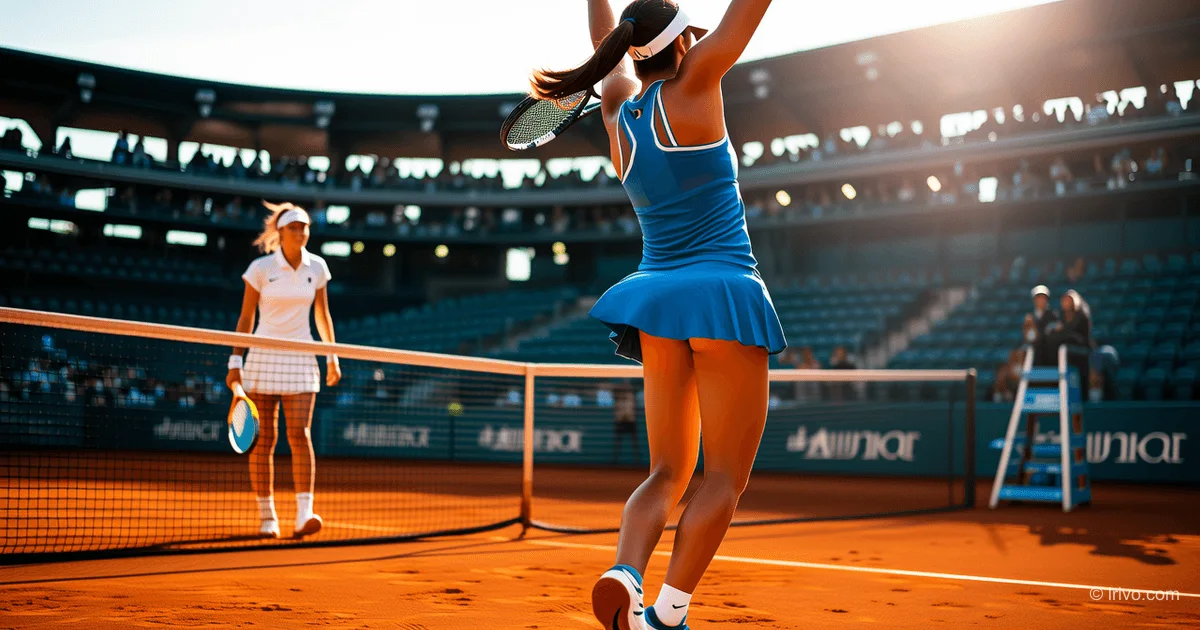
Symbolically, Cirstea ended the match with a first-serve ace, then raised her arms to the Roman sky in triumph. It was her first career victory over a reigning world No. 1.
Context and Significance
Sabalenka's defeat in Rome is not an isolated incident but part of a worrying trend. This is her second consecutive failure on clay: a week earlier, she sensationally lost in the quarterfinals of the Madrid WTA 1000, falling to Hailey Baptiste after squandering six match points. Thus, Sabalenka has lost three of her last four matches—an unthinkable slump for a player who started the season with 26 wins in 28 matches.
For the first time in 14 months—since February 2025—Sabalenka exits a tournament before the quarterfinal stage. Her impressive streak of 17 consecutive tournaments reaching at least the quarterfinals has been broken. Moreover, this is only the second time in women's tennis history that a world No. 1 has lost to players outside the top 20 in two consecutive tournaments; the previous instance was Ash Barty in 2019.
The historical magnitude of Cirstea's achievement deserves special attention. At 36 years and 28 days, she became the oldest player in history to defeat a world No. 1 on clay. Across all surfaces, only legends Serena Williams, Venus Williams, Martina Navratilova, and Billie Jean King are older. Cirstea also set a record as the oldest player to come back against a world No. 1 after losing the first set. For the Romanian, this is her 25th win over a top-10 player, but her first over a WTA No. 1, achieved at a record age.
Cirstea is playing her farewell season, having announced her retirement after a 20-year professional career at the end of 2026. The victory over Sabalenka becomes the highlight of her final tour and proof that one should leave at the peak.
What's Next / Next Match Preview
For Cirstea, the Italian Open journey continues. In the fourth round, she will face world No. 13, 21-year-old Czech Linda Noskova. The match will take place on May 12, and it will be a tough test for the Romanian veteran—Noskova represents the new generation of players with powerful serves and aggressive style.
For Sabalenka, a period of urgent recovery begins. Less than two weeks remain until Roland Garros, the season's second Grand Slam, which she has never won. The tournament starts on May 24 in Paris. Former Grand Slam champions Jim Courier and Tracy Austin, commenting for Tennis Channel, expressed cautious optimism: if the injury were serious, Sabalenka would have retired from the match rather than continuing for another five or six games after the medical timeout.
However, questions about the world No. 1's form have piled up critically. Slow clay forces longer rallies, putting additional strain on the back and hip—the very areas that troubled Sabalenka in Rome. Ahead of her are a few days of rest and intensive physiotherapy, after which it will become clear whether she can approach the Paris tournament in optimal condition.
"We never lose, we only learn," Sabalenka philosophically summarized. Well, the lesson from the 36-year-old Romanian was quite vivid. Now the tennis world holds its breath: can the world No. 1 reset before the Paris Slam, or is the clay crisis threatening to turn into a full-blown disaster?
— Editorial Team