History: Sensation at the Madrid Tennis Masters: Lucky Loser Potapova Knocks Out World No. 2
Russian Anastasia Potapova, who lost in qualifying and entered the main draw of the Madrid tournament as a lucky loser, achieved a historic victory. She defeated world No. 2 Elena Rybakina and became the first lucky loser in the tournament's history to reach the quarterfinals.
Main Event
On the night of April 28, 2026, at the Manolo Santana Arena in Madrid, one of the biggest sensations of the WTA Tour season occurred. Anastasia Potapova, who made it into the main draw of the Mutua Madrid Open solely thanks to her lucky loser status, pulled off a phenomenal victory over world No. 2 and reigning Australian Open champion Elena Rybakina of Kazakhstan with a score of 7:6 (10:8), 6:4.
The paradox of the situation was that a week before this triumph, Potapova lost in the final round of qualifying to Germany's Sinja Kraus (2:6, 7:6, 3:6) and was preparing to leave Madrid, but a withdrawal by one of the players gave her a spot in the main draw. What began as a stroke of luck turned into a historic achievement: Potapova became the first lucky loser in the history of the Mutua Madrid Open to reach the quarterfinals since the women's tournament was founded in 2009.
Details and Statistics
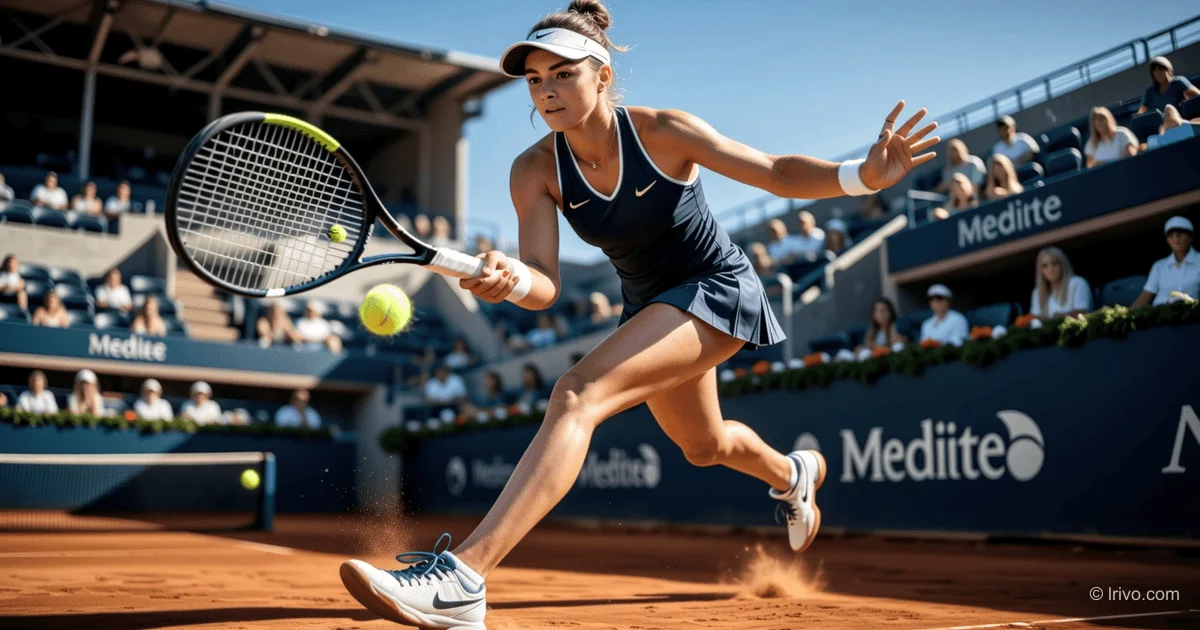
The match lasted 1 hour and 53 minutes and kept the stands on edge until the final shot. The first set turned into a prolonged battle with errors on both sides. In the tiebreak, Potapova saved a set point against Rybakina and converted her own chance — 10:8. The decisive point of the first set became arguably the highlight of the entire tournament: Potapova, in an incredible leap, reached what seemed an unreachable ball and then finished the attack spectacularly.
The second set started worryingly for Potapova — Rybakina took a 4:2 lead with a break and seemed to regain control. However, the Austrian tennis player (Potapova changed her sporting nationality in 2023) demonstrated tremendous mental resilience: she won ten consecutive points and three straight games, turning the situation in her favor. Spectators at the Manolo Santana Stadium witnessed a classic Cinderella story: the lucky loser ranked 56th in the WTA rankings completely outplayed one of the tournament's top favorites.
Potapova commented on the result with her characteristic emotion: "I got a second chance at this tournament, and I think I used it pretty well. Rybakina is the world No. 2, she's one of the best right now. I'm grateful for this win, but I don't want to stop. I want to keep improving and maybe get closer to these girls."
By the time she reached the quarterfinals, Potapova had already crossed several significant milestones: she defeated two Grand Slam champions at the tournament — Jelena Ostapenko (in the third round) and Rybakina — becoming only the third lucky loser in the Open Era to achieve such a feat at a single WTA event, after Elina Avanesyan (Cincinnati 2024) and Antonia Ruzic (Dubai 2026). This was Potapova's fifth career win over a top-5 opponent. Reaching the quarterfinals guaranteed her at least $199,598 in prize money. A return to the WTA top 50 was virtually assured.
Context and Significance
The historical value of the achievement extends beyond a single tournament. The lucky loser system has existed in tennis for decades, but only a few have seriously challenged the later stages of major events. Before Potapova, only Taylor Townsend (Toronto 2024) had reached a WTA 1000 quarterfinal with such a status. In 2026, this is becoming almost a trend: earlier, Elisabetta Cocciaretto in Doha and Antonia Ruzic in Dubai followed a similar path.
Potapova's case is particularly telling. The athlete went through a difficult period after changing her nationality to Austrian in 2023. She methodically built her career under new conditions, and the Madrid success became her loudest statement of a return to the elite. "I'm just enjoying being here," Potapova said in an on-court interview.
From the perspective of women's tennis, the result also highlighted a certain fragility in the dominance of today's leaders: Rybakina, who won the 2026 Australian Open, could not find a counter-strategy against an aggressive and inspired opponent ranked 40 places below her. This defeat became one of the most unexpected of the season for the Kazakh player.
What's Next / Next Match Preview
Potapova's quarterfinal opponent was former world No. 1, 34-year-old Czech Karolina Pliskova, who reached this stage using a protected ranking (she was ranked 197th at the time of the tournament). On her way to the quarterfinals, Pliskova defeated Elise Mertens and Solana Sierra. The match for a spot in the semifinals was scheduled for April 29.
The head-to-head history favored Pliskova — she won their only previous meeting at the Doha tournament in 2024 (6:1, 5:7, 6:4), but that match was on hard court. The upcoming quarterfinal was the first meeting between the two on clay. Analysts noted that the clay surface gave Potapova a certain advantage — she had demonstrated excellent movement and defensive skills throughout the tournament.
The winner of the Potapova-Pliskova match would advance to the semifinals to face the winner of the match between Marta Kostyuk and Linda Noskova. With a favorable turn of events, Potapova had a real chance to become the first lucky loser and the first tennis player representing Austria to reach the semifinals of a WTA 1000 tournament.
— Editorial Team