Football's Time Debate: Stoppage Minutes and VAR Under Scrutiny
Recent football matches have sparked significant debate among fans and pundits alike regarding the application of stoppage time and VAR decisions. The stark contrast in added minutes, particularly in recent FA Cup ties, has highlighted the complexities and subjective nature of modern football officiating.
The Stoppage Time Conundrum: West Ham vs. Leeds
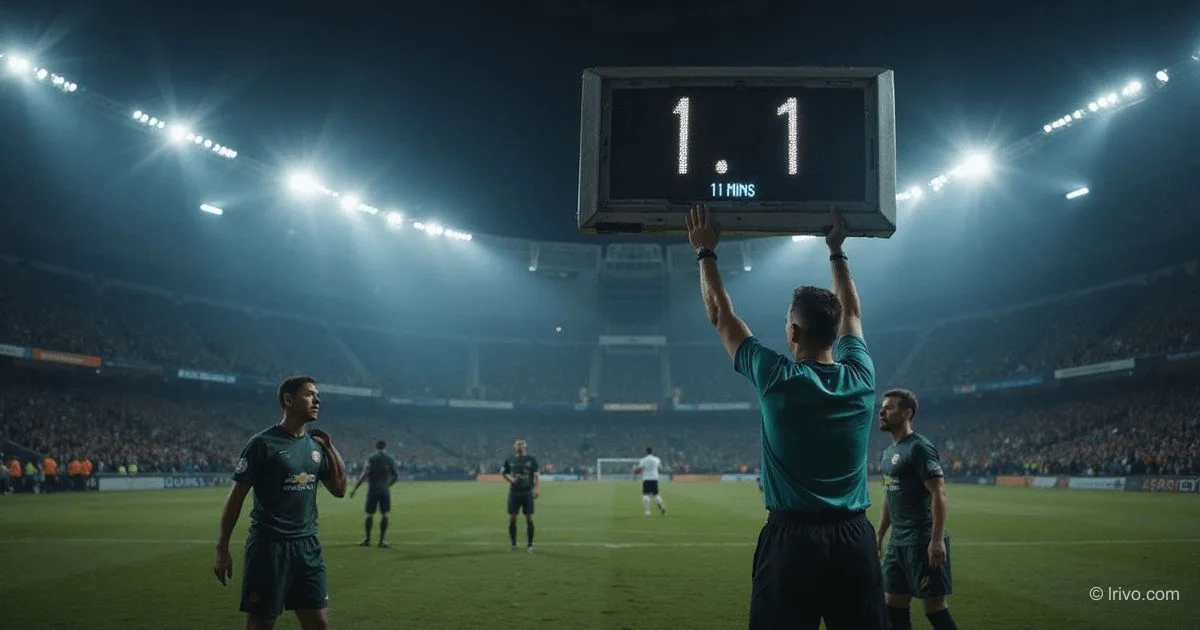
The FA Cup quarter-final between West Ham United and Leeds United recently became a flashpoint for discussions around how much extra time is "too much." The match saw an extraordinary 11 minutes added to regular time, a period during which West Ham, trailing 2-0, managed to score two dramatic goals to level the score and force extra time. Leeds ultimately won the tie 4-2 on penalties, but the extended stoppage time was the main talking point.
Many questioned the rationale behind such a lengthy addition. However, a closer look reveals several significant delays that justified the decision:
- Three minutes were spent on medical treatment for Adama Traore and Joe Rodon.
- Another two minutes were dedicated to physio attendance for Pablo and Jaka Bijol.
- A penalty decision, following a detailed VAR review, consumed three minutes.
- An injury check for Noah Okafor added one minute.
Beyond these, the game also saw two substitutions, additional VAR checks, and other minor delays, all contributing to the extended period.
Leeds manager Daniel Farke acknowledged the common fan sentiment, noting how added time feels different depending on whether your team is winning or chasing the game. He emphasized accepting officials' decisions, a pragmatic approach in the face of such variables. The dramatic comeback also meant many West Ham fans, who had left early assuming defeat, rushed back into the stadium for the thrilling conclusion. The subsequent extra time was also eventful, featuring two disallowed West Ham goals, shots hitting the woodwork, and a debut for 20-year-old goalkeeper Finlay Herrick just before the penalty shootout. There was even a pre-match debate about the penalty shootout location, with West Ham eventually winning the coin toss to decide the end.
The Other Side of the Coin: Zero Added Time
In stark contrast to the West Ham-Leeds encounter, a Premier League match just a day earlier, Manchester City's dominant 4-0 victory over Liverpool, concluded without a single second of added stoppage time. This decision by referee Michael Oliver immediately drew criticism and confusion on social media. Despite the game featuring two goals and six substitutions, the official opted for no additional minutes.
This disparity in application brings FIFA's head of referees, Pierluigi Collina's, insights into focus. Collina has previously stated that in cup ties where the outcome is effectively decided and there's no realistic chance of it changing, referees might be justified in ending the match on time. This approach, however, should never apply to league games, where goal difference can prove crucial. Michael Oliver, being a FIFA and UEFA referee, operates under guidelines that allow officials to conclude matches precisely on time if further play would be inconsequential. This philosophy has been seen in UEFA Champions League matches as well, where games like Chelsea vs. PSG and Barcelona vs. Newcastle ended without additional time when the aggregate scores were overwhelmingly in favor of one side.
VAR's Role: "Clear and Obvious" or Subjective Calls?
Beyond the clock, VAR decisions also continue to fuel debate, particularly around subjective calls involving high boots. Two recent incidents highlight this ongoing challenge. In a December match between Brighton and West Ham, a goal scored by Charalampos Kostoulas via an overhead kick saw his boot come dangerously close to West Ham defender Konstantinos Mavropanos's head. Despite West Ham manager Nuno Espirito Santo's fury, VAR did not intervene to disallow the goal.
A similar situation arose in the West Ham vs. Leeds FA Cup tie itself, when Axel Disasi's 96th-minute equalizer involved his high boot making contact with Leeds defender Pascal Struijk's shoulder. Again, VAR chose not to overturn the on-field decision.
The core principle guiding VAR intervention is the "clear and obvious error" standard. If an incident has a degree of subjectivity, VAR is instructed to defer to the referee's initial call on the field. Interestingly, in both these high-boot scenarios, the defenders involved did not react dramatically. Had they emphasized the contact more, perhaps holding their heads, the outcome might have been different, leading to a foul call and potentially disallowing the goals.
Key Takeaways
- Stoppage Time Justification: Lengthy added time can be fully justified by numerous genuine delays, such as injuries and VAR checks, as seen in the West Ham vs. Leeds match.
- Referee Discretion: Officials have discretion, particularly in cup ties with a decided outcome, to add minimal or no stoppage time, aligning with FIFA guidelines.
- League vs. Cup Rules: The importance of goal difference in league games means that ending matches early is generally not advised, unlike in certain cup scenarios.
- VAR's "Clear and Obvious" Standard: VAR interventions are limited to clear and obvious errors, often leading to subjective calls remaining with the on-field referee, especially in nuanced situations like high boots.
- Player Reaction Impact: A player's reaction to an incident can subtly influence how a referee or VAR perceives the severity of a foul, impacting critical decisions.
In conclusion, recent football matches have vividly illustrated the intricate challenges faced by referees in applying rules consistently while managing game flow and player safety. The debates surrounding stoppage time and VAR are not just about specific calls, but about the broader principles of fairness and transparency in modern football, constantly evolving with new technologies and interpretations.
— Editorial Team