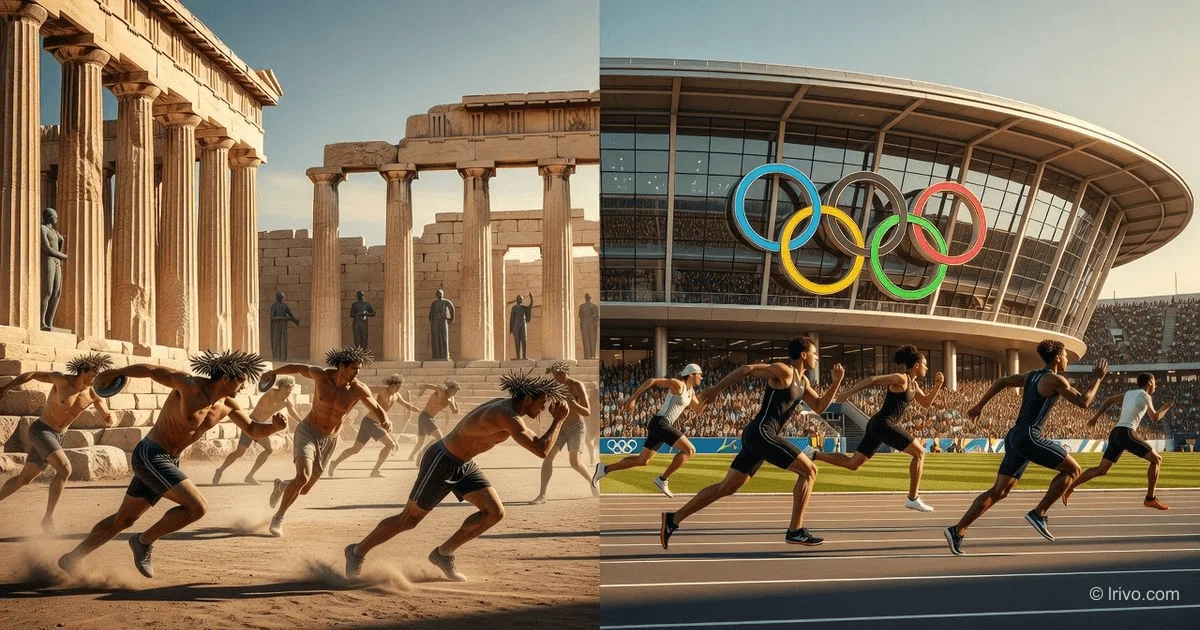
From Ancient Greece to Modern Glory: Olympic History
From Ancient Greece to Modern Glory: Olympic History
The Olympic Games represent one of humanity's most enduring traditions, a spectacle that has captivated civilizations for nearly three millennia. From its humble beginnings in the sacred sanctuary of Olympia to the globally televised extravaganza we witness today, the history of the Olympic Games is a story of cultural evolution, athletic excellence, and the indomitable human spirit. This journey from ancient religious festival to modern global movement is not just a chronicle of sports, but a mirror reflecting the political, social, and technological transformations of the Western world.
What You'll Learn
By the end of this article, you'll understand the origins of the Games in Ancient Greece, how they were revived by a visionary French educator, and how they evolved into the world's largest sporting event. You'll discover the dramatic contrasts and surprising connections between the ancient and modern Olympics, from the naked athletes of Olympia to the high-tech arenas of today. You'll walk away with a clear understanding of how this ancient tradition has survived, adapted, and thrived over thousands of years.
The Ancient Origins: 776 BC and the Birth of the Games
The recorded history of the Olympic Games begins in 776 BCE, a date often cited in ancient manuscripts for the first recorded Games . However, archaeological evidence suggests that athletic competitions, like chariot racing and wrestling, may have been held even earlier, possibly as part of funeral rites and religious ceremonies during the Mycenaean and Minoan eras . The Games were held every four years, a period that became known as an "Olympiad," which the Greeks used as a primary method of dating historical events .
These ancient competitions were more than just sporting events; they were deeply religious festivals dedicated to Zeus, the king of the Greek gods . Held at Olympia, the Games served as a unifying force for the often-warring Greek city-states, fostering a shared pan-Hellenic identity . Only freeborn Greek males were permitted to compete, often in the nude, and victory brought not material wealth but immense honor: a wreath of olive leaves and near-immortal status among their people .
The Ancient Events and Athletes
The early Games were a modest, single-day affair, with the only recorded event being the stadion, a footrace of about 200 meters . Over time, the festival expanded to three days, and later to five days, to accommodate a growing program of events. Athletes competed in a variety of disciplines, including:
- Track and Field: Longer footraces of roughly 400 and 1500 meters, the pentathlon, discus, javelin, and a distinctive long jump event where athletes used stone or lead weights called halteres to propel themselves further .
- Combat Sports: Boxing (without weight classes), wrestling, and the brutal pankration, a no-holds-barred mix of boxing and wrestling that was one of the most dangerous sports of the ancient world .
- Equestrian Events: Chariot racing was a spectacular and popular event, but it was unique in that victory was awarded to the owner of the chariot and horses, not the driver, highlighting the wealth and status of the participants .
While women were generally barred from competing, they were not entirely absent. Unmarried women were allowed to attend the Games, and there were separate athletic competitions in honor of the goddess Hera .
The Decline and End of the Ancient Games
For nearly twelve centuries, the ancient Olympics were held without interruption . However, the rise of the Roman Empire and the subsequent Christianization of Greece severed the link between the Games and their pagan religious ceremonies . The economic and military decline of the empire further sapped the resources needed to support such a grand spectacle . The official end came in 393 CE when the Roman Emperor Theodosius I, a devout Christian, abolished the Games, though they may have lingered on a smaller, local scale for some time .
The Modern Revival: The Vision of Pierre de Coubertin
After more than 1,500 years, the Olympic flame was rekindled. The driving force behind this monumental revival was French historian and educator Pierre de Coubertin. Inspired by the ancient ideals of sport and the discovery of the ruins of Olympia, Coubertin envisioned a modern international competition that would foster peace and understanding among nations. Based on the history of the Olympic Games and its ancient legacy, he founded the International Olympic Committee (IOC) in 1894 . His vision became a reality just two years later.
The First Modern Games: Athens 1896
In 1896, Athens, Greece, hosted the first Games of the modern era, a symbolic choice that connected the new competition to its ancient roots . While modest by today's standards, with 241 athletes from 14 nations competing in 43 events, the 1896 Games were a resounding success . The program featured nine sports, including athletics, cycling, fencing, gymnastics, shooting, swimming, tennis, weightlifting, and wrestling—all of which remain core Olympic sports to this day . This inaugural modern Olympics marked the birth of a new global tradition.
Evolution of the Modern Olympics: Growth and Challenges
The path from Athens 1896 to the modern day has been one of remarkable growth, but not without its challenges. The history of the Olympic Games in the 20th and 21st centuries is a complex tapestry of sporting achievement, political conflict, and social change.
Expanding the Games and Including Women
- Paris 1900: The Games were held in conjunction with the World's Fair, and for the first time, women were allowed to participate, though they were largely limited to "acceptable" sports like golf and tennis .
- Amsterdam 1928: A major milestone was reached when women were finally permitted to compete in athletics (track and field) and gymnastics, significantly expanding their presence in the Games .
The Winter Olympics
The success of the "International Winter Sports Week" held in Chamonix, France, in 1924 led to it being retroactively designated as the first Winter Olympics, creating a new division of the Olympic Movement .
A Stage for Politics
The Games have frequently been a stage for political expression and conflict.
- Berlin 1936: The Nazi regime used the Olympics as a propaganda tool. However, it was the performance of African American athlete Jesse Owens, who won four gold medals, that delivered a powerful rebuttal to the ideology of Aryan supremacy .
- Cold War Era: The 1952 Helsinki Games were fraught with political tension as the United States and the Soviet Union competed for supremacy both on and off the field . The Games were also marked by numerous boycotts, including the American-led boycott of the 1980 Moscow Games and the Soviet-led boycott of the 1984 Los Angeles Games.
- Melbourne 1956: The first Games held in the Southern Hemisphere, these Olympics were also marked by political boycotts due to the Suez Crisis and the Soviet invasion of Hungary .
War and the Olympic Spirit
The modern Games have been cancelled three times due to the two World Wars: in 1916 (Berlin), and in 1940 and 1944 (the former scheduled for Tokyo, the latter for London) . The Games resumed in 1948, hosted by London, a city still recovering from the war, as a testament to resilience and international cooperation .
New Traditions and Symbolism
The modern era has introduced iconic symbols that are now synonymous with the Games:
- The Olympic Rings: Created by Coubertin in 1913, the five interlocking rings represent the union of the five inhabited continents .
- The Torch Relay: First introduced at the 1936 Berlin Games, the tradition of carrying the Olympic flame from Olympia to the host city has become a powerful symbol of peace, friendship, and the connection between the ancient and modern Games .
The history of the Olympic Games is a saga that has stood the test of time. It is a story of a simple footrace that grew into a global phenomenon, surviving political turmoil, wars, and societal shifts. The Games have evolved from a religious festival for Greek men to an inclusive global celebration where the world's best athletes compete for glory, embodying the ancient ideal of arete—the pursuit of human excellence.
Sources
- Guinness World Records: First Olympic Games
- BBC Sport: A visual guide to The Olympics
- PBS/The Real Olympics: A History of the Ancient and Modern Olympic Games
- Library of Congress Research Guides: Olympics: Topics in Chronicling America
- China Daily: Beijing photo show explores over 2,800 years of Olympic heritage
- Olympics.com: What is the origin of the Olympic Games?
- Duke University Libraries: The Real Olympics catalog
— Editorial Team