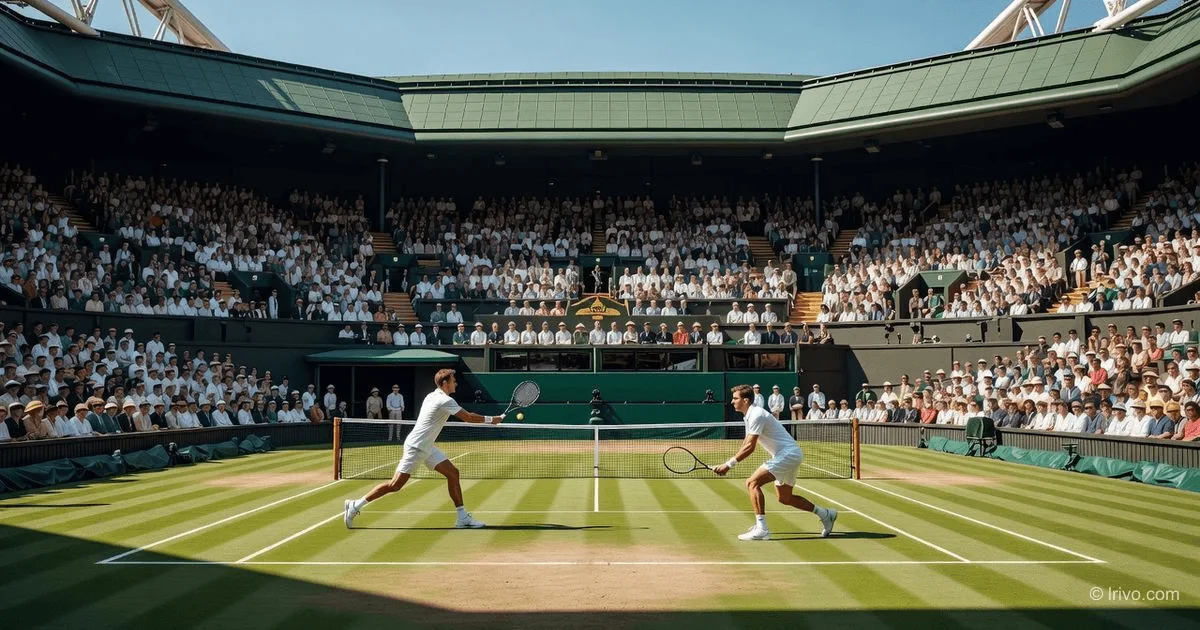
Wimbledon History: Tennis' Most Prestigious Major
Wimbledon History: Tennis' Most Prestigious Major
The Wimbledon Championships, known officially as "The Championships," represent tennis's most hallowed ground. As the world's oldest tennis tournament and the only Grand Slam still contested on natural grass, Wimbledon is distinguished by a rich history of tradition, resilience, and athletic excellence that has shaped the sport as we know it today. From its humble beginnings as a fundraiser on a croquet lawn to a globally televised event watched by billions, the history of the Wimbledon tennis tournament reflects the evolution of tennis from a genteel Victorian pastime to a modern, fiercely competitive professional sport.
What You'll Learn
By the end of this article, you will understand Wimbledon's remarkable journey from a one-event men's tournament to a global sporting phenomenon. You will learn about the pivotal moments that defined its evolution, from the introduction of women's events to the dawn of the Open Era. Most importantly, you will be able to trace how the tournament's core traditions, like its all-white dress code and grass courts, have been preserved for over 140 years, making it a unique and enduring pillar of the sporting world.
The Birth of a Tradition: 1877
The story of Wimbledon began not with a grand vision, but with a practical need. In the 1870s, the All England Croquet Club in Wimbledon, London, needed to raise funds to repair a broken roller. To raise money, they decided to host a lawn tennis tournament, a new and fashionable game that was growing in popularity as an outdoor version of "real tennis".
On July 9, 1877, the first Wimbledon Championship was held. It was a far cry from the spectacle we know today. The tournament featured only a single event: the Gentlemen's Singles. Twenty-two amateur players paid an entrance fee of one pound and one shilling to compete. In the final, Spencer William Gore defeated William Marshall 6-1, 6-2, 6-4 in just 48 minutes in front of a crowd of about 200 spectators, each paying a shilling for admission. The winner took home a 25-guinea trophy. Despite the final being delayed due to rain—a tradition of sorts that would persist until 2009—the tournament was deemed a success and returned the following year, laying the foundation for the prestigious history of the Wimbledon tennis tournament.
Expanding the Championships: Ladies, Doubles, and the First Overseas Stars
The tournament grew rapidly. In 1884, seven years after the first men's event, Wimbledon introduced the Ladies' Singles and Men's Doubles, with only 13 women competing in the inaugural women's event. Maud Watson became the first female champion. Women's Doubles and Mixed Doubles were added later, in 1913. This period also saw the emergence of the tournament's first stars, including British twins Ernest and William Renshaw, who dominated the 1880s, winning 13 titles between them and inspiring a wave of popularity known as the "Renshaw Rush".
For the first three decades, British players dominated the tournament. However, this era of home rule ended in the early 1900s when the rest of the tennis world began to catch up. In 1905, May Sutton of the United States became the first overseas champion, winning the Ladies' Singles title. She was soon followed by Norman Brookes of Australia, who in 1907 became the first foreign men's champion. Brookes' victory was a watershed moment, heralding a new international era for tennis. After his win, only two British men, Arthur Gore and Fred Perry, won the singles title until Andy Murray's triumph in 2013.
A New Home and a Golden Age
The 1920s were a pivotal decade. In 1922, the Championships moved from the original Worple Road site to its current home on Church Road, where the iconic Centre Court was built with a capacity of nearly 14,000 spectators. The same year, the "Challenge Round" system was abolished, meaning the defending champion no longer received a bye directly to the final but had to compete from the start like all other players. These changes helped popularize the game even further.
This decade also marked a golden age of French tennis. Suzanne Lenglen dominated the Ladies' Singles, winning five consecutive titles from 1919 to 1923 and becoming the sport's first global celebrity. She was briefly overshadowed by Helen Wills Moody, who won eight titles in the 1920s and 30s. On the men's side, the "Four Musketeers"—Jean Borotra, Jacques Brugnon, Henri Cochet, and René Lacoste—won six of the seven gentlemen's singles titles between 1924 and 1929.
War, Open Tennis, and the Modern Era
The Championships were canceled twice due to the World Wars, losing four years to the First World War and six to the Second. The Second World War also caused a bomb to strike the Centre Court roof, causing damage that was repaired in time for the 1949 tournament.
A monumental shift occurred in 1968 when Wimbledon entered the "Open Era," allowing professional players to compete alongside amateurs for the first time. This decision, which followed a 1959 proposal that was initially rejected, cemented Wimbledon's status as the world's premier tennis event. The first champions of this new era were Rod Laver and Billie Jean King, whose names are now etched in tennis history. Equal prize money for men and women, a landmark achievement in sports, was finally awarded in 2007.
The modern era has been defined by iconic rivalries and legendary champions. The 1980s featured the epic battles of Bjorn Borg, John McEnroe, and Jimmy Connors. In the 1990s, Pete Sampras and Steffi Graf dominated the lawns, with Sampras capturing a then-record seven men's titles. The 2000s saw the rise of Roger Federer, who would eventually claim a record eight men's singles titles, and the Williams sisters, Serena and Venus, who won eight of ten women's finals in the decade. In 2013, Andy Murray ended a 77-year wait for a British men's champion, a testament to the tournament's enduring emotional connection with its home nation.
The Only Grand Slam on Grass
The history of the Wimbledon tennis tournament is inseparable from its surface. Wimbledon is the only one of the four Grand Slam tournaments still played on grass, a tradition that sets it apart from the hard courts of the US and Australian Opens and the clay of the French Open. This distinctive surface demands a unique style of play—fast, low-bouncing, and rewarding of serve-and-volley tactics, creating a specific and cherished challenge for players.
Unmistakable Traditions
Wimbledon's allure is not just in its tennis but in its deeply rooted traditions. The strict all-white dress code is perhaps its most famous rule; players must wear "almost entirely white" clothing, a tradition dating back to the Victorian era. Only a thin single strip of colour under 10mm is allowed on the neckline, sleeves, trousers, or skirt. The consumption of strawberries and cream is another beloved custom, with approximately 28,000 kg of strawberries consumed each year. The tournament also maintains its connection with the British Royal Family, adding to its aura of prestige and heritage.
Sources
- Sky HISTORY. "New balls please: The history of Wimbledon."
- The Washington Post. "Tradition reigns at Wimbledon 140 years after the tennis tournament began."
- NDTV Sports. "Wimbledon's Illustrious history."
- BBC Sport. "The start of something special."
- Britannica. "Wimbledon Championships."
- India Today. "Humble beginnings to massive event: How Wimbledon changed through the years."
- Sportskeeda. "Wimbledon: A look at the evolution of the iconic tournament over the years."
- Sky Sports. "Wimbledon - A potted history."
- BBC Sport. "Wimbledon through the ages."
- Wimbledon.com. "History."
— Editorial Team