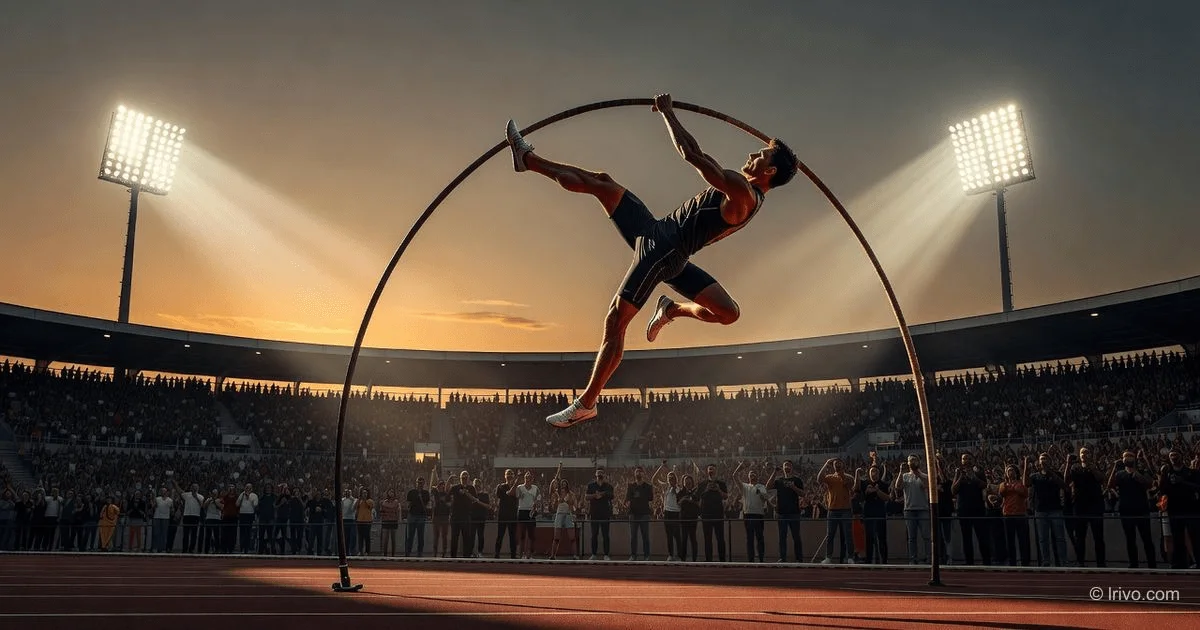
Decathlon of Greatness: Debating the Ultimate All-Round Athlete
The debate over who is the greatest all round athlete of all time has captivated sports fans for over a century, long before the term "GOAT" entered popular lexicon. At the heart of this discussion lies the Olympic decathlon—a grueling two-day, ten-event contest that has been historically regarded as the ultimate test of versatility, awarding its winner the informal title of "World's Greatest Athlete." But is this title purely ceremonial, or does the decathlon's unique structure objectively identify the most complete athlete on the planet?
What You'll Learn
You'll understand why the decathlon remains the gold standard for measuring all-round athletic ability, and how modern contenders from other disciplines—from basketball to CrossFit—challenge that claim. By the end, you'll have a clear framework for evaluating athletic greatness across sports, and be equipped to decide whether specialization or versatility truly defines the "greatest" athlete.
At a Glance
| Criterion | Decathlete (Generalist) | Specialist Athlete (e.g., Sprinter, Swimmer, Basketball Player) |
|---|---|---|
| Breadth of Skills | Extreme (10 distinct track & field events) | Narrow (single sport or event) |
| Measurability | 100% objective (times, distances, heights) | Often subjective or team-dependent |
| Aerobic Demand | Moderate (1,500m is longest event) | Varies; can be extreme (e.g., marathon, soccer) |
| Anaerobic Demand | High (sprints, jumps, throws) | Varies; often high in team sports |
| Technical Complexity | High (pole vault, throws, hurdles) | Very high in specialized events (e.g., gymnastics) |
| Versatility | Unmatched across track & field disciplines | Limited to their specific discipline |
| Recognition | "World's Greatest Athlete" title | "Fittest on Earth" (CrossFit) or "GOAT" in their sport |
| Transferability | High foundation for other sports | Low; often unable to compete outside specialty |
| Training Focus | Balancing weaknesses across 10 events | Maximizing specific performance metrics |
| Historical Pedigree | Since 1912 Olympics | Varies by sport |
The Decathlon: The Gold Standard for All-Round Athleticism
The decathlon was created to answer a specific question: who is the most complete athlete? The event is structured to test running (100m, 400m, 110m hurdles, 1500m), jumping (long jump, high jump, pole vault), and throwing (shot put, discus, javelin). It demands a brutal combination of speed, power, endurance, and technical skill across events that are fundamentally different from one another . "Each event is unique," notes U of T track coach Carl Georgevski. "Each demands a different set of physical skills. Just take the pole vault all by itself... you not only have to be fast like a sprinter but also have the strength and body control of a gymnast" .
Strengths of the Decathlon
- Objective and Measurable: The decathlon is a "standardized test that covers a broad range of athleticism that is absolutely measurable," as two-time Olympic decathlon champion Ashton Eaton points out. You run the 100m and get a time; you throw the discus and get a distance. This provides a data-driven, empirical basis for comparison that team sports simply cannot offer .
- Balanced Profile: Research on decathletes shows that the key to success at the highest level is a balanced profile across all events . To reach the top, an athlete cannot have significant weaknesses; they must be well-rounded.
- Historical Significance: The decathlon's connection to Jim Thorpe—who was declared "the greatest athlete in the world" by King Gustav V of Sweden after his 1912 victory—has cemented its legendary status . This tradition continues today, with each Olympic decathlon champion carrying that same mantle for the next four years .
Weaknesses and Limitations
- Narrow Fitness Profile: While broad by track and field standards, the decathlon's ten events are still a subset of human athletic capability. It heavily emphasizes anaerobic power and speed. As exercise physiologist Ira Jacobs notes, "Even the longest event in the decathlon comes nowhere near the aerobic fitness demands and performance duration of many team sports" like basketball or soccer .
- Lack of Adaptability: Decathletes are "generalists" within a defined structure. They train for ten known events. They are not tested on their ability to handle the "unknown and unknowable" in real-time. Athletes in team sports must constantly adapt to opponents' strategies and unpredictable game states.
The Specialists: Modern Contenders for the Crown
The decathlon's status is increasingly challenged by the sheer physical prowess displayed in other elite sports.
The Basketball Player
Jacobs suggests that basketball may demand just as broad a fitness base as the decathlon, encompassing "aerobic fitness, muscular endurance, explosive power, motor coordination," and even "executive function"—the split-second decision-making that occurs mid-stride . An elite player like LeBron James or Giannis Antetokounmpo possesses a rare combination of size, speed, strength, and agility.
The CrossFit Games Athlete
CrossFit explicitly frames its competition as a test of broader fitness than the decathlon. It defines fitness as "work capacity across broad time and modal domains" . CrossFit events can range from a max snatch to a marathon row, testing a far wider variety of time domains (seconds to hours), modalities (weightlifting, gymnastics, swimming), and movement combinations. An analysis from CrossFit acknowledges that a decathlete possesses many transferable skills—strength, explosive power, and body awareness—but would likely be "devastated" by a long, grueling event that demands true muscular endurance .
The Tennis Player
Two-time Olympic decathlon champion Ashton Eaton offered a surprising take: "I personally believe tennis is the next most athletic sport next to the decathlon... because of certain things required. Those matches are three or four hours long. There's the technical aspect, the agility, the mind-body awareness" . This highlights that "athleticism" involves not just physical prowess but also mental fortitude and tactical thinking.
Cost & Accessibility
| Athlete Type | Training Approach | Accessibility | Equipment/Infrastructure |
|---|---|---|---|
| Decathlete | Year-round specialized training across 10 events | Requires track and field facilities, coaching for multiple events | High; specialized equipment for pole vault, throws |
| CrossFit Athlete | Constantly varied functional movements | Access to a CrossFit affiliate or gym | Moderate; basic gym equipment, rowers, bikes |
| Basketball/Soccer Player | Sport-specific skill and conditioning | Access to courts/fields and team | Low to Moderate |
| Swimmer | High-volume pool training | Requires regular access to a pool | High; pool availability and maintenance |
How to Decide: A Framework for "Greatest"
The answer to who is the greatest all round athlete of all time depends entirely on your definition of "athleticism." Use this framework to decide:
Choose the Decathlete if...
- You believe the title should be determined by an objective, standardized, and diverse battery of physical tests. You value proven excellence across running, jumping, and throwing above all else.
- You consider track and field the purest form of athleticism, as it is "the only standardized test that covers a broad range of athleticism that is absolutely measurable" .
- Historical precedent and the tradition of the "World's Greatest Athlete" title matter to you.
Choose a Specialist (e.g., Basketball, CrossFit, Soccer, Tennis) if...
- You believe that peak performance in any single complex sport is a higher achievement than being proficient in ten.
- You value adaptability, sport-specific skill, and cognitive demands alongside physical prowess .
- You think a broader definition of fitness should include endurance events lasting longer than five minutes or functional, constantly varied movements .
Verdict: A Title Worth Debating
The decathlon remains the most justifiable and objective answer to the question of who is the greatest all round athlete of all time. Its multi-event format provides a clear, measurable, and historical benchmark for all-around athletic excellence. However, to claim it is the only valid answer is to ignore the incredible fitness and skill required in other sports. Basketball players combine explosive power with extreme endurance and split-second decision-making. CrossFit athletes push human capacity across an astonishingly wide variety of time domains and tasks. Ultimately, a decathlete is the greatest track and field all-rounder, and the tradition of bestowing the title of "World's Greatest Athlete" is well-earned. But the modern debate acknowledges that athletic greatness comes in many forms, and the conversation itself is part of the fun.
Frequently Asked Questions
Q: Why is the decathlon winner called the "World's Greatest Athlete"? This tradition began in 1912 after King Gustav V of Sweden awarded Jim Thorpe the gold medal and declared, "Sir, you are the greatest athlete in the world" . The decathlon's 10-event structure was specifically designed to identify the most versatile athlete, a tradition that has stuck for over a century .
Q: Has anyone won the Olympic decathlon more than once? Yes, only three men have won two Olympic decathlon gold medals: Bob Mathias (1948, 1952), Daley Thompson (1980, 1984), and Ashton Eaton (2012, 2016). This rarity underscores the immense difficulty of maintaining peak performance across all ten events for multiple Olympic cycles .
Q: Can a decathlete beat a specialist in a single event like the 100m? Generally, no. "Even Ashton Eaton, the best generalist in the world, couldn't compete with a world-class specialist in a single event" . For example, while Eaton's 100m time was elite, it would not win an Olympic final against a dedicated sprinter.
Q: How does a CrossFit athlete compare to a decathlete? CrossFit tests a broader range of fitness, including longer-duration endurance events and a wider variety of functional movements. While a decathlete would likely outperform a CrossFit athlete in most track and field events, the CrossFit athlete would likely dominate in "unknown and unknowable" events combining multiple modalities .
Q: Why isn't a team sport athlete like a soccer player ever considered for this title? The "greatest athlete" title often favors individual, objective sports. Team sports introduce too many variables, making it difficult to isolate an individual's athletic performance. As a U of T swimming coach put it, to rank athletes objectively, "it has to be totally objective. And we'd have to take a snapshot in time. That would really eliminate all team sports" .
— Editorial Team