Gym Guide for Beginners: Your First Workout & Beyond
Gym Guide for Beginners: Your First Workout & Beyond
Walking into a gym for the first time can feel overwhelming—rows of unfamiliar machines, people who seem to know exactly what they're doing, and the nagging question of "Where do I even start?" This guide answers exactly that: how to start going to the gym for beginners, with a clear, safe, and practical plan that turns anxiety into confidence.
What You'll Learn
By the end of this guide, you'll know exactly how to choose the right gym, what to wear and bring, how to navigate the equipment, and a simple full-body workout plan for your first week. You'll walk away with a step-by-step system to build a sustainable gym habit—starting from your very first visit.
Step 1: Define Your "Why" and Set a SMART Goal
Before you set foot in the gym, get clear on your motivation. It's the fuel that keeps you showing up when motivation wanes. The American Heart Association recommends setting and tracking specific goals to help you stick with your program over time .
Start with one focus area: strength, endurance, or consistency. Then, turn it into a SMART goal :
- Specific: Define exactly what you want to achieve.
- Measurable: Track progress via reps, distance, or workout frequency.
- Achievable: Set a target realistic for your current fitness.
- Relevant: Tie it to your personal reason for training.
- Time-bound: Set a clear deadline.
Example goal: "I will go to the gym on Monday, Wednesday, and Friday for the next four weeks for a 30-minute beginner workout." This goal checks every box .
Step 2: Choose the Right Gym and Prepare for Day One
Select a Gym That Fits Your Life
- Convenience is king: Choose a gym close to home or work. Easy access drives consistency .
- Match your goals: If strength is your focus, check for racks and dumbbells. For cardio, look for treadmills and bikes .
- Test the vibe: Use a trial pass during your usual workout time. Check for cleanliness, crowding, and staff helpfulness .
What to Wear and Pack
- Clothing: Wear soft, breathable fabrics that let you move freely. Avoid overly loose clothes near machines .
- Shoes: Match your footwear to your workout—flat, stable soles for strength training, supportive cushioning for cardio .
- Gym bag essentials: Water bottle, towel, lock, headphones, and your membership ID .
Step 3: Navigate the Gym and Learn Basic Etiquette
Your first few visits are about exploration, not intense training.
Learn the layout:
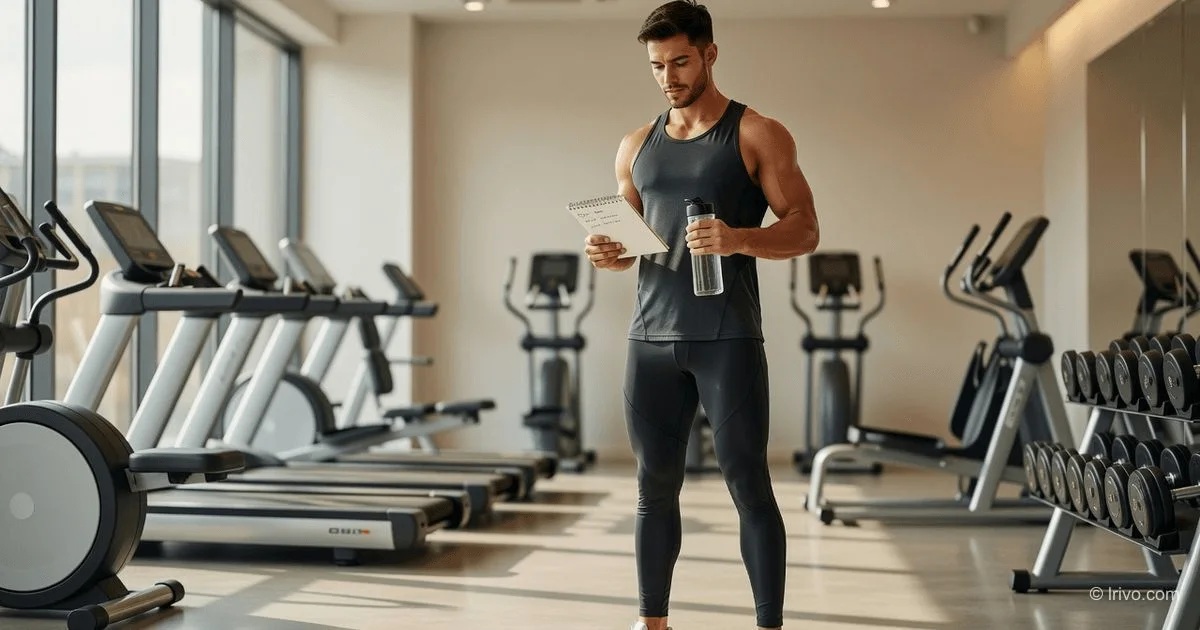
- Cardio zone: Treadmills, bikes, ellipticals—usually near the front .
- Strength machines: Grouped together, often with diagrams showing how to use them .
- Free weights area: Dumbbells, barbells, benches, and squat racks .
Follow these etiquette rules to feel confident:
- Wipe down equipment after each use .
- Re-rack all weights and return equipment to its proper place .
- Manage your time on machines during busy hours—step aside if you need long breaks .
- Respect personal space and avoid giving unsolicited advice .
- Wear headphones for your music or podcasts .
Step 4: Your First Workout—A Simple Full-Body Routine
The key to success is consistency, not intensity. "Your first 30 days aren't about going hard, they're about getting comfortable," says Stefanie Bourassa, PT, DPT, sports medicine program director at Hartford HealthCare's Bone and Joint Institute .
⚠️ Safety first: 55% of workout injuries occur within the first three months of starting a new routine . Always prioritize form over weight. If you feel sharp pain, stop immediately and consult a professional .
Weekly Schedule
Aim for 2-3 full-body workouts per week, with rest days in between. A Monday-Wednesday-Friday schedule works well for most beginners .
Warm-Up (5-10 minutes)
Never skip this. Cold muscles are injury-prone .
- Light cardio: 3-5 minutes on a treadmill or bike at an easy pace .
- Dynamic stretches: Leg swings, arm circles, and hip hinges .
Full-Body Beginner Workout (Do this routine each session)
| Exercise | Sets x Reps | Key Form Tip |
|---|---|---|
| Leg Press | 3 x 10-12 | Keep feet flat and knees tracking over toes. Press smoothly. |
| Bodyweight Squats or Goblet Squats | 3 x 10-12 | Sit back as if into a chair. Keep chest tall and knees aligned with toes. |
| Chest Press Machine | 3 x 10-12 | Keep wrists neutral. Press forward, return slowly to a light stretch. |
| Lat Pulldown | 3 x 10-12 | Grip slightly wider than shoulders. Pull bar to upper chest, squeezing shoulder blades. |
| Seated Row or Dumbbell Row | 3 x 10-12 | Keep back straight. Pull the weight toward you, squeezing your back muscles. |
| Plank | 3 x 30 seconds | Keep body in a straight line from head to heels. Engage your core. |
Choose a weight that makes the last 2-3 reps challenging but allows you to maintain perfect form . Rest 60-90 seconds between sets .
Cool-Down (5 minutes)
- Walk slowly to lower your heart rate.
- Perform static stretches (hold for 15-20 seconds) for the muscles you worked: chest, back, quads, and hamstrings .
Step 5: Progress Safely and Stay Consistent
Many beginners make the mistake of doing too much too soon. Research shows that 45% of gym injuries are caused by overloading—trying to lift too much weight or doing too many reps before your body is ready .
Follow the 10% rule for progression: don't increase your workout volume (weight, reps, or cardio time) by more than 10% per week . For example, if you do 12 reps this week, aim for 13 or 14 reps next week before adding more weight.
Patience is your superpower. "It took a while for your health to get where it is, and it will take a while to mend it," advises Logan Collins, a certified personal trainer at Texas Health Prosper .
— Editorial Team