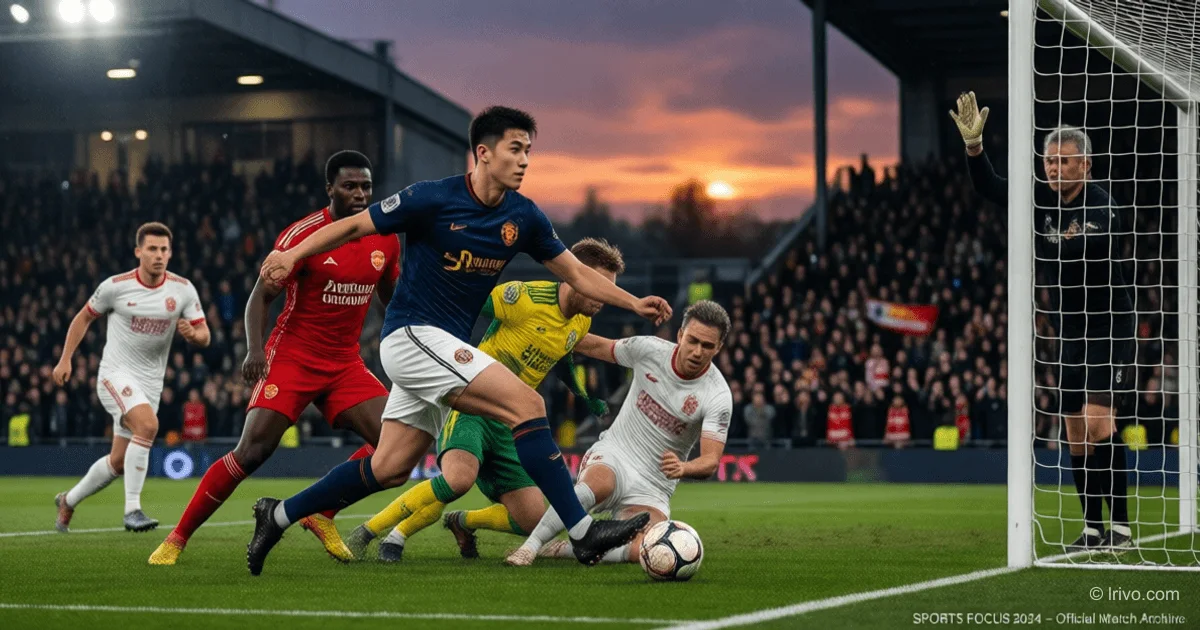
Can De Zerbi’s High-Risk Tactics Save Spurs From Relegation?
Roberto de Zerbi is the latest manager to take the Tottenham hot seat—but with just seven games left and survival on the line, his bold, possession-heavy philosophy faces its toughest test yet.
De Zerbi isn’t your typical relegation firefighter. While most clubs in danger turn to cautious, pragmatic coaches, Spurs have gone all-in on a visionary who demands technical precision, relentless pressing, and fearless ball progression from the back. It’s a gamble that could either ignite their season or accelerate their fall.
A System Built on Risk and Reward
At Brighton and Marseille, De Zerbi’s teams played with striking consistency: draw opponents in, overload central zones with short passing triangles, and explode forward once space opens up. His center-backs don’t clear—it—they bait strikers into pressing by rolling the ball under their studs, creating chaos that midfielders exploit with one- or two-touch layoffs.
This approach thrives on intelligent players comfortable under pressure. The payoff? Rapid transitions from defense to high-quality chances. The downside? If the press breaks down or a pass goes astray in dangerous areas, the opposition counters quickly. Brighton under De Zerbi conceded the second-most high turnovers leading directly to shots in the Premier League.
Spurs’ current squad isn’t exactly stacked with the kind of technicians De Zerbi usually relies on. But there are glimmers of hope—Lucas Bergvall, Xavi Simons, and Archie Gray all possess the close control and spatial awareness needed to thrive in tight zones.
Building on Postecoglou’s Foundation
One key advantage for De Zerbi: he’s not starting from zero. Ange Postecoglou’s tenure drilled Spurs in aggressive, front-foot football—short build-ups, inverted full-backs, and goalkeepers acting as deep playmakers. Those habits align closely with De Zerbi’s principles, especially in how possession is used to provoke pressure rather than avoid it.
Even Igor Tudor’s brief interim spell introduced man-to-man marking and aggressive triggers on backward passes—concepts De Zerbi also employs off the ball. So while Thomas Frank’s wide-focused, risk-averse system dominated the early part of the season, recent months have already nudged Spurs toward a more vertical, central style.
That continuity matters. Players won’t need to learn an entirely new language—just refine their fluency.
The Relegation Reality Check
Bringing in a system-first coach during a relegation scrap is inherently risky. Manchester United’s struggles with Ruben Amorim show how hard it is to impose complex tactics on a fragile squad mid-crisis. De Zerbi’s methods require weeks, even months, to embed—not seven matches.
Yet Spurs are out of conventional options. Their attack has sputtered, confidence is low, and passive football hasn’t worked. De Zerbi’s choreographed routines might actually simplify decision-making: instead of improvising under pressure, players follow rehearsed patterns that reduce mental load in high-stress moments.
If it clicks—even partially—it could unlock enough goals to swing tight games. If it doesn’t, Spurs may find themselves conceding early and often.
What to watch for in the coming weeks:
- Goalkeeper involvement: Will Guglielmo Vicario drop deep to initiate build-up like Ederson or Ramsdale did under similar systems?
- Midfield connectivity: Can Yves Bissouma and Pape Matar Sarr adapt to rapid one-touch recycling between lines?
- Press triggers: Does the team aggressively swarm after backward passes, or revert to passive shape?
- Full-back roles: Will they tuck inside like under Postecoglou, or stay wide as Frank preferred?
Key Takeaways
- De Zerbi’s philosophy centers on controlled risk: inviting pressure to create superiorities in transition.
- Spurs already have partial familiarity with his core ideas thanks to Postecoglou and Tudor.
- Technical midfielders and brave defenders are essential—luckily, Spurs have a few candidates.
- The biggest hurdle isn’t tactics—it’s time. Seven games may not be enough to master this system.
- If executed well, this approach could generate the goals Spurs desperately need to survive.
De Zerbi himself admits his style isn’t for every club—or every moment. But with Spurs staring at the Championship, playing it safe hasn’t worked. Sometimes, the only way out is through the fire.
— Editorial Team