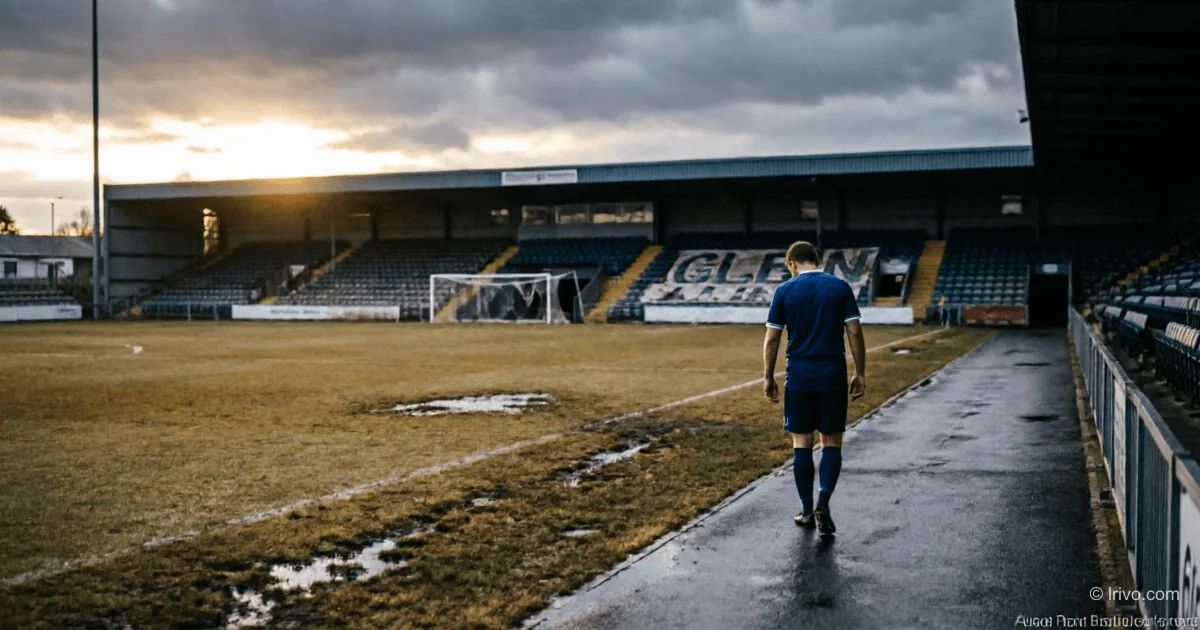
Glenavon's Relegation: A Season Analysis of Missed Opportunities
Glenavon's long stay in the Irish Premiership has come to an end. After 21 consecutive seasons in the top flight, the Lurgan Blues were relegated following a narrow 1-0 defeat to Crusaders in their final home game. This article examines the key factors behind their downfall, from a disastrous start to critical player departures and injuries.
The Crippling Start
The season was essentially doomed from the opening weeks. Glenavon failed to pick up a single point in their first eleven matches, a record that put them in a deep hole from which they never fully escaped. Confidence evaporated as the team struggled to score, failing to find the net in nine of their opening thirteen games. At the same time, their defense was porous, conceding fifty goals before the January transfer window. This catastrophic combination of offensive drought and defensive frailty shattered any early-season optimism.
Manager Paddy McLaughlin, who had helped the club avoid relegation the previous season, departed in October after less than a year in charge. The damage inflicted during this period proved too great for any subsequent recovery, despite the efforts of his successor.
Key Player Losses and Absences
A major issue was the loss of experienced players at critical moments.
- David McDaid's Departure: The veteran striker left in November to become assistant manager at Portstewart. McDaid had been a pivotal figure since joining, scoring 12 goals in 51 appearances. His leadership and goal-scoring ability were sorely missed during the club's most unstable period.
- Jack Malone's January Exit: Another senior player, Malone, departed for Glentoran in the mid-season window, further eroding the squad's experience and depth.
- Peter Campbell's Injury-Plagued Season: Perhaps the most impactful absence was that of midfielder Peter Campbell. He missed the opening two months of the campaign through injury, a period during which the team scored only one goal. He later suffered another injury setback in December, missing three more games. Between injuries and suspensions, he was unavailable for nearly half the season. His influence was clear; when fit, he scored three goals. His stop-start year was a significant blow to a team already lacking leaders.
The Failed Fightback
Under new manager Michael O'Connor, Glenavon mounted a commendable, but ultimately futile, comeback. They dramatically closed a 12-point gap and even leapfrogged Crusaders into 11th place in March, suggesting a great escape was possible. However, their form after the league split sealed their fate.
Their post-split results included:
- A 1-1 draw with Portadown, with a late goal from substitute Peter Campbell.
- Another draw against Ballymena United.
- A goalless draw away to Bangor.
These draws, while showing fight, were not enough. Crucially, Crusaders' 4-0 victory over Portadown simultaneously pushed Glenavon back into the bottom spot. This set up the decisive final match at Mourneview Park, where Fraser Bryden's goal for Crusaders ended Glenavon's hopes and confirmed their relegation.
Looking Forward
Despite the disappointment, there is a belief that relegation could offer a chance to reset. Former assistant manager Colin Coates, who experienced relegation with Crusaders in 2005, noted on BBC Ulster's Sportsound that such an event can allow a club to rebuild from the foundation. He pointed out that Glenavon had been flirting with relegation for three seasons, often changing managers before Christmas to salvage their situation.
A potential positive is the completion of investment from Football International Limited in March. This financial boost could support their aim to return to the Premiership at the first attempt. The club now faces the challenge of using this reset—and the new investment—to build a more stable and competitive squad for the Championship campaign.
Key Takeaways
- Glenavon's season was defined by a historically poor start, with zero points from the first 11 games.
- The loss of experienced players like David McDaid and Jack Malone, coupled with Peter Campbell's prolonged injury absences, stripped the squad of vital leadership and quality.
- A late-season fightback was impressive but stalled in the post-split matches, where a lack of wins proved fatal.
- Relegation, after 21 years, may provide an opportunity for a structural reset, aided by new external investment.
- The Irish Premiership's competitiveness means a bad transfer window or a poor run of form can quickly cost a club its top-flight status.
— Editorial Team