Unpacking the VAR Decisions: Barcelona vs. Atlético Madrid's Controversial Moments
Football fans often debate referee decisions, but rarely do we get to hear the actual discussions that lead to them. Recently, audio recordings from the VAR room during the high-stakes match between Barcelona and Atlético Madrid were released, offering an unprecedented look into the intricate process of how crucial calls are made and, sometimes, overturned. This unique transparency reveals the intense scrutiny and detailed analysis behind two pivotal moments in Barcelona's hard-fought 2-1 victory, shedding light on the human and technological elements of modern football officiating.
Inside the VAR Review of Gerard Martín's Challenge
One of the most contentious moments involved Barcelona's young talent, Gerard Martín. Just three minutes into the second half, in the 48th minute, the on-field referee, Busquets Ferrer, initially showed Martín a straight red card. This severe punishment was for a challenge on Atlético midfielder Almada, a decision that instantly sent shockwaves through the stadium and among players. The immediate reaction from many was that it looked like a dangerous tackle, potentially warranting the dismissal.
However, the Video Assistant Referee (VAR) system promptly flagged the incident for review. The VAR officials, in their dedicated control room, meticulously replayed the footage from multiple angles. Their in-depth analysis focused on the sequence of events leading up to the contact. The key finding from the VAR room was that Martín had first made a clear play on the ball. They articulated that the subsequent contact with Almada was not malicious or reckless but rather a "natural dynamic of play" – an unavoidable consequence of a legitimate attempt to win the ball. This distinction is paramount in the Laws of the Game, separating serious foul play from regular footballing challenges.
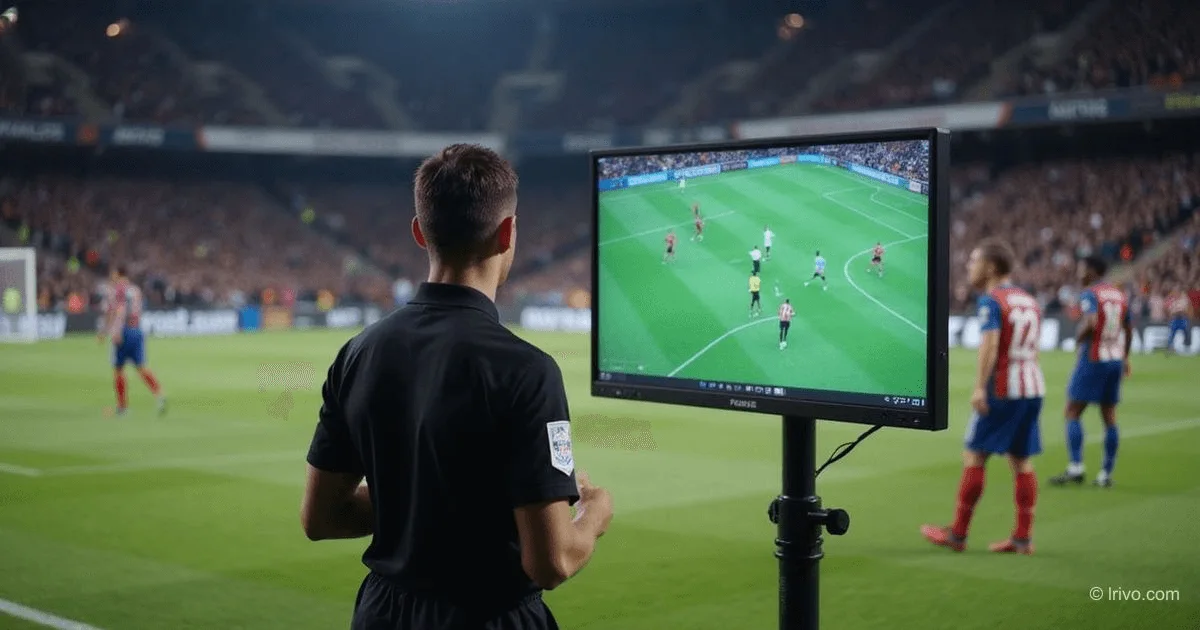
Upon being summoned to the pitch-side monitor, Referee Ferrer re-examined the play with the benefit of slow-motion replays and different perspectives. After a careful review, he confirmed the VAR's interpretation. Ferrer himself stated that "the Barcelona player has control of the ball, plays it and then steps on the opponent; it is a natural dynamic." This crucial understanding led to the overturning of his initial decision. The red card was rescinded, and instead, a yellow card was issued to Martín. This change was monumental, allowing Barcelona to maintain their full squad of eleven players for the remainder of the match, a significant factor in such a tightly contested fixture.
Atlético Madrid's Nico González Sees Red After VAR Intervention
The second major VAR intervention occurred earlier in the game, during first-half stoppage time, and had an equally dramatic impact, this time on Atlético Madrid. Nico González, an Atlético player, found himself in trouble after a challenge on Barcelona's Lamine Yamal. The referee's initial call was to show González a second yellow card, which would have automatically resulted in his dismissal from the game. Again, the VAR system became the focal point of the match.
The VAR officials quickly communicated with Referee Ferrer, recommending he review the incident for a "potential red card for denying a clear goal-scoring opportunity." This specific infringement, often referred to as a "DOGSO" offense, carries a direct red card irrespective of prior bookings. The VAR team's analysis was precise: they highlighted that Yamal was in full control of the ball, moving directly towards the goal, and critically, there were no other defending players positioned to intervene effectively. This meant the foul directly prevented a likely goal-scoring chance, meeting the criteria for a DOGSO offense.
Called to the monitor for the second time, Referee Ferrer closely scrutinized the footage. He concurred with the VAR's detailed assessment, confirming that "the point of contact was clearly outside the penalty area, and the foul is clear; yes, he was preparing to shoot towards goal." He also agreed with the VAR's observation that "there are no defenders around him and the next move was to shoot." Based on this comprehensive review, Ferrer rescinded the second yellow card and, in its place, issued a direct red card to Nico González. This meant Atlético Madrid had to play the remainder of the match, including much of the second half, with only ten players, putting them at a distinct disadvantage.
The Broader Implications of VAR Transparency
These two incidents from the Barcelona vs. Atlético Madrid game serve as powerful examples of VAR's evolving role in football. While the technology often sparks heated debates about game flow and consistency, the release of these audio recordings provides a rare level of transparency. It allows fans, pundits, and players to understand the logic and rationale behind decisions that can swing the outcome of major matches.
The dialogue between the on-field referee and the VAR team highlights the collaborative yet ultimately decisive nature of modern officiating. It's a complex process where human judgment, aided by technological replays, seeks to uphold the spirit of the game and correct 'clear and obvious errors.' This transparency is crucial for building trust in the system, even if it means interrupting the rapid pace of play for several minutes. It underscores that VAR isn't just about identifying fouls, but about interpreting the intent and context of player actions within the strict framework of the Laws of the Game.
Ultimately, the VAR interventions in the Barcelona vs. Atlético Madrid match were central to its narrative and outcome. They showcased how technology, when meticulously applied and interpreted, can significantly alter individual player fates and team strategies. For everyone involved in football, from casual viewers to professional analysts, these behind-the-scenes insights offer a deeper and more nuanced appreciation for the intricate decisions made under immense pressure at the pinnacle of the sport. It's a testament to the ongoing effort to ensure fairness and accuracy in a game loved by billions worldwide.
Key Decisions from the VAR Room:
- Gerard Martín (Barcelona): Initial red card for a challenge was overturned to a yellow card after VAR determined contact was a 'natural dynamic' of playing the ball.
- Nico González (Atlético Madrid): His initial second yellow card was upgraded to a direct red card for denying a 'clear goal-scoring opportunity' after VAR review.
Key Takeaways:
- Transparency in Officiating: The released VAR audio offers unprecedented insight into the detailed decision-making process during high-stakes matches.
- Nuance of Fouls: VAR clarified that Martín's challenge, though impactful, was a natural footballing action, warranting a lesser punishment.
- Denying Goal Opportunities: González's foul was deemed a direct prevention of a clear goal-scoring chance, leading to a straight red card.
- Impact on Game Flow: These interventions, while ensuring correctness, underscore how VAR significantly pauses and influences the rhythm of play.
- Referee-VAR Collaboration: The audio highlights the collaborative yet decisive role of both the on-field referee and the VAR team in critical moments.
— Editorial Team