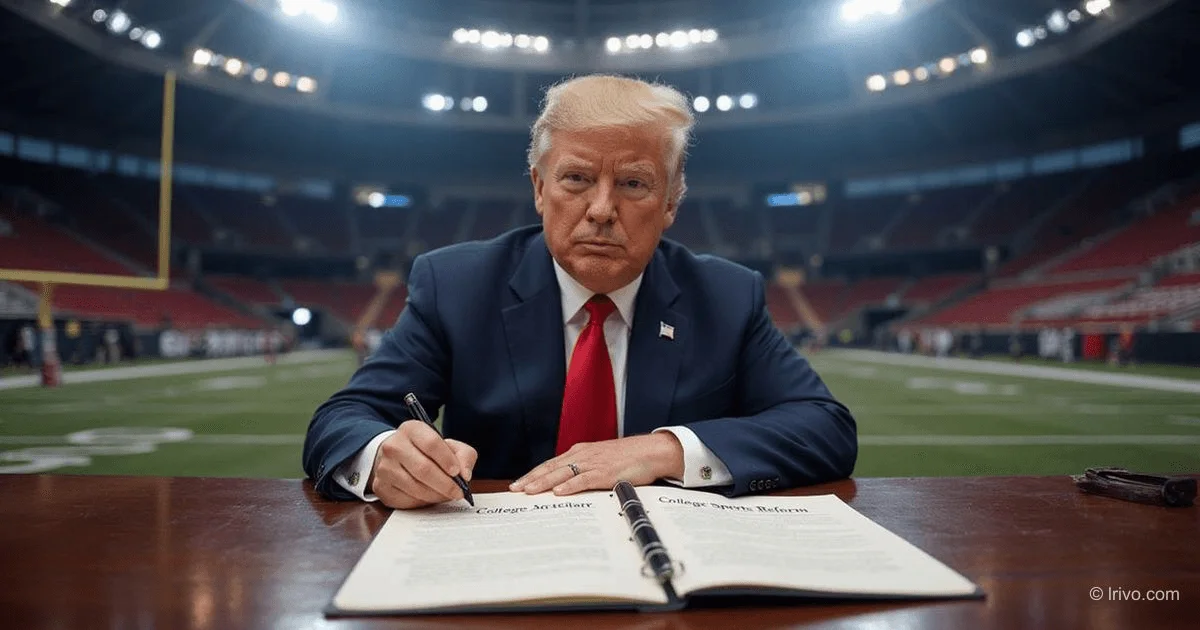
Trump's Executive Order Targets US College Sports System
Former U.S. President Donald Trump is reportedly preparing an executive order that could dramatically reshape the landscape of American university sports. This proposed federal intervention aims to assert greater government control over a multi-billion dollar system long managed by the National Collegiate Athletic Association (NCAA). The initiative is stirring significant debate, with some observers expressing concerns about the potential politicization of college athletics and the independence of educational institutions.
Overhauling Athlete Compensation (NIL)
A core component of Trump's plan focuses on the Name, Image, and Likeness (NIL) system. This policy, which currently allows university athletes to profit from their personal brand, has been a game-changer for student-athletes since its introduction. However, Trump's view is that the current NIL framework lacks standardized rules, leading to what he describes as “financial lawlessness” and chaos in contracts. His administration would seek to impose strict federal standards to regulate these financial arrangements, aiming for more uniformity and control over athlete compensation deals.
Critics, however, are wary of such extensive federal oversight. They argue that imposing strict federal standards on NIL could be seen as direct government interference in university affairs. This raises fundamental questions about the balance of power between Washington and academic institutions, potentially paving the way for political influence over decisions that have historically been left to universities and sports bodies.
Player Mobility and Funding Implications
Another significant change targets player mobility with the proposed reinstatement of a 'one-time transfer' policy. Under this rule, a student-athlete would be allowed one free transfer between universities without penalty. Any subsequent transfer, however, would require the player to sit out for a full year, impacting their eligibility and playing time. Supporters of this policy believe it would reduce “competitive chaos” by discouraging frequent transfers, while opponents view it as a step backward for player freedom, reverting to more restrictive past policies that limited athlete agency.
The executive order's reach also extends to the financial stability of university athletic programs. Trump proposes linking federal funding and university grants to how well institutions comply with these new, federally-mandated policies. This means universities that do not adhere to the new rules could face significant cuts in financial support. Such a measure could threaten the operational stability of sports departments, potentially leading to a funding crisis for non-compliant schools and forcing widespread adherence.
Additionally, the plan includes a new eligibility framework dubbed '5-for-5'. This system would grant players five years to complete five seasons of play. The intention behind this is to standardize participation schedules, particularly in light of disruptions caused by the COVID-19 pandemic. This aims to create a more consistent and predictable path for athletes throughout their collegiate careers, ensuring a uniform approach to eligibility across the board.
Redefining the State-Sport Relationship
If implemented, these proposed changes would represent a fundamental shift in the governance of U.S. collegiate sports. Beyond just modifying rules for athletes and institutions, Trump's executive order could redefine the relationship between the federal government and sports in America. This initiative has the potential to significantly impact the future of university competition, its financial structures, and the autonomy of educational sports programs, potentially setting a precedent for broader governmental involvement in sports administration.
Key Takeaways:
- Federal Intervention: Former President Donald Trump plans an executive order to exert federal control over US university sports, traditionally governed by the NCAA.
- NIL Regulation: The order seeks to impose strict federal standards on Name, Image, and Likeness (NIL) deals, citing current "financial lawlessness" as a concern.
- Transfer Rules: A 'one-time transfer' policy would be reinstated, allowing one free transfer but requiring a year out for subsequent moves.
- Funding Impact: Universities might face federal funding cuts if they do not comply with the new policies, potentially creating financial strain.
- Eligibility Standard: A '5-for-5' eligibility system aims to standardize five seasons of play over five years, especially post-pandemic.
— Editorial Team