Football's Vanishing Act: The Decline of the Traditional No. 9 Striker
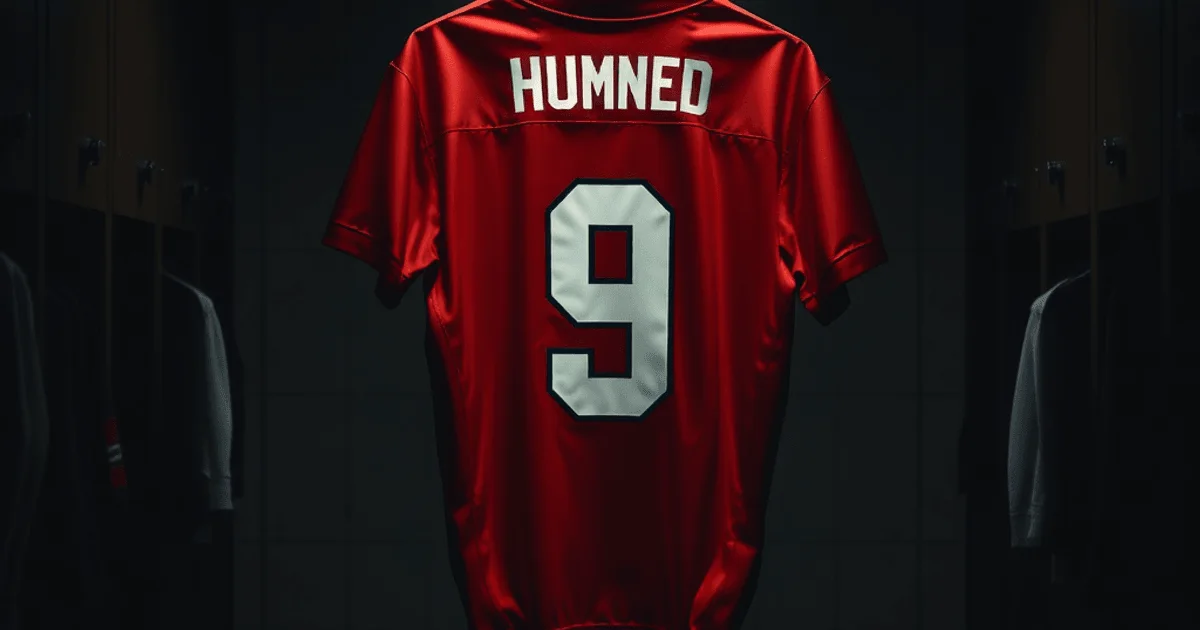
Football has always been a game of evolution, but few positions have seen as dramatic a shift as the traditional No. 9 striker. Once the undisputed focal point of attacks and the primary source of goals, this classic forward role is increasingly becoming a relic of a bygone era. Modern tactics, youth development changes, and a redefinition of attacking roles have all contributed to a significant decline in their presence and output on the pitch.
The Golden Era of Goalscorers
Cast your mind back to the late 1990s, and you'll recall partnerships that terrorized defenses. Take Andy Cole and Dwight Yorke at Manchester United during their treble-winning 1998-99 season. Despite not knowing each other well initially, their synergy was immediate, culminating in 53 goals between them. That season, the top ten goal scorers in the Premier League were all out-and-out strikers, a testament to their dominance. This period exemplified an era where the centre-forward was king, a direct and prolific goal-getter.
The Numbers Don't Lie: A Statistical Drop
Fast forward to today, and the landscape is dramatically different. Statistical analysis reveals a stark decline in striker influence. Two decades ago, traditional strikers accounted for a hefty 41.6% of all Premier League goals, netting 387 out of 931. This season, that figure has plummeted to just 25.9%, with 291 goals from 845 total. Individual standout performances, like hat-tricks, have also become rarer. Between 2007 and 2012, centre-forwards managed ten or more hat-tricks in four out of five seasons. In the last nine seasons combined, this benchmark has been reached only once, highlighting a significant drop in individual goal-scoring prowess from these specialized players.
England's Striker Shortage
The scarcity of traditional No. 9s is particularly evident when looking at national teams, such as England. Beyond Harry Kane, who will be 33 shortly after the upcoming World Cup, viable options are alarmingly thin. Recent call-ups like Dominic Solanke, with just three league goals in an injury-hit season, and Dominic Calvert-Lewin, with ten, failed to impress. Ollie Watkins, with nine league goals, is next in line, but the depth is concerning. Without Kane, England's attacking struggles were laid bare in recent friendlies: a single goal scored by a defender against Uruguay and a blank against Japan, despite eight shots on target across both games. Since his debut in 2015, Kane has been directly involved in 32% of England's goals, with 78 goals and 19 assists, underscoring his irreplaceable value. The prospect of his injury or retirement leaves a significant void.
Tactical Evolution: The Rise of the False Nine
So, what's behind this dramatic shift? Former England international Emile Heskey, a traditional centre-forward himself, suggests the role is "no longer a sexy position." He points to the modern game's possession-based approach, where the striker's primary task often involves creating space for attacking midfielders or wingers, rather than being the direct recipient of chances.
Tactical innovations have played a huge part. José Mourinho's successful use of a solitary striker in a 4-2-3-1 formation at Chelsea in 2004 marked an early departure from strike partnerships. Pep Guardiola took this even further, famously reimagining football without a conventional striker. At Barcelona, he deployed Lionel Messi as a 'false nine' – a central forward who drops deep, confusing defenders and opening up space. Guardiola has even experimented with two false nines at Manchester City. While players like Erling Haaland represent a more traditional, prolific No. 9, even he has had to adapt his game to fit Guardiola's fluid systems.
The Impact on Youth Development
The changes aren't just happening at the top level; they've seeped into youth development and training methodologies. René Meulensteen, who coached under Sir Alex Ferguson at Manchester United, recalls dedicating 15 to 30 minutes daily to finishing drills with strikers. Today, he notes that training is far more generalized, with a heavy emphasis on possession and strength and conditioning, leaving little time for specialized striker development. Meulensteen argues that young strikers "don't get developed" properly, advocating for more specific training for the position.
Dean Whitehouse, a former Manchester United academy coach, echoes this sentiment. He observes that youth teams often mirror first-team formations, which are increasingly fixed and dictated by club executives. This approach, he believes, stifles the development of "impromptu, natural strike partnerships." Whitehouse laments the loss of "vertical thrust" in teams, suggesting an overemphasis on possession for its own sake. He emphasizes the need for training that focuses on No. 9s playing with their back to goal, making opposite runs, and receiving early balls to cultivate "real No 9 predators." Without this specialized attention, the buildup play becomes "too sanitised."
A Glimmer of Hope for the Future
Despite the current challenges, there's a belief that the traditional No. 9 isn't entirely doomed. A past initiative by Gareth Southgate offers a blueprint. In 2011, as the FA's head of youth development, he championed smaller-sided games at youth level to ensure technically gifted, smaller players weren't overlooked in favor of more physical ones. This strategic alignment between the FA and Premier League academies could, in theory, pave the way for a resurgence.
Dean Whitehouse suggests that a shift could be triggered by success. If a first-team manager achieves significant trophy success with a lethal strike partnership, others will inevitably follow suit. This renewed demand would then drive changes in training practices, leading to a new generation of specialist No. 9s. The football world is cyclical, and what's out of fashion today could easily become the next big trend.
Key Takeaways:
- The traditional No. 9 striker has seen a significant decline in influence and goal-scoring output over the past two decades.
- Premier League data shows striker goal contributions have dropped from over 40% to just 25.9%.
- Tactical shifts, such as the rise of the false nine and possession-based football, have redefined the striker's role, making it less direct.
- Youth development programs now prioritize generalized training and often mirror first-team formations, neglecting specialized striker development.
- Despite the current trend, there's potential for the No. 9 to make a comeback if successful tactical innovations involving strike partnerships emerge.
Conclusion:
The journey of the traditional No. 9 striker from football's celebrated hero to an endangered species reflects the sport's dynamic evolution. While the modern game demands versatility and tactical flexibility, the pure goalscorer's instincts remain invaluable. Whether football will rediscover its love for the classic centre-forward or continue its tactical experimentation remains to be seen, but the conversation around their decline highlights a fascinating period of change in the beautiful game.
— Editorial Team