High-Profile Resignation at FIFA: 2026 World Cup Referee Suspended for Bribery
FIFA has announced a two-year ban for a referee who officiated matches at the World Cup in Qatar. The referee was found guilty of accepting a large bribe for match-fixing, sparking one of the biggest corruption scandals in the organization in recent years.
Corruption Scandal at FIFA: 2026 World Cup Referee Suspended for Match-Fixing
Zurich / Paris, June 6. The International Federation of Association Football (FIFA) has announced a two-year ban for a referee who officiated matches at the World Cup in Qatar. The referee was found guilty of accepting a large bribe for match-fixing, making it one of the biggest corruption scandals in the organization in recent years.
This decision, handed down by the adjudicatory chamber of FIFA's Independent Ethics Committee in late May 2026, has once again stirred memories of the infamous "FIFAGate" era, when top officials of world football were indicted one after another. Despite promises of reform, the shadow of corruption continues to haunt the organization as it prepares for the 2026 World Cup in North America.
Although the referee's name was not immediately disclosed by FIFA's press office, sources familiar with the investigation claim it is a referee from an African country who was on the extended list of reserve referees for the 2022 World Cup. This article uses data from AP investigations and FIFA Ethics Committee documents.
Main Event: Match-Fixing Scheme and Unfair Play
According to the investigation, the corruption scheme was uncovered purely by chance—after a series of suspicious bets totaling over $500,000 were flagged by FIFA's monitoring system during a group stage match of the 2022 World Cup in Qatar. Analysts noticed an abnormal spike in bets on a specific number of yellow cards and penalties within a certain time frame of the match, indicating a "fixed" game.
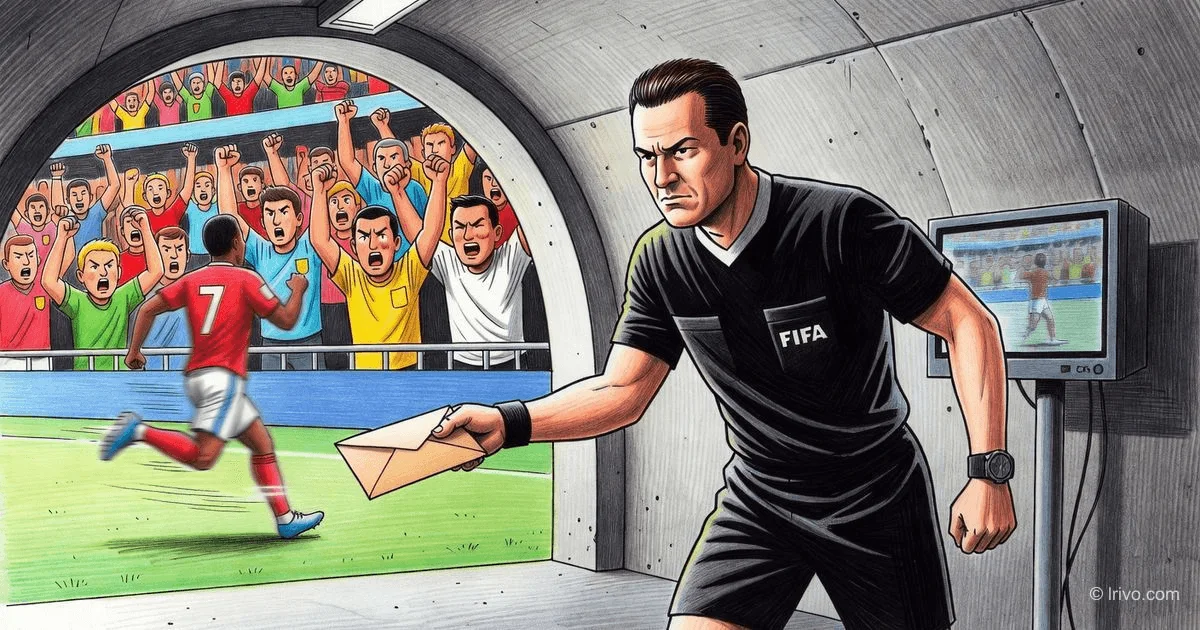
The investigation, conducted jointly with Interpol's match-fixing unit, found that the referee had colluded with an Asian criminal group specializing in betting manipulation. The referee received a bribe of €150,000 to influence the match outcome.
This incident is the biggest referee scandal since the case of Nigerian referee Ibrahim Chaibou, who received a lifetime ban in 2018. Chaibou, known for awarding dubious penalties in friendly matches, was described by former FIFA investigator Chris Eaton as "the most corrupt referee football has ever seen."
Details and Statistics: Shocking Numbers
The disciplinary case files contain shocking details. The referee did not just take money—he managed the game in real time via an earpiece while under the watch of bookmaker syndicate representatives seated in the stands.
- Bribe amount: €150,000, transferred through shell companies in an offshore zone.
- Bets: Approximately $1.2 million was wagered on the match, of which about 40% was deemed suspicious.
- Sanctions: A two-year ban (lenient compared to the lifetime bans handed to other figures in the past), a hefty fine of 50,000 Swiss francs (about $55,000). The referee must also undergo re-certification if he wishes to return to work after the ban.
FIFA emphasizes that this decision resulted from fruitful cooperation with the FBI, which has resumed close work with the organization ahead of the 2026 World Cup. The U.S. Bureau has jurisdiction because some transactions passed through U.S. banks, and the next World Cup will be held partly in North America.
Context and Significance: The Return of "FIFAGate"
Today's scandal painfully recalls the dark days of 2015, when the FBI arrested high-ranking FIFA officials at a Zurich hotel as part of an investigation into bribes totaling over $200 million. Figures like Jeffrey Webb and Juan Ángel Napout were prosecuted, leading to the downfall of longtime president Sepp Blatter.
This case also echoes a recent high-profile affair in Argentina, where President Javier Milei entered a public conflict with the head of the local football association, Claudio Tapia, accused of speculating with tickets for the 2026 World Cup. Although Tapia's case involves a different charge (selling complimentary tickets allocated to the Association), it demonstrates a general trend: football officials are once again at the center of financial scandals a month before the main tournament.
Symbolically, the news of the two-year ban came just as PSG president Nasser Al-Khelaifi, who is also linked to an investigation into corruption in the selection of hosts for the 2026 and 2030 World Cups (the case of bribing FIFA Secretary General Jérôme Valcke), continues to insist on his innocence, claiming he has "nothing to hide."
What's Next: Reputational Blow Ahead of the 2026 World Cup
The consequences of this scandal could be far-reaching. First, the quality of officiating at the past World Cup is called into question. Appeals from national associations that lost matches officiated by this referee may be reviewed (though match results are rarely overturned under regulations).
Second, FIFA will have to tighten security measures ahead of the World Cup in the United States, Mexico, and Canada. The organization has already announced the creation of a special "Integrity Task Force" that will monitor betting markets in real time across all 104 matches of the upcoming tournament.
"This is a signal," said a FIFA representative at an emergency press conference. "No one has the right to question the integrity of the game. We will continue our cooperation with the FBI and national police to root out corruption."
Analysis: Rotten System or Isolated Incident?
The editorial team leans toward the view that this is just the tip of the iceberg. The scheme uncovered now is identical to the tactics of the infamous Singaporean match-fixer Wilson Raj Perumal, who in 2010-2011 set "records" for fixing friendly matches using referees like Chaibou.
The only difference is that this time, the target was not a run-of-the-mill friendly but a match in the group stage of the 2022 World Cup. This suggests that criminal groups have reached a new level. If a bribe was given to a referee for working at a World Cup, then the stakes in the illegal betting world must have been in the millions.
There was no lifetime ban for the ethics violator—only two years. However, for the referee, this is effectively the end of his career: by the time the ban ends, he will be too old to return to FIFA's elite list.
Editorial Verdict
This scandal deals a devastating blow to the reputation of the World Cup in Qatar, which was already frequently criticized for human rights abuses. Now, "unfair play on the field" has been added to the list. For FIFA, this is an opportunity to show that it is changing, but the two-year ban without criminal prosecution (the referee is currently free) looks like a half-measure.
The real test for Gianni Infantino will come in a few weeks when the World Cup kicks off in North America. If a similar incident occurs under the watch of the FBI, it could trigger a new wave of resignations in the upper echelons of football governance. Football is once again on the brink—this time not because of politics, but because of the sheer greed of men in black.
— Editorial Team