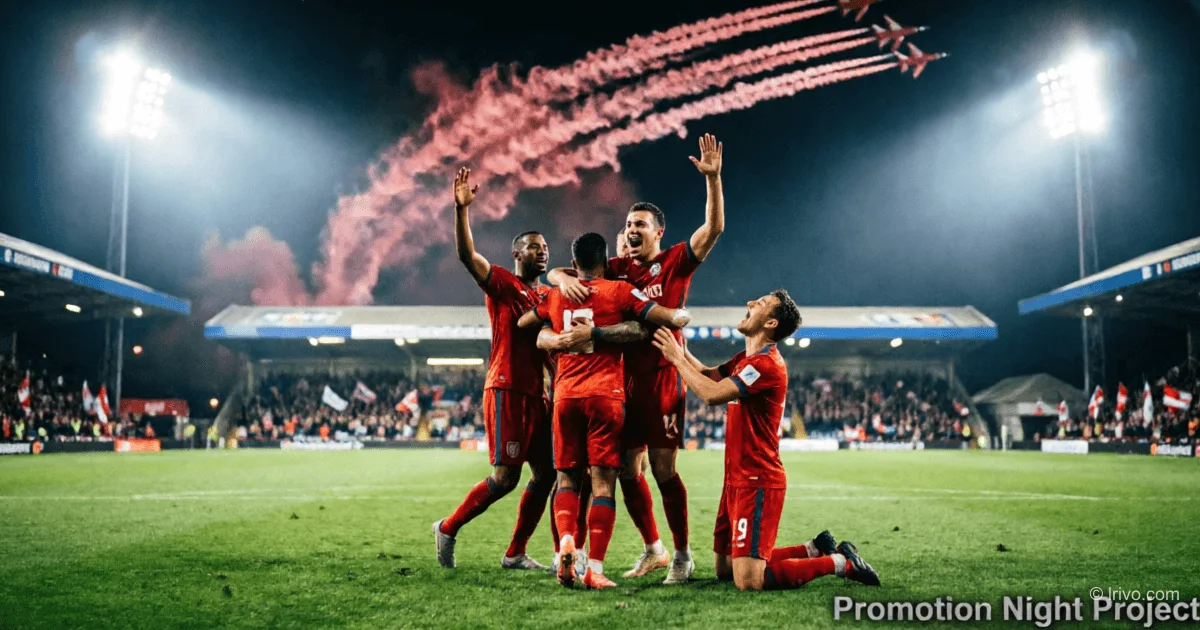
How Lincoln City’s Unconventional Thinking Fueled Their Championship Promotion
Lincoln City are heading back to the Championship for the first time since 1961—and they didn’t get there by playing it safe. With one of League One’s smallest budgets, the Imps leaned into creativity, psychology, and even lessons from the Royal Air Force’s Red Arrows to outthink wealthier rivals.
Head coach Michael Skubala—a former England futsal boss turned senior manager—has built a team that blends high-energy pressing, technical precision, and tactical intelligence. His background spans grassroots coaching, youth development at top academies, and academic work in sport science. That mix has shaped a unique identity for Lincoln, one that borrows from futsal’s quick transitions and tight spaces while staying grounded in practical football logic.
Learning from Elite Pilots
It might sound far-fetched, but Lincoln have literally studied how the Red Arrows operate. Based just miles from Sincil Bank, the RAF aerobatic team flies in formation at hundreds of miles per hour with mere millimetres between wingtips. Skubala sees parallels: both require extreme focus, split-second decision-making, and flawless teamwork under pressure.
“We go down there and learn how their pilots prepare,” he explained. “It’s not about being different for the sake of it—it’s about finding ways to make the boat go faster.”
This mindset extends beyond aviation metaphors. Lincoln were early adopters of AI-driven set-piece analysis, using data to refine dead-ball routines long before it became mainstream in the lower leagues.
A Club Built on Grit and Innovation
Lincoln’s rise isn’t accidental. Saved by fans in 2002 after administration, the club climbed from the National League to League One with two promotions in three years—including a historic FA Cup quarter-final run in 2017 as a non-league side.
Ownership has evolved too. South African investor Clive Nates arrived in 2016, followed by American involvement: Landon Donovan joined as an adviser in 2021, and Ron Fowler—former co-owner of MLB’s San Diego Padres—became majority shareholder this season. Despite new backing, the club hasn’t abandoned its frugal, inventive ethos.
Skubala points to Brentford as a blueprint: a smaller club that used data-led recruitment and clear identity to reach the Premier League. “We’re not Man United,” he said. “We look at clubs like Brentford as aspirations.”
The Players Who Embodied the Journey
Promotion was sealed in dramatic fashion: Jack Moylan scored a stoppage-time winner against Reading. The Irish forward, signed from Shelbourne in January 2024, missed three months after ankle surgery but returned to finish as joint top scorer alongside Reeco Hackett.
For Skubala, Moylan’s goal symbolized everything about Lincoln’s path: resilience, smart recruitment, and belief in second chances. “He epitomises the journey of the club,” the manager said.
The squad balances young talent with experienced heads—a deliberate strategy to accelerate development without sacrificing stability. It’s a model that’s working, and one they’ll need to double down on in the Championship.
Key Takeaways
- Lincoln City earned promotion to the Championship through innovation, not spending power.
- Head coach Michael Skubala blends futsal principles, psychological preparation, and elite performance insights (including from the Red Arrows) into his coaching philosophy.
- The club uses AI for set-piece optimization and prioritizes identity over imitation.
- Ownership includes international investors, but the operational approach remains grounded in sustainability and creativity.
- Player development focuses on pairing emerging talent with seasoned professionals—a system validated by Jack Moylan’s breakthrough season.
As they prepare for life in the second tier, Lincoln aren’t planning to change course. Their edge has never been money—it’s mindset. And if flying close to the sun requires nerves of steel, the Imps have already proven they’ve got them.
— Editorial Team