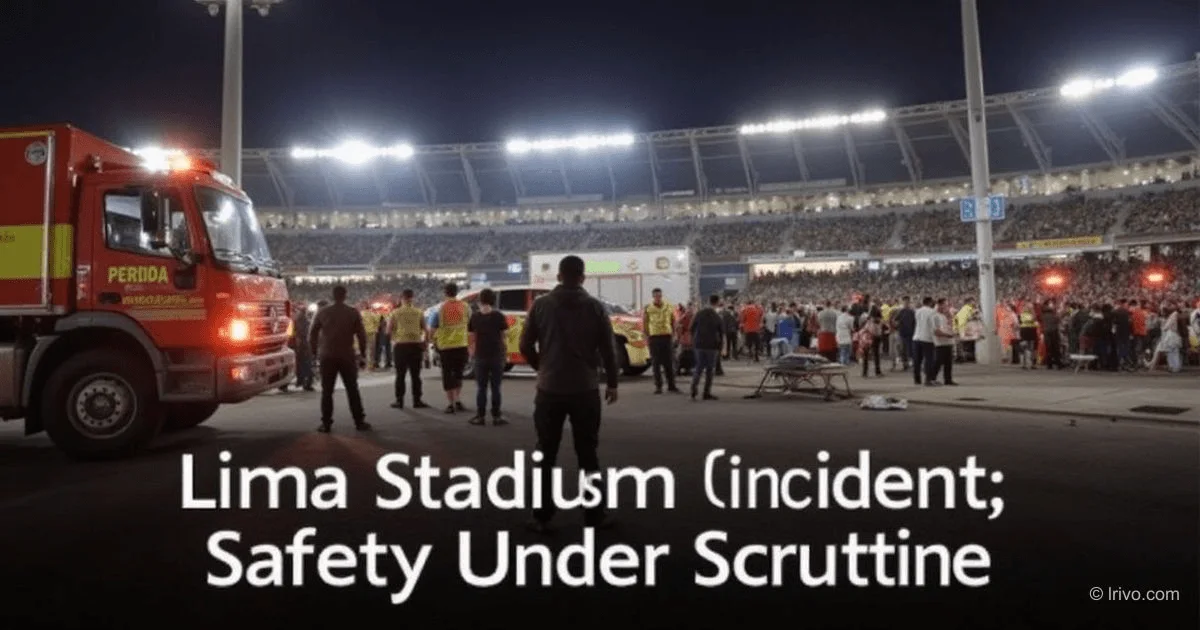
Peruvian Football Tragedy: One Dead, Dozens Injured Ahead of Lima Derby
A tragic incident unfolded in Lima, Peru, leaving one person dead and 47 injured during a public gathering at the Alejandro Villanueva stadium. This unfortunate event occurred just hours before a highly anticipated derby match, prompting immediate official responses and a venue change for the game.
The incident, which took place on a Saturday, cast a somber shadow over the capital's football scene. Peru's Ministry of Health confirmed the casualties, detailing that among the 47 injured, three were minors. A significant number, 39 individuals, required hospitalization, with three of them reported to be in critical condition, highlighting the severity of the situation. Health Minister Juan Carlos Velasco expressed sorrow over the fatality and the widespread injuries, though specific details regarding the cause of the incident were not immediately released.
Initial reports and public concern quickly centered on the possibility of a structural collapse at the stadium, particularly concerning one of the stands. However, both the host club, Alianza Lima, and fire service officials swiftly moved to debunk these rumors. Alianza Lima issued a statement via their platform, confirming that the tragedy was not due to any structural defects or collapsing walls within the facility. This clarification was crucial in addressing widespread fears about stadium integrity.
Official Clarifications and Safety Assurances
Further reinforcing these assurances, a fire service official provided a direct assessment, stating unequivocally that "the structure of the south stand is in good condition." This official also specifically noted that no walls had collapsed, nor had any structural elements fallen onto the pitch. Such rapid and clear communication from authorities aimed to prevent misinformation and reassure the public about the safety of the venue's infrastructure, even as investigations into the precise cause of the crowd incident likely began. The focus quickly shifted to understanding how such a large number of people could be injured in a non-structural event.
The Peruvian Football League, faced with the immediate aftermath of the tragedy, made a critical decision regarding the upcoming derby. The highly anticipated match between Alianza Lima and Universitario, a fixture known for its intense rivalry and passionate supporters, was announced to proceed as planned, but at an alternative stadium within the capital. This decision reflects a balance between acknowledging the gravity of the incident and maintaining the sporting calendar, while prioritizing the safety and well-being of fans by relocating to a venue deemed secure. The move ensured that while the game would go on, it would do so under new, safer conditions, away from the site of the recent incident.
Broader Implications for Stadium Safety
This incident underscores the constant challenges in managing large public gatherings, especially passionate sporting events. Stadium safety extends beyond structural integrity to encompass effective crowd control, emergency response planning, and clear communication protocols. When thousands converge for a single event, even minor disruptions can escalate rapidly, leading to serious consequences.
Authorities and club management worldwide continuously review and update their safety measures to prevent such tragedies. This recent event in Lima serves as a stark reminder of the unpredictable nature of crowd dynamics and the paramount importance of robust safety frameworks that can adapt to unforeseen circumstances. It highlights the need for continuous vigilance and investment in infrastructure, but also in human resources trained for crisis management.
The well-being of spectators is a fundamental responsibility for event organizers. From adequate entry and exit points to clear signage, medical facilities, and trained personnel, every aspect contributes to a safe environment. Post-incident reviews are crucial for learning and implementing improvements, ensuring that future events can be enjoyed without fear. The focus now remains on the recovery of the injured and supporting the family of the deceased, while the football community grapples with the impact of this sad day.
Key Takeaways:
- A tragic incident at Lima's Alejandro Villanueva stadium resulted in one death and 47 injuries before a major derby.
- Initial fears of a stand collapse were explicitly denied by both the club and fire service officials, who confirmed structural integrity.
- The injured included three minors, with 39 people hospitalized and three in critical condition.
- The highly anticipated derby match between Alianza Lima and Universitario was relocated to another stadium in the capital but will proceed.
- The event highlights the critical importance of robust crowd management and emergency protocols at large sporting events.
— Editorial Team