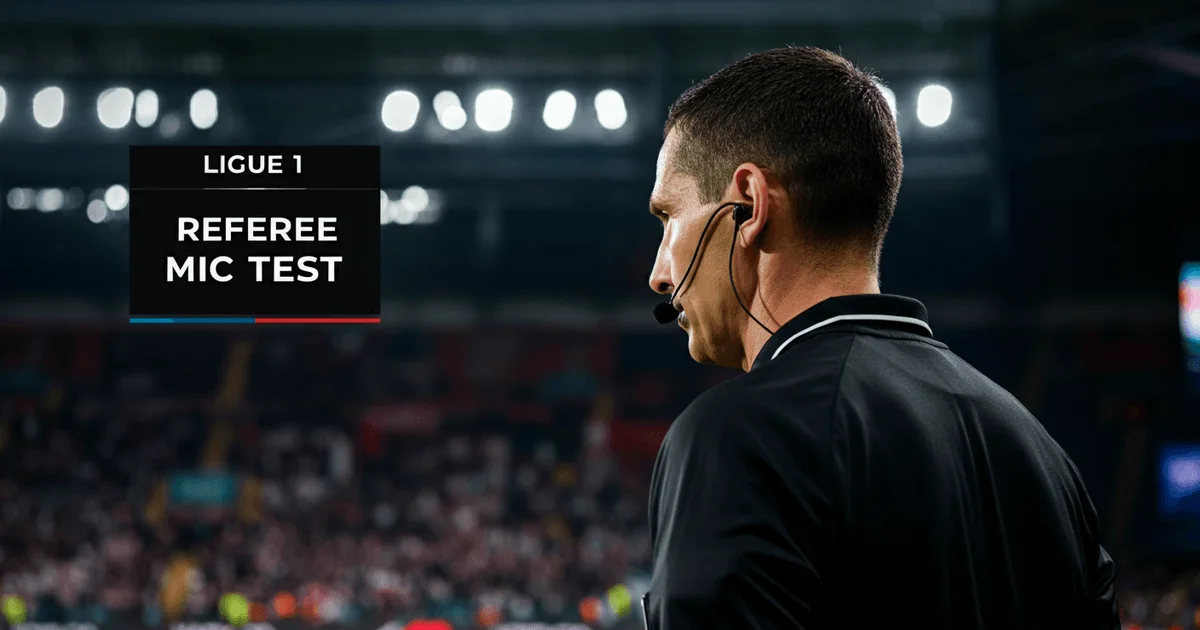
Ligue 1's Referee Mic Test: A Quiet Debut for VAR Transparency
French football recently took a step towards greater transparency by testing referee microphones during a Ligue 1 match, aiming to broadcast VAR decisions to fans. However, the inaugural trial at the Parc des Princes, during the game between Paris Saint-Germain and Toulouse, didn't quite deliver on its main promise. The system wasn't used for its intended purpose, not due to a technical failure, but simply because the Video Assistant Referee (VAR) wasn't called into action throughout the match.
The Unheard Explanations
The highly anticipated test saw referee Eric Wattelier equipped with a microphone, intended to explain any VAR rulings to the 47,000 spectators present. While the crowd did hear Wattelier's pre-match greetings to team captains Achraf Hakimi of PSG and Rasmus Nicolaisen of Toulouse, that was the extent of the live audio broadcast. The core function of the test – providing real-time explanations for critical in-game decisions – remained untapped because no incidents required VAR intervention during the 90 minutes. This meant the primary objective of enhancing fan understanding of contentious calls was put on hold for this particular fixture.
This outcome highlights a peculiar challenge in testing such systems: their functionality is entirely dependent on specific game situations arising. Without a VAR check, there's no opportunity to demonstrate the system's ability to clarify decisions. PSG ultimately won the match 3-1, but the scoreline wasn't the main talking point for those interested in the future of football broadcasting and refereeing. The focus remained on the missed opportunity to hear direct communication from the official regarding a VAR review.
Why Referee Mics Matter for Football
The push for referee microphones in football is part of a broader global trend towards increasing transparency and improving the fan experience across various sports. Leagues worldwide are exploring ways to make complex decisions, especially those involving VAR, more understandable for both stadium attendees and television viewers. This initiative aims to demystify the decision-making process, reduce controversy, and potentially foster greater trust in officiating.
Here are some key reasons why broadcasting referee audio is gaining traction:
- Enhanced Transparency: Fans get direct insight into why a decision was made, rather than relying on commentators or post-match explanations.
- Improved Understanding: Complex rules and VAR protocols become clearer when the referee explains them in real-time.
- Reduced Frustration: Knowing the reasoning behind a call can mitigate fan and player frustration, even if they disagree with the outcome.
- Engagement: It adds another layer of engagement for spectators, making them feel more connected to the game's unfolding drama.
Other major sports, such as rugby and American football (NFL), have successfully integrated live referee audio for years, allowing fans to hear officials' calls and explanations. This practice has largely been met with positive feedback, as it enhances the viewing experience and provides valuable context. Football, traditionally more resistant to such innovations, is now slowly catching up, recognizing the potential benefits.
The Road Ahead for Ligue 1 and Transparency
Despite this initial, quiet test, the commitment to exploring referee communication tools in Ligue 1 remains. This particular match was an isolated trial, with no other games in the 28th matchday scheduled to use the device. This suggests a cautious, phased approach to implementing such significant changes. Future tests will undoubtedly seek scenarios where VAR is actively involved to properly assess the system's effectiveness and the audience's reception.
The ultimate goal is to find a balance between providing clarity and not disrupting the flow of the game or adding undue pressure on officials. The experience of other sports demonstrates that with proper implementation and training, live referee audio can be a valuable addition. Ligue 1's journey towards more transparent refereeing has just begun, and while this first step was more of a whisper than a shout, it signals an important direction for the sport.
Key Takeaways
- Ligue 1 conducted its first test of referee microphones to broadcast VAR explanations during a PSG vs Toulouse match.
- The test's primary goal was not achieved because VAR was not used during the game, meaning no in-game explanations were broadcast.
- Only pre-match greetings from the referee were heard by the fans at the Parc des Princes.
- This initiative is part of a wider trend in sports to increase transparency and fan understanding of referee decisions, especially with VAR.
- Future tests will be needed to fully evaluate the system's potential when VAR is actively involved in a match.
— Editorial Team