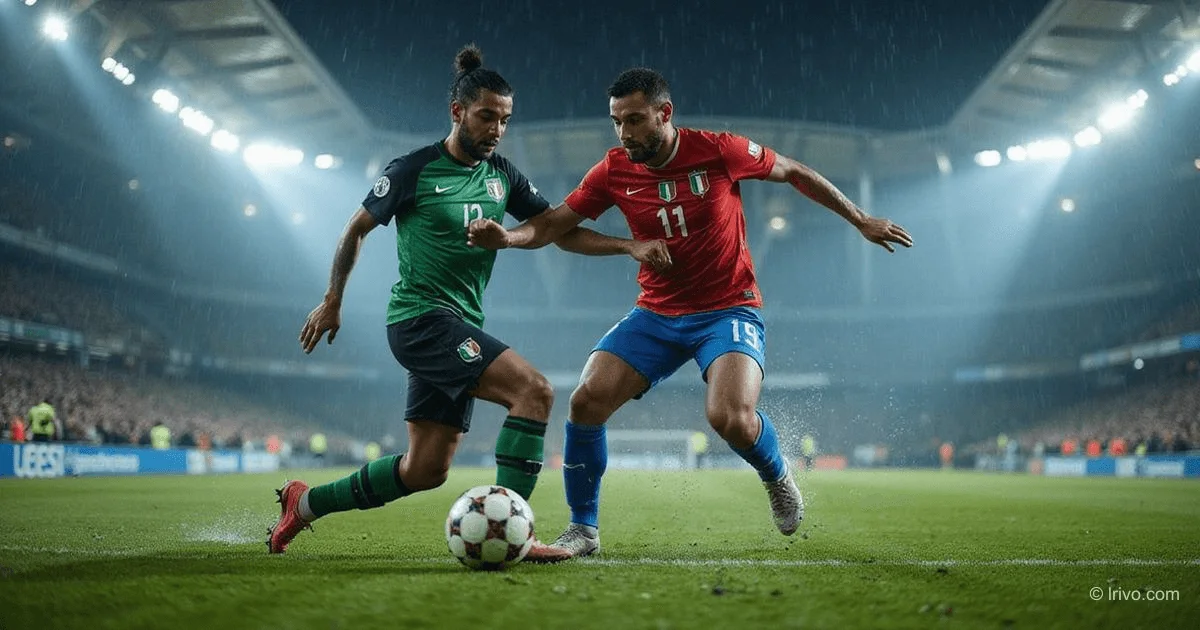
Italy's World Cup Dream Crumbles Amid Bonus Talks
The Italian national football team, a perennial powerhouse, has once again failed to qualify for the World Cup, a stunning defeat reportedly preceded by discussions among players regarding qualification bonuses. This marks a truly disheartening chapter for the Azzurri, who now face the harsh reality of missing football's biggest tournament for the third consecutive time.
The Controversial Pre-Match Discussion
Just before their critical play-off final against Bosnia and Herzegovina, several Italian international players reportedly engaged in discussions about the size of a potential World Cup qualification bonus. The sum in question was approximately 300,000 euros, intended to be distributed among 28 players, which would equate to a little over 10,000 euros each, paid by the Italian federation. This conversation, occurring right before a make-or-break match, has raised questions about the team's focus and priorities at such a pivotal moment.
Such financial incentives are common in professional sports, but their timing can be crucial. Bringing up bonuses immediately before a high-stakes game can be perceived as a distraction, potentially shifting the players' focus from national pride and competitive spirit to monetary reward. For a team representing a nation with a rich footballing history, this kind of pre-match chatter can be particularly damaging to morale and public perception.
Gattuso's Stance and the Match Day Reality
Former head coach Gennaro Gattuso, a figure known for his fierce passion and commitment, reportedly found these bonus discussions highly inappropriate. He reminded the squad in the dressing room that their primary focus should be on earning qualification on the pitch through their performance and dedication, not on financial rewards. This intervention highlights a classic conflict in sports: the balance between professional compensation and intrinsic motivation driven by national honor and sporting achievement.
Despite Gattuso's admonition, the match itself did not go in Italy's favor. They drew 1-1 against Bosnia and Herzegovina in Zenica, a result that pushed the game to a penalty shootout. Ultimately, Italy succumbed to a 1-4 defeat in the penalties, sealing their fate and extinguishing their World Cup hopes yet again. The outcome was a bitter pill for fans and players alike, intensifying scrutiny on the team's preparation and mindset.
A Historic Low for the Azzurri
This failure to qualify for the World Cup is not an isolated incident; it represents a significant and painful streak. Italy will now miss the tournament for the third consecutive edition, an unprecedented low for a nation that has lifted the World Cup trophy four times. This extended absence from the global stage is a stark indicator of deeper issues within Italian football, from youth development to national team management and player psychology. The implications for the sport's popularity and funding in Italy are substantial.
For a country where football is deeply ingrained in the national identity, this repeated disappointment is heartbreaking. It prompts a nationwide reflection on what needs to change to restore the Azzurri to their former glory. The pressure on the Italian Football Federation (FIGC) to implement significant reforms will undoubtedly intensify, as fans demand answers and a clear path forward.
Key Factors in Italy's World Cup Qualification Failure:
- Pre-match bonus discussions: Allegations of financial focus before a crucial game.
- Lack of decisive performance: Inability to secure a win against Bosnia and Herzegovina in regular play.
- Penalty shootout defeat: The ultimate downfall in the high-pressure situation.
- Broader team cohesion and focus issues: Suggests underlying problems beyond a single match.
Money vs. Motivation: The Deeper Debate
The incident reignites the perennial debate in professional sports about the role of financial incentives. While fair compensation is expected, the timing and emphasis of bonus discussions can have a profound psychological impact. For national teams, the intrinsic motivation of representing one's country, achieving sporting glory, and bringing joy to millions of fans is often considered paramount. When monetary concerns overshadow these ideals, it can affect team unity, public perception, and ultimately, on-field performance.
It raises questions about whether players are primarily driven by personal gain or by the collective ambition to win for their nation. In an era of multi-million-dollar club contracts, the relatively smaller national team bonuses might seem less significant, yet their discussion at critical junctures can symbolize a misplaced priority. This situation serves as a cautionary tale for other national federations and teams worldwide.
Looking Ahead: Rebuilding Italian Football
Italy's repeated World Cup absence necessitates a comprehensive overhaul of its footballing structure. This includes a renewed focus on youth academies, talent identification, and creating a robust pathway for young players to reach the national team. There must also be a critical evaluation of coaching philosophies, player management, and the culture surrounding the national squad. Restoring national pride and a winning mentality will require more than just tactical adjustments; it demands a fundamental shift in approach.
The road back to the World Cup will be long and challenging, but it is essential for the future of Italian football. The federation, coaches, and players must collaborate to rebuild trust with the fans and demonstrate an unwavering commitment to sporting excellence above all else. This current low point could, paradoxically, become the catalyst for meaningful and lasting change.
Key Takeaways:
- Italy failed to qualify for the World Cup for the third consecutive time after losing a play-off to Bosnia and Herzegovina.
- Pre-match discussions among players about qualification bonuses reportedly caused controversy.
- Former coach Gennaro Gattuso criticized the timing of these financial talks, emphasizing the need to earn qualification first.
- The incident highlights a potential conflict between financial incentives and intrinsic motivation in national team sports.
- Italy faces a significant challenge to rebuild its national football program and restore its international standing.
— Editorial Team