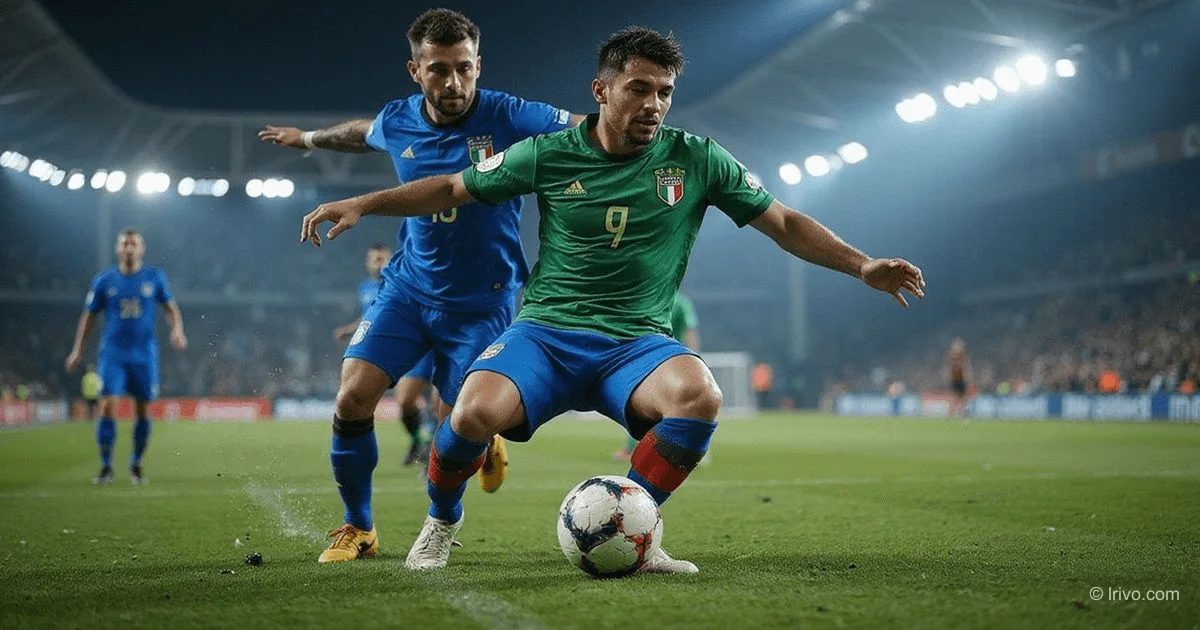
Italy's World Cup Dream Crumbles: Gattuso Resigns After Play-off Defeat
Gennaro Gattuso has stepped down as Italy's national team manager following their failure to qualify for the 2026 FIFA World Cup, marking the third consecutive time the Azzurri will miss the tournament. This decision comes amidst a broader leadership shake-up within the Italian football federation, signaling a significant crisis for the sport in the country.
Gattuso's resignation was confirmed by the Italian federation, a move mutually agreed upon after the team's decisive loss to Bosnia and Herzegovina in the World Cup play-off final. He had been appointed in June 2025 with the explicit goal of securing a spot in the 2026 tournament, a target he ultimately couldn't achieve. His tenure was brief, spanning just eight matches.
During his short time at the helm, Gattuso's record stood at six wins and two defeats. Despite a generally positive win rate, the critical loss in the play-off proved to be the undoing of his management. The pressure on the team and the federation had been immense, especially given Italy's recent history of missing out on football's biggest stage.
A Cascade of Departures
The coaching change isn't the only significant development within Italian football. Prior to Gattuso's resignation, Gabriele Gravina, the president of the Italian federation and a strong supporter of Gattuso, also stepped down. His departure came amid a significant media outcry and strong criticism regarding his leadership and the national team's performance.
Following Gravina's exit, Gianluigi Buffon, who served as the head of delegation, also resigned from his role. These high-profile departures signal a period of considerable upheaval and introspection for Italian football as they grapple with the implications of repeated World Cup qualification failures. The collective resignations underscore the depth of the crisis facing the sport in the country.
Italy's Recent World Cup Struggles
Italy's absence from the 2026 World Cup extends a concerning trend for the four-time champions. Their recent qualification record paints a stark picture:
- 2018 World Cup: Failed to qualify, losing to Sweden in a play-off.
- 2022 World Cup: Failed to qualify, losing to North Macedonia in a play-off semi-final.
- 2026 World Cup: Failed to qualify, losing to Bosnia and Herzegovina in a play-off final.
This string of failures is particularly striking for a nation with such a rich footballing heritage, highlighting systemic issues that extend beyond individual coaches or players. The repeated inability to navigate the qualification stages points to deeper structural or strategic problems within the national setup.
Looking Ahead
In his parting message, Gattuso expressed his profound regret, stating he was stepping aside with a "heavy heart." He emphasized the importance of the national jersey and suggested that his departure would facilitate future technical assessments, hinting at the need for a comprehensive review. He also extended gratitude to his players, supporters, and the federation for their backing during his tenure.
The road ahead for Italian football is undoubtedly challenging. With a new leadership structure and coaching staff required, the focus will quickly shift to rebuilding and ensuring the Azzurri can reclaim their position among the world's elite. The immediate task will be to understand the root causes of these recurring qualification failures and implement fundamental changes to prevent a similar outcome in future tournaments.
Key Takeaways:
- Gennaro Gattuso resigned as Italy manager after failing to qualify for the 2026 World Cup.
- This marks Italy's third consecutive absence from the World Cup finals.
- The defeat to Bosnia and Herzegovina in a play-off final sealed their fate.
- Federation President Gabriele Gravina and head of delegation Gianluigi Buffon also resigned.
- Italian football faces a significant period of rebuilding and strategic review.
— Editorial Team