How Much Protein You Need Daily: A Simple Guide
How Much Protein You Need Daily: A Simple Guide
Protein is the essential building block for every cell in your body, fueling muscle, bone, and immune function. Yet, the simple question of how much protein do you need per day often comes with confusing and contradictory answers. This guide cuts through the noise, providing clear, science-backed protein recommendations tailored to your age, activity level, and health goals so you can build a diet that genuinely supports your body.
What You'll Learn
By the end, you'll understand exactly how to calculate your personal daily protein target, from the baseline RDA to optimal intakes for muscle gain, aging well, and athletic performance. You'll be able to distinguish between minimum requirements and optimal amounts and know how to apply these numbers to your diet. The single most important takeaway is that your daily protein need isn't a fixed number—it's a personalized range based on your unique physiology and goals.
The Foundation: Understanding the RDA
The Recommended Dietary Allowance (RDA) for protein is the baseline amount needed to prevent deficiency for nearly all (97-98%) healthy individuals. This standard, established by the National Academies of Sciences, Engineering, and Medicine, is 0.8 grams of protein per kilogram of body weight (or 0.36 grams per pound) .
To put this into practice, here's how to calculate your minimum daily protein requirement:
- Convert your weight to kilograms: Divide your weight in pounds by 2.2.
- Multiply by 0.8: This gives you your daily protein goal in grams.
For example, a sedentary 165-pound (75 kg) adult would have an RDA of about 60 grams of protein per day . While this is a crucial starting point, it is important to understand that the RDA is designed to prevent deficiency, not necessarily to optimize health, muscle mass, or athletic performance . It does not account for the increased needs of physically active individuals, older adults, or those with specific health goals .
Finding Your Optimal Protein Intake
Since the RDA is a minimum, most people benefit from a higher intake. A more practical, optimal range for healthy adults is between 1.2 and 2.0 grams per kilogram of body weight . The right amount for you depends on several key factors. This is where you can fine-tune the answer to how much protein do you need per day.
If You Are Over 40-50 or a Older Adult
The aging process naturally leads to sarcopenia, the gradual loss of muscle mass and strength. This decline, which typically begins in one's 40s, can be slowed and managed with adequate protein intake . For older adults, particularly those over 65, experts recommend increasing protein intake to 1.2 to 1.4 grams per kilogram of body weight . This higher intake, especially when combined with resistance exercise, helps preserve muscle, maintain physical function, and reduce the risk of frailty .
If You Are Physically Active or an Athlete
Exercise increases the body's demand for protein to repair muscle tissue and fuel performance. The necessary intake depends on the type and intensity of your training .
| Activity Level | Recommended Protein Intake (grams per kg of body weight) |
|---|---|
| Regular Exercise (General) | 1.1 - 1.5 g/kg |
| Strength Training / Bodybuilding | 1.5 - 2.0 g/kg |
| Endurance Athletes (Running, Cycling) | 1.2 - 1.4 g/kg |
⚠️ Caution: Excessive protein intake is generally considered to be more than 2 grams per kilogram of body weight per day for most healthy individuals . While higher intakes are sometimes used in specific athletic contexts, they are not generally recommended and should be discussed with a healthcare professional.
Special Considerations: Pregnancy and Weight Management
Protein needs increase significantly during pregnancy to support the growth of the fetus, placenta, and maternal tissues. Experts recommend a daily intake of about 1.1 grams per kilogram of pre-pregnancy weight, working out to roughly 71 grams or more, depending on the individual . For those on a reduced-calorie diet for weight loss, aiming for a higher protein intake of 1.2 to 1.5 grams per kilogram can be beneficial. This helps promote satiety, preserve muscle mass, and support a healthy body composition while in a calorie deficit .
A Note on Emerging Research
Recent studies using the advanced Indicator Amino Acid Oxidation (IAAO) method suggest that the official RDA may be too low for certain populations . This research indicates that requirements may be closer to 0.93 g/kg for general young adults, and significantly higher for athletes (1.49-2.10 g/kg) . Based on these findings and the consensus of leading health institutions, adopting a higher protein intake is a reasonable and scientifically supported conclusion.
How to Hit Your Daily Target
Reaching your protein goal is achievable through a balanced diet. Most people can meet their needs through whole foods, though supplements can be useful for convenience .
- Spread Your Intake: Aim for 20-40 grams of protein at each meal, as the body can effectively utilize this amount for muscle synthesis .
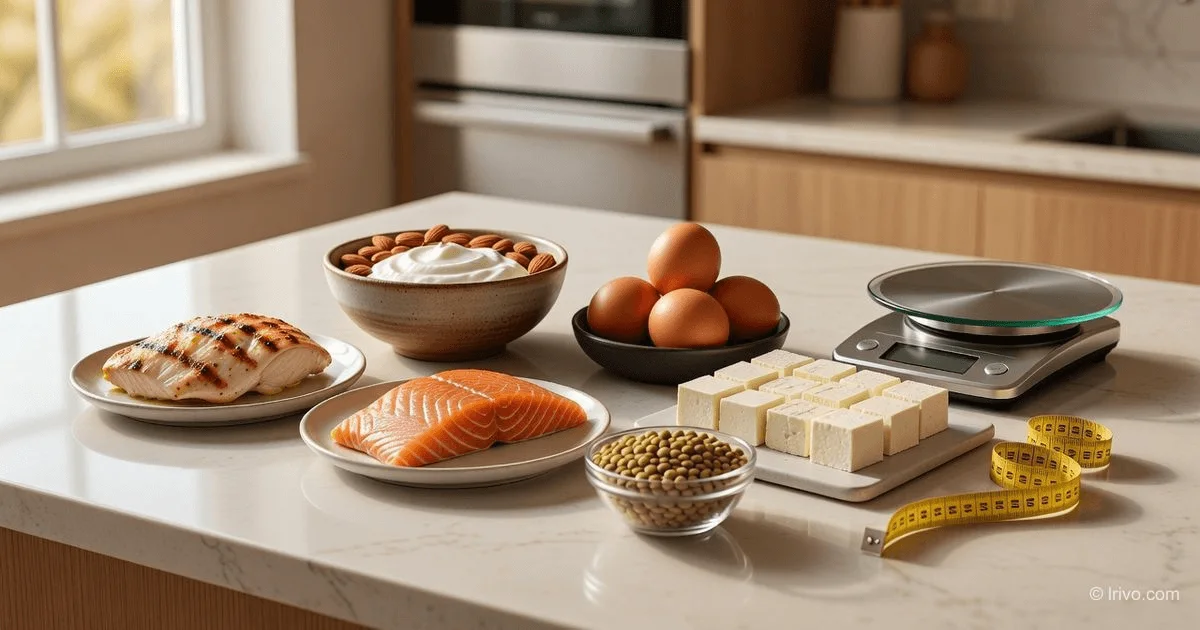
- Choose Quality Sources: Focus on lean meats, poultry, fish, eggs, dairy, and plant-based options like tofu, lentils, beans, and nuts .
Sources
- Mayo Clinic News Network: Are you getting enough protein?
- Harvard Health: Weighing protein powders
- GlobalRPH: Protein Requirements Calculator
- PubMed (NIH): Evaluation of protein requirements using the indicator amino acid oxidation method: a scoping review
- Mayo Clinic Press: Can you consume enough protein on a plant-based diet?
- Harvard Health: Healthy Eating Topic Page
- MSD Manuals: Recommended Dietary Reference Intakes Table
- ScienceDirect (The Journal of Nutrition): Evaluation of protein requirements...
- Harvard Health: How much protein do you need every day?
- Life Extension: How Much Protein Do You Really Need?
- MyNetDiary: Start a High-Protein Diet
- Harvard Health: High-protein snacks
- The Vegetarian Resource Group: How Much Protein Do Vegans Need?
- Medscape: Evaluation of protein requirements using the indicator amino acid oxidation method
- Harvard Health: When it comes to protein, how much is too much?
— Editorial Team