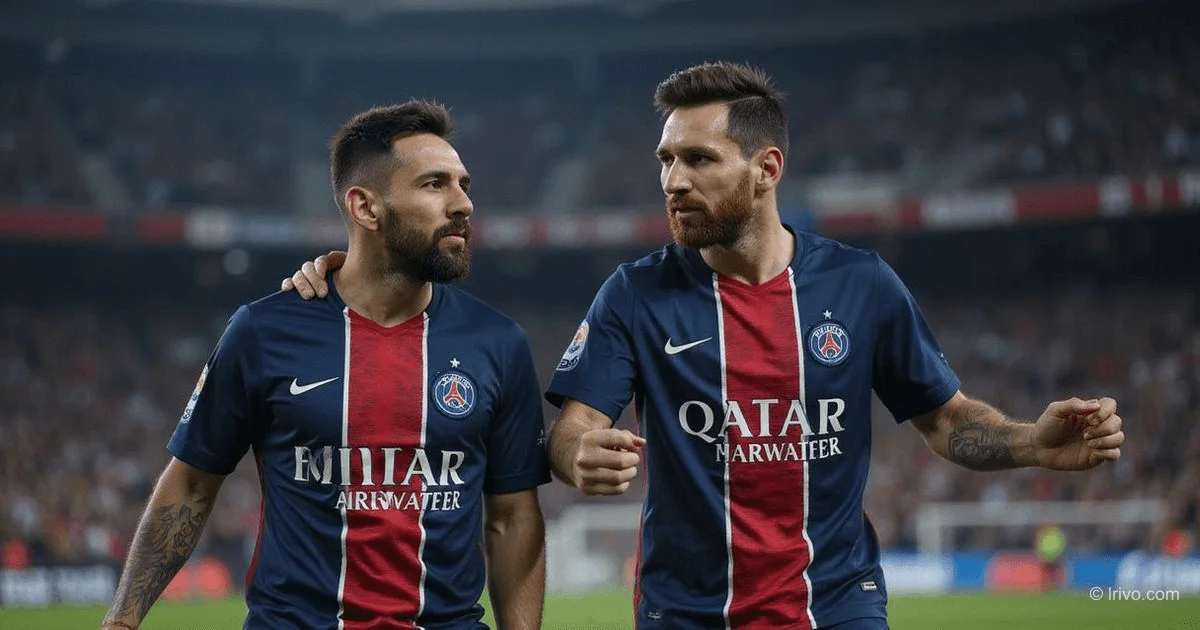
Achraf Hakimi Opens Up: Why Playing with Lionel Messi at PSG Wasn't Enjoyable for Him
Achraf Hakimi, the dynamic full-back for Paris Saint-Germain, recently shared a surprising revelation: he didn't enjoy his time playing alongside football icon Lionel Messi during their shared tenure at the French club. This candid admission offers a glimpse into the complex dynamics of superstar-laden teams and how individual player roles can be impacted by tactical shifts.
Hakimi's comments shed light on the challenges of integrating multiple world-class talents and maintaining team balance, especially when the focus shifts to accommodating marquee players. His experience highlights a critical aspect of modern football: sometimes, even the presence of a legend doesn't guarantee a fulfilling experience for all teammates.
The Messi Effect: A Shift in PSG's Project
When Lionel Messi arrived at Paris Saint-Germain in the summer of 2021, joining Hakimi who also signed that window for €68 million, the club's entire project underwent a significant transformation. According to Hakimi, this shift immediately altered the team's playing style, moving away from what he was accustomed to and enjoyed.
"As soon as Messi arrived, Paris Saint-Germain’s project changed, and with it the team’s style of play. We were playing in different ways and I wasn’t enjoying it," Hakimi stated during an appearance on "THE BRIDGE" podcast. This tactical evolution, driven by the desire to maximize an attacking trio of Messi, Neymar, and Kylian Mbappé, inadvertently sidelined Hakimi's natural strengths.
Impact on Hakimi's Role
Hakimi is known for his blistering pace and potent attacking contributions from the right-back position. However, with the team's new focus, his opportunities to push forward and influence the attack were significantly curtailed. He felt his primary role became more defensive, limiting his ability to express himself on the pitch.
"I wasn’t doing the things I love to do, like attacking and feeling important… I felt like a minor player," he explained. This sentiment underscores a common challenge for players in star-studded teams: finding personal fulfillment and demonstrating their full capabilities when the tactical emphasis is heavily skewed towards a few key individuals.
Navigating Criticism and Seeking Balance
The change in playing style and Hakimi's subsequent dip in perceived form didn't go unnoticed. He recalled facing criticism from fans and pundits who questioned the discrepancy between his performances for PSG and his impactful displays for the Moroccan national team.
"It was mentally difficult for me to perform in Paris as I wanted to, and then the criticism started pouring in, with people asking why I played one way for Morocco and looked different in Paris," Hakimi shared. "Is he not well? Or is there another reason? People don’t understand the difference."
This period was particularly tough for Hakimi, as he struggled to reconcile his personal playing style with the team's new direction. The mental toll of feeling underutilized and facing public scrutiny while playing alongside some of the world's best further complicated his experience.
The Resurgence Under Luis Enrique
Things began to change for Hakimi and PSG with the arrival of coach Luis Enrique and, crucially, the departures of both Lionel Messi and Neymar. Enrique's tactical approach brought a renewed sense of balance to the squad, allowing players like Hakimi to thrive in their natural roles.
With a more cohesive team structure, Hakimi was able to unleash his attacking prowess once again, becoming one of the most effective full-backs in world football. This period saw PSG achieve greater success, particularly in the Champions League, where the emphasis shifted from individual brilliance to collective teamwork. Hakimi's journey at PSG serves as a compelling case study on the importance of tactical fit and team harmony over simply accumulating star power.
Key Factors in Hakimi's Improved Performance:
- Return to Attacking Role: Luis Enrique's system allowed Hakimi to resume his preferred aggressive attacking runs from the full-back position.
- Enhanced Team Balance: The departures of Messi and Neymar freed up tactical space and allowed for a more balanced midfield and defensive structure.
- Increased Importance: Hakimi felt more central to the team's strategy, leading to greater confidence and motivation.
- Reduced Pressure: A less star-centric approach might have reduced the immense pressure on individual players to perform within a rigid framework.
Ultimately, Hakimi's candid remarks underscore that even for elite athletes, enjoyment and optimal performance are deeply tied to feeling valued, playing to one's strengths, and operating within a system that fosters collective success. The allure of individual superstars doesn't always translate into a harmonious or effective team environment.
Key takeaways:
- Achraf Hakimi did not enjoy playing with Lionel Messi at PSG due to a change in team playing style.
- Messi's arrival shifted PSG's focus to a star-studded attack, limiting Hakimi's natural attacking full-back role.
- Hakimi felt like a "minor player" and faced criticism for his performances during this period.
- His best form at PSG came under Luis Enrique, after Messi and Neymar departed, allowing for better team balance.
- The experience highlights the importance of tactical fit and team cohesion for individual player performance and enjoyment.
— Editorial Team