The Complex Joy of Rival Misfortune in Football Fandom
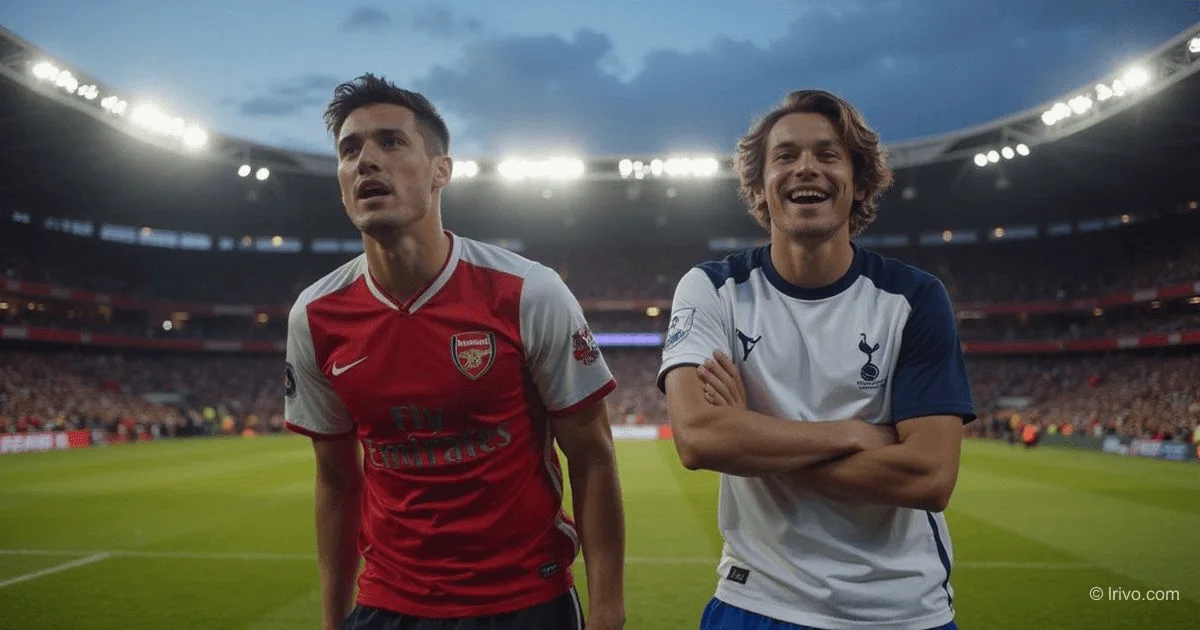
In the intense world of football, one emotion often overlooked but universally understood is schadenfreude – the pleasure derived from a competitor's setback. This sentiment has been particularly evident in recent seasons, especially concerning Arsenal, where their high-profile near-successes have amplified the glee of rival supporters, most notably those of Tottenham Hotspur.
Football rivalries are deeply ingrained, transforming matches into battles where the outcome often feels personal. For many fans, the experience isn't solely about their team's triumphs but also about the struggles of their closest adversaries. This dynamic creates a unique emotional landscape where a rival's disappointment can be a distinct source of satisfaction.
Arsenal, in particular, has found itself at the center of this phenomenon. Over the past couple of years, a combination of factors – including perceived hubris, the media's narrative-building, and a pattern of coming close but ultimately falling short of major trophies – has made their moments of failure especially sweet for opposing fanbases. This situation is further fueled by the caricature of the "Online Arsenal Fan," a vocal segment whose reactions, both in celebration and despair, are often seen as exaggerated, inviting an equally strong counter-reaction from others.
The Role of Rivalry Dynamics
The media plays a significant role in shaping these perceptions. While many football clubs experience similar challenges, certain issues have become disproportionately associated with Arsenal. This narrative-driven approach often attributes generic footballing occurrences exclusively to them, further entrenching their position as a focal point for rival schadenfreude. It's a testament to how stories are crafted and consumed within the sport, often simplifying complex realities into compelling, if sometimes unfair, narratives.
A prime example illustrating this dynamic occurred when Tottenham fans were observed celebrating Arsenal's defeat in the Carabao Cup final. This celebration happened despite Spurs themselves having suffered a heavy 3-0 home loss to Nottingham Forest in a crucial league match on the same day. While many questioned how fans could celebrate under such circumstances, the incident highlighted the deep-seated nature of rivalry; for some, a rival's loss offers a moment of catharsis, regardless of their own team's immediate performance.
Common footballing traits often unfairly linked solely to Arsenal, according to the discourse:
- Playing effective but sometimes unexciting football.
- Scoring goals from set-pieces.
- Not winning every single game played.
- Failing to achieve a quadruple of trophies.
- Exuberant celebrations.
- Getting ahead of themselves or prematurely celebrating.
- Believing match officials are biased against them.
- Having a manager with unconventional traits.
- Pulling players from international duty for seemingly minor reasons.
Understanding Fan Psychology
This isn't to say that fans prioritize a rival's failure over their own club's success. Instead, it suggests that enjoying a rival's misfortune is a separate, yet equally valid, component of the overall fan experience. It’s a part of the banter and emotional investment that makes football so captivating. For supporters, the intense rivalries add depth and excitement, transforming mere competition into a rich tapestry of shared triumphs and perceived injustices.
The human element of deriving joy from a rival's struggles is an age-old aspect of competitive sports. It's not necessarily unhealthy, but rather a fundamental part of how fan communities interact and define themselves against others. This intricate dance of emotions, where success for one often means disappointment for another, is what makes football fandom so vibrant and engaging. Schadenfreude, far from being a fringe emotion, is an enduring and core element of the beautiful game.
Key Takeaways
- Schadenfreude is a Core Fan Emotion: Enjoying a rival's misfortune is a natural and integral part of football fandom, enhancing the overall experience.
- Arsenal's Unique Position: Recent seasons, marked by near-misses and a strong "Online Arsenal Fan" caricature, have made Arsenal a particular focus for rival schadenfreude.
- Media's Role in Narratives: Media outlets often attribute general footballing issues specifically to Arsenal, contributing to how they are perceived by other fanbases.
- Rivalry Trumps Immediate Performance: The example of Tottenham fans celebrating Arsenal's cup final loss despite their own team's defeat highlights the deep-seated nature of rivalries.
- Not About Prioritization: This joy isn't about valuing a rival's failure over one's own club's success, but rather a distinct, complementary aspect of emotional investment in the sport.
— Editorial Team