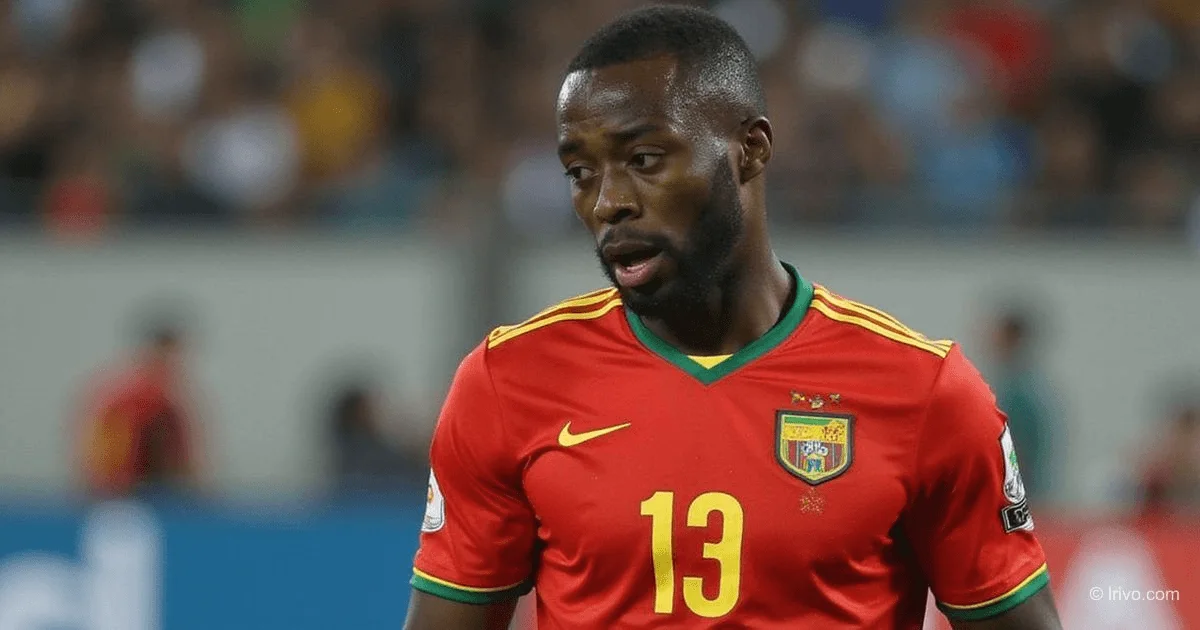
DR Congo's World Cup Heroes Held Back: Clubs Face Unprecedented Player Release Dispute
The Democratic Republic of Congo's national football team recently made history by qualifying for the 2026 World Cup, an achievement celebrated across the nation. However, this joy has been overshadowed by an unusual development: the Congolese Football Association (FECOFA) has reportedly prevented the players from returning to their respective clubs, citing unspecified "internal restrictions." This unprecedented situation has left European clubs, including Spanish side Espanyol, in a difficult position, prompting calls for intervention from international football bodies.
Historic Qualification Leads to Unexpected Standoff
The DR Congo's qualification for the 2026 World Cup marks their first appearance in the tournament in 52 years, a monumental feat. They secured their spot after a thrilling 1-0 victory over Jamaica in the intercontinental play-off final held in Mexico. This triumph makes them the tenth African nation to qualify, joining the ranks of elite footballing countries. The team is set to compete in Group H alongside formidable opponents Colombia, Portugal, and Uzbekistan. This achievement was meant to be a moment of national pride and celebration, but the subsequent actions of the football association have turned it into a complex international incident.
Espanyol, currently battling in La Liga, is one of the clubs directly affected. Their manager, Manolo González, expressed considerable surprise and concern over the ongoing situation. Midfielder Charles Bikel, a key player for Espanyol, is among those unable to rejoin his club. González confirmed that official notification from FECOFA stated that international players are not permitted to leave the country due to these internal restrictions, a ruling that applies to all national team members, not just Bikel.
Unprecedented Challenge for Clubs and Players
This refusal to release players back to their professional clubs is highly unusual in international football. Typically, after national team duties, players are expected to return promptly to their clubs to resume league and cup competitions. The stated reason of "internal restrictions" is vague and has raised questions about the nature of the issue and the rights of the players involved. For clubs like Espanyol, the absence of crucial players can significantly impact their performance and strategic planning, especially during a critical phase of their domestic season.
Key aspects of the current situation include:
- Historic World Cup Qualification: DR Congo's first in over half a century, a major milestone for African football.
- Player Detention: The Congolese Football Association is preventing national team players from returning to their clubs.
- Vague Reasons: The official reason given is "internal restrictions," lacking specific details.
- Club Impact: European clubs, such as Espanyol, are directly affected by the absence of key players like Charles Bikel.
- International Intervention: Affected clubs are communicating with FECOFA and FIFA to resolve the dispute.
Seeking Resolution: FIFA's Potential Role
Espanyol has described the situation as "completely unprecedented" for the Catalan club. Management has initiated communication with both the Congolese Football Association and FIFA, the global governing body for football, seeking a resolution. The club is also considering taking necessary legal action to ensure the return of their player. FIFA's regulations generally uphold a club's right to have its players released after international duty, making their involvement crucial in mediating or enforcing a solution.
For Espanyol, the timing couldn't be worse. The club has been struggling with a run of poor results since the start of 2026 and is currently sitting eleventh in the La Liga table with 37 points. The absence of a key midfielder like Bikel ahead of an important clash against Real Betis, who are fifth with 44 points, further complicates their efforts to improve their league standing. The manager emphasized that the club has taken all official steps and is awaiting a response from authorities, highlighting that the matter is beyond their immediate control.
This evolving situation puts a spotlight on the delicate balance between national team obligations and club commitments. It also raises concerns about player welfare and the transparency of national football associations. The international football community will be watching closely to see how FIFA responds and whether a swift resolution can be found to allow these World Cup heroes to return to their professional careers.
Key Takeaways:
- The Democratic Republic of Congo qualified for the 2026 World Cup for the first time in 52 years, a historic moment.
- Following qualification, the Congolese Football Association has prevented players from returning to their clubs, citing "internal restrictions."
- Spanish club Espanyol is significantly impacted, with midfielder Charles Bikel unable to rejoin his team.
- Espanyol is engaging with FECOFA and FIFA, exploring legal options to resolve the dispute.
- The situation is considered unprecedented and highlights potential conflicts between national federations and player release protocols.
— Editorial Team