Barcelona's Dressing Room Dynamics Under Scrutiny Amidst Journalist's Claims
Recent reports from Spanish journalist Pepe Estrada have ignited a debate about the internal harmony within FC Barcelona's squad. Estrada, known for his outspoken commentary, suggests that the team is divided into distinct generational groups rather than operating as a fully unified unit. These claims have sparked considerable discussion among fans and observers, raising questions about the true state of player relations at one of the world's biggest football clubs.
Estrada's comments, initially made on a YouTube podcast, paint a picture of a squad where professional coexistence trumps genuine camaraderie. He posits that players primarily interact within their specific age and experience brackets, despite sharing the common goal of on-field success. This perspective challenges the often-projected image of a tightly knit team, prompting fans to either dismiss his remarks as sensationalism or consider them a plausible insight into the club's inner workings.
The Alleged Factions Within the Squad
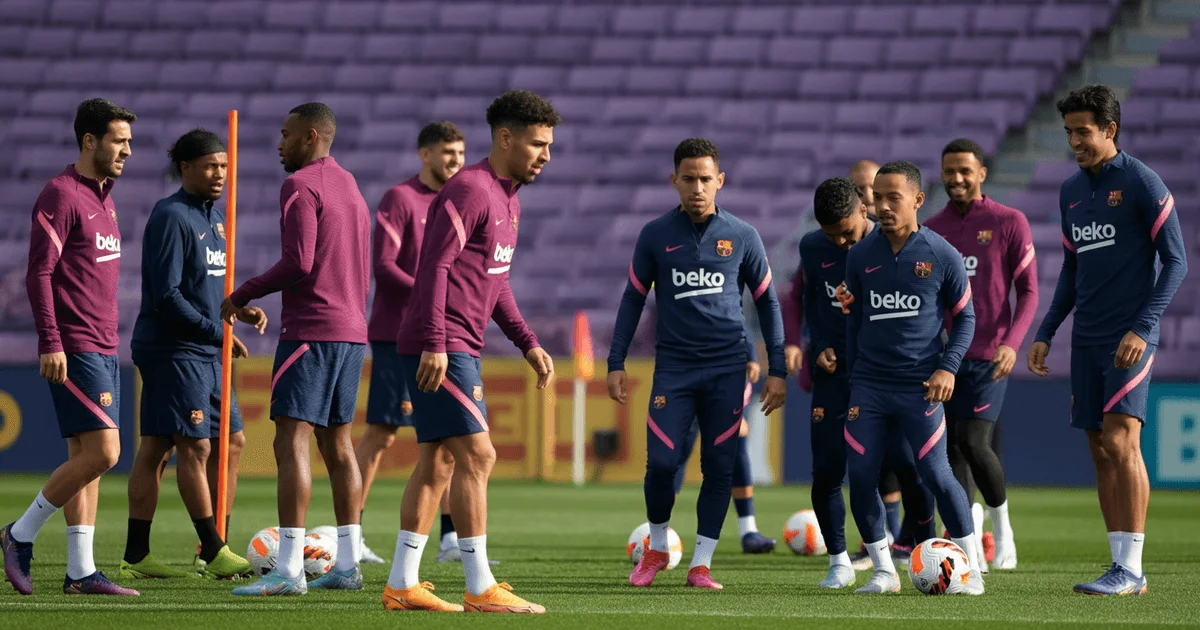
According to Estrada, the Barcelona dressing room is structured around three main groups. This alleged stratification highlights a potential generational divide, which could influence team dynamics and communication, especially given the club's recent emphasis on developing young talent alongside established stars. Understanding these proposed divisions helps contextualize the ongoing discussion about team cohesion.
Estrada's breakdown of the player groups includes:
- The Young Guns: This category reportedly features emerging talents like Balde, Lamine Yamal, and Gavi. These players represent the future of the club and are often seen as a close-knit cohort developing together.
- The Up-and-Coming Players: This group consists of players who are still relatively young but have already established themselves more firmly within the squad, such as Pedri, Ferran (likely Ferran Torres, though listed separately later), and Kubo. Their position might bridge the gap between the youngest prospects and the more seasoned professionals.
- The Veterans: Comprising experienced figures like Rafeina (likely Raphinha), Robert Lewandowski, and Ferran Torres, this group brings leadership and experience. Their interactions, according to Estrada, are more about professional collaboration than deep personal bonds.
This suggested structure, if accurate, implies that while players perform together on the pitch, their off-field relationships might be more segmented than fans typically imagine. The potential for such internal divisions could impact team spirit and performance, particularly during challenging periods.
Reactions and Club's Stance
The journalist's assertions have been met with a mixed response. A significant portion of Barcelona's fanbase has strongly criticized Estrada, accusing him of spreading misinformation and attempting to destabilize the club. They point to his past media record, which some describe as controversial and prone to inaccuracies. For these supporters, the claims are simply media sensationalism designed to generate clicks and controversy.
Conversely, some observers and pundits believe Estrada's comments might reflect an underlying reality. They suggest that the generational gap, combined with the individual ambitions of players—especially rising stars like Lamine Yamal—could naturally lead to such dynamics. Yamal, in particular, is frequently highlighted as one of Europe's most promising talents, and his rapid ascent could contribute to shifts in team hierarchy and social groupings.
Despite the backlash, Estrada has remained steadfast in his claims, insisting that he is merely presenting facts as he perceives them, rather than trying to provoke trouble. He continues to appear on various media platforms, undeterred by public criticism or social media campaigns against him. Meanwhile, FC Barcelona itself has consistently sought to project an image of unity and strong camaraderie through official channels and player interviews, aiming to reassure fans and counter any doubts about internal strife.
The Unfolding Narrative
The ongoing tension between Estrada's persistent claims and the club's efforts to portray a harmonious environment leaves the true situation somewhat ambiguous. The Spanish sporting world is now watching closely to see whether these reports are merely fleeting media speculation or indicators of more profound, silent issues affecting the cohesion of a globally renowned football institution. The performance of the team in upcoming matches, particularly in high-stakes competitions like the Champions League, may offer further clues as to the actual state of affairs within the dressing room.
Ultimately, the debate highlights the intense scrutiny and speculation that surrounds top-tier football clubs. While internal dynamics are always complex, the public nature of these discussions adds another layer of pressure. Whether Barcelona's squad is truly fractured or simply experiencing the natural evolution of player relationships, the conversation initiated by Estrada continues to resonate.
Key Takeaways
- Alleged Divisions: Journalist Pepe Estrada claims Barcelona's dressing room is split into three distinct generational groups: young guns, up-and-coming players, and veterans.
- Professional Coexistence: Estrada suggests player relationships are more professional than genuinely friendly, with interactions largely confined to specific groups.
- Mixed Reactions: Fans are divided, with some dismissing the claims as sensationalism and others believing they reflect a plausible reality.
- Club's Stance: Barcelona officially maintains an image of harmony and unity, countering any suggestions of internal strife.
- Uncertainty: The true extent of any internal divisions remains unclear, fueling ongoing speculation in the Spanish sporting world.
— Editorial Team