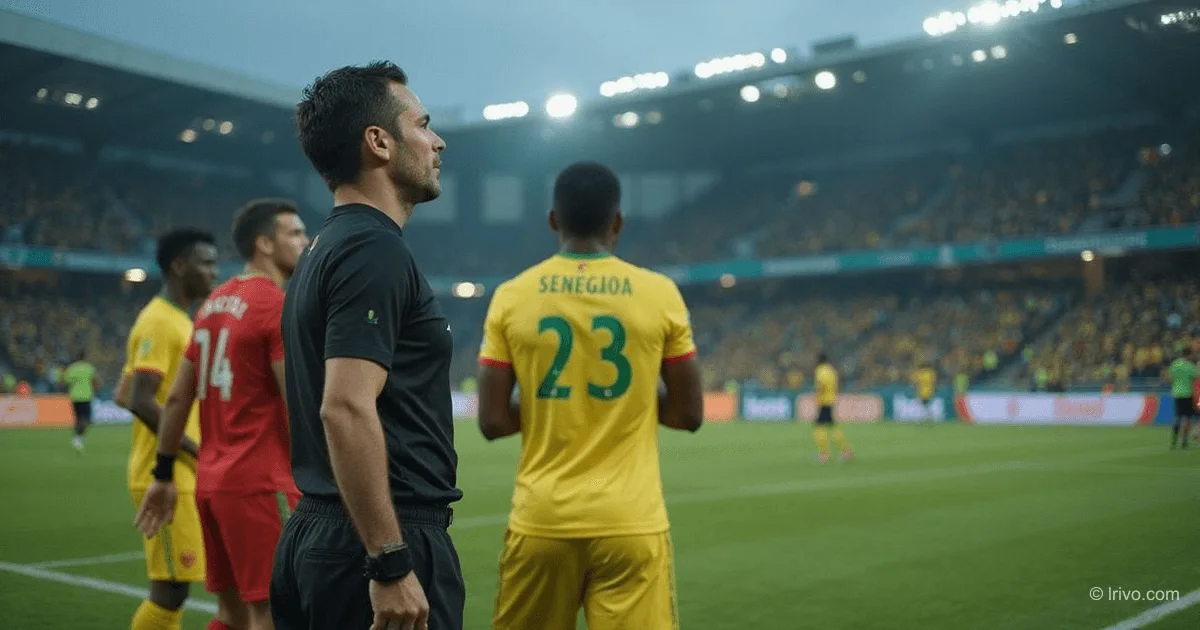
African Football Scandal: Morocco-Senegal Title Dispute Heats Up at CAS Amidst Referee Allegations
The African football community is currently grappling with a major controversy involving Morocco and Senegal, centered around the final of a recent continental championship. What began as a match dispute has escalated into a full-blown legal battle before the Court of Arbitration for Sport (CAS), raising serious questions about refereeing integrity and administrative influence within the Confederation of African Football (CAF). This high-stakes case could set a significant precedent for how disputes are handled in African football.
The Initial Controversy
The heart of the issue stems from a championship final played in Rabat a few months ago, where Morocco faced Senegal. During the match, with the score tied 0-0, the Senegalese team staged a protest by leaving the field for approximately 12 minutes. This dramatic walk-off occurred after the referee awarded a penalty to Morocco in second-half stoppage time. This action by the Senegalese players became the central point of contention for both national federations, leading to an immediate and significant fallout.
CAF's Ruling and CAS Intervention
Following the contentious final, the Moroccan Football Federation (MFF) lodged an official appeal with CAF. Their argument was based on tournament regulations, specifically Articles 82 and 84, which stipulate that a team refusing to play or leaving the pitch before the match concludes is considered to have forfeited and is eliminated. The CAF Appeals Committee sided with Morocco, subsequently awarding them the championship title.
However, the Senegalese Football Federation (SFF) was not willing to accept this decision. They swiftly took their case to the Court of Arbitration for Sport (CAS) in Lausanne, Switzerland, seeking an independent review. Interestingly, CAF President Patrice Motsepe publicly welcomed SFF's move, emphasizing that CAF would respect the final ruling from the independent arbitration body. This step signals the gravity of the dispute and the need for an impartial resolution.
Allegations of External Influence
The controversy took a more serious turn with revelations from French newspaper Le Monde. Their investigation, based on official reports, highlighted alarming allegations contained within the MFF's appeal against earlier disciplinary committee decisions. According to MFF Secretary-General Tarik Najm's submission, remarks made by Olivier Safari, the head of CAF’s Referees’ Committee, are at the core of these claims.
Safari allegedly made statements during a CAF Executive Committee meeting in Dar es Salaam on February 13, suggesting that "institutional instructions" were given to the match referee. These instructions reportedly directed the referee not to issue yellow cards to the Senegalese players who had walked off the pitch. The concern was that penalizing them with cards, which would have led to two players being sent off, might prevent the match from continuing upon their return. This raises critical questions about potential external pressure on match officials to influence game outcomes or ensure completion under specific conditions.
Implications for African Football
These allegations, if substantiated, cast a long shadow over the integrity of CAF's refereeing processes and the fairness of its competitions. The prospect of "institutional instructions" influencing a referee's decisions in a high-profile final is a significant concern for fans, clubs, and national federations across the continent. The transparency and independence of sporting bodies are paramount, and any perceived deviation can erode trust.
Here are some key points in the ongoing dispute:
- Senegal's Walk-Off: The initial protest by Senegalese players leaving the field during a crucial match.
- MFF's Appeal & CAF Ruling: Morocco was initially awarded the title by CAF's Appeals Committee, citing tournament rules.
- SFF to CAS: Senegal's decision to escalate the matter to the highest sports arbitration body for an independent review.
- Referee Allegations: Claims of "institutional instructions" given to the referee to avoid penalizing protesting players, sparking concerns about external interference.
- CAS Decision Awaited: The final ruling from CAS will be crucial in resolving this complex issue and setting a precedent for future disputes.
The Court of Arbitration for Sport now faces the task of thoroughly investigating these claims and delivering a definitive judgment. Their decision will not only determine the legitimate champion of the tournament but also carry significant weight for CAF's reputation and its commitment to fair play. The football world awaits the outcome, hoping for clarity and a resolution that upholds the principles of sportsmanship and independent officiating.
Key Takeaways:
- A major football dispute between Morocco and Senegal over a continental final is now before the Court of Arbitration for Sport (CAS).
- The controversy began with Senegalese players walking off the pitch in protest during the final match.
- CAF initially awarded the title to Morocco based on tournament rules regarding refusal to play.
- Serious allegations have emerged, suggesting that the match referee received "institutional instructions" to avoid penalizing the protesting Senegalese players, raising concerns about external interference.
- The upcoming CAS ruling is critical for resolving the championship title and for upholding the integrity of African football governance.
— Editorial Team