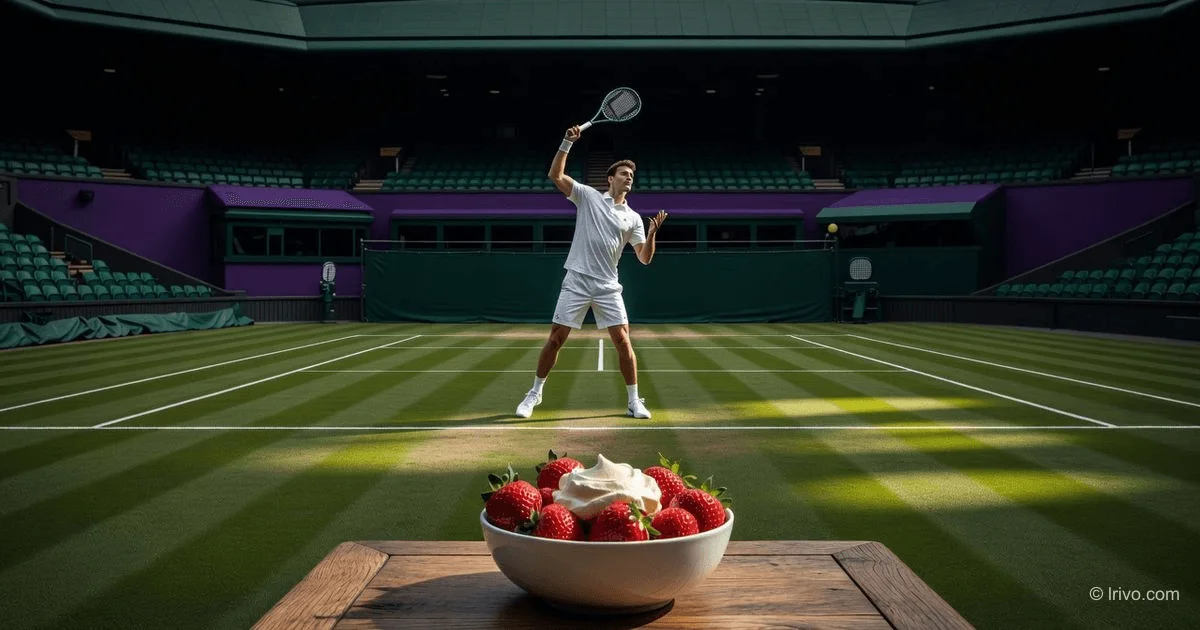
Strawberries & White Dress Codes: The Tradition of Wimbledon
For two weeks each summer, the All England Lawn Tennis and Croquet Club in southwest London becomes the epicenter of the sporting world. But Wimbledon is far more than a tennis tournament; it is a living museum of Victorian sensibilities, a celebration of British pageantry, and a culinary festival centered on a simple, seasonal dessert. To truly understand Wimbledon is to explore a rich tapestry of history where strict dress codes and ripe strawberries are as significant as the tennis played on its hallowed grass courts.
What You'll Learn
By the end of this article, you'll understand the distinct origins of Wimbledon's most cherished traditions, from the all-white dress code born of 19th-century propriety to the strawberry-and-cream phenomenon that predates the tournament itself. You will be able to explain why players must adhere to such strict rules and how the event evolved from a fundraiser to a global icon. Ultimately, you'll walk away with a comprehensive understanding of how a tournament that began in 1877 to repair a lawn roller became the world's most prestigious tennis championship.
How It Works: The Mechanics of Tradition
The traditions of Wimbledon function as a carefully preserved ecosystem, governed by explicit rules and centuries-old customs that are enforced with remarkable rigor.
The All-White Dress Code: A Rule of Law
The most visible and strictly enforced tradition is the players' attire. The rule states that competitors must be dressed in "suitable tennis attire that is almost entirely white" from the moment they enter the court . This is a strict, literal definition of white; off-white or cream are expressly forbidden . The only permitted exception is a single trim of color around the neckline or cuff, which must be no wider than one centimeter (10mm) . This rule applies to every piece of clothing and accessory, from shirts and shorts to caps, headbands, wristbands, socks, and even the soles of shoes . Officials have been known to bring out tape measures to check for infractions, and players have been asked to change their outfits for minor violations, such as Roger Federer's orange-soled shoes in 2013 . This tradition was born in the 1880s when sweating was considered improper, and white was the color that best concealed perspiration .
The Ritual of Strawberries and Cream
The beloved snack of strawberries and cream is not just a menu item but a ritual. The dish is steeped in history and is a nod to the tournament's summer timing. Each year, the tournament serves approximately 191,000 portions of the snack, consuming nearly two million individual strawberries . The strawberries are of the Elsanta variety, grown locally at Hugh Lowe Farms in Kent, just under 50 kilometers from the venue, and are delivered fresh daily . The price of a portion remained at £2.50 for over a decade until a slight increase to £2.70 in 2025 . This consistency is part of the tradition's charm.
The Queue: An Honored Tradition
Another unique tradition is the queue. Wimbledon is famous for its "queue," where fans line up for the chance to purchase tickets on the day of play. This tradition of orderly queuing is seen as a quintessentially British custom, with roots in the 19th century and solidified during World War II as a symbol of civility . The queue even has its own code of conduct, and fans often camp overnight to secure a spot .
Why It Matters: The Impact and Significance
These traditions matter because they create an atmosphere of timeless prestige that sets Wimbledon apart from all other sporting events.
Preserving History in a Modern World
In an era of commercialization, Wimbledon serves as a counterpoint. The strict dress code, the lack of on-court advertising, and the continued use of grass courts are not mere quirks but deliberate acts of preservation . They force modern athletes and spectators into a space that feels like it belongs to another age, creating a unique sense of occasion. The dress code, in particular, promotes a sense of equality and focus, stripping away the individuality of brand logos and colorful kits to emphasize the sport itself .
A Cultural and Economic Phenomenon
The traditions are also a massive economic driver. The sale of strawberries and cream alone is a logistical marvel, requiring over 100,000 strawberry plants to be grown specifically for the tournament . The event is Europe's largest annual sporting catering operation, serving over 234,000 meals and 330,000 cups of tea and coffee . These rituals, from the dress code to the cuisine, are central to Wimbledon's brand identity, making it a global cultural touchstone that generates significant revenue and tourism.
A Reflection of Societal Change
While the tournament is steeped in tradition, it is not static. The decision in 2022 to allow women to wear colored undershorts, a change implemented in 2023, is a powerful example of how tradition can evolve to be more inclusive . The rule change was made after consultation with players and medical authorities to relieve "a potential source of anxiety" for female players, particularly regarding menstruation . This modernizes a Victorian rule while respecting its core principle.
By the Numbers: Key Stats, Dates, and Milestones
| Aspect | Detail | Source |
|---|---|---|
| First Championship | 1877, held to raise money to repair a pony roller. | |
| First Events | Only Gentlemen's Singles; 22 competitors paid a guinea each. | |
| Women's Competition Begins | 1884, with Maud Watson winning the first Ladies' Singles title. | |
| Move to Church Road | 1922, the tournament moved to its current site. | |
| Open Era Begins | 1968, professionals allowed to compete for prize money. | |
| Strawberries Consumed | ~28,000kg (over 1.9 million individual berries) per tournament. | |
| Tennis Balls Used | Over 54,000 balls are used each year. | |
| Longest Continuous Era | Martina Navratilova holds the record for most titles with nine. |
Common Myths vs. Facts
| Myth | Fact |
|---|---|
| The white dress code was designed to 'look classy'. | The white dress code was introduced in the Victorian era to minimize the visibility of sweat, which was considered highly improper at the time . |
| Strawberries and cream became a tradition because the King liked them. | The tradition began because the tournament coincides with the British strawberry season. The dish was a popular summer staple at Victorian gatherings, and it simply became part of the event . |
| The Queen herself always attends and presents the trophies. | While Wimbledon has Royal patronage, the monarch does not always attend. The trophy is presented by the Duke of Kent, who is President of the All England Club . |
| The 'Henman Hill' is an official name. | The official name of the grassy bank is Aorangi Terrace. It was nicknamed "Henman Hill" after Tim Henman, then later "Murray Mound" after Andy Murray . |
| The tournament has never been postponed. | The tournament was suspended during both World Wars (1915-1919 and 1940-1945). The grounds were even used for civil defense and a bomb damaged Centre Court in 1940 . |
What You Should Do With This Knowledge
Understanding the history of Wimbledon enriches your viewing experience. When you watch a match, you're not just seeing a tennis game; you're witnessing a century and a half of tradition.
- Watch with New Eyes: Appreciate the strict enforcement of the dress code as a link to the 19th century. Notice the absence of advertising.
- Engage with the Ritual: If you ever attend Wimbledon, participate in the traditions. Queue up for a grounds pass, buy a £2.70 portion of strawberries and cream, and perhaps sip a glass of Pimm's, which has been a Wimbledon staple since 1971 .
- Understand the Evolution: Recognize that traditions evolve. The 2023 rule change for women's undershorts shows a commitment to player welfare while respecting the tournament's heritage.
Frequently Asked Questions
Why do tennis players have to wear white at Wimbledon? The all-white dress code is a tradition that dates back to the Victorian era in the 1880s. It was implemented because sweating was considered improper, and white was the best color for hiding sweat stains . The rule has been strictly enforced ever since.
How did strawberries and cream become associated with Wimbledon? The tradition started naturally because the first Wimbledon championships in 1877 coincided with the peak of the British strawberry season . The dish was already a popular summer treat at Victorian social events, so it became a staple for spectators and has remained an iconic part of the tournament.
What is the "Open Era" in tennis? The Open Era began in 1968 when the Grand Slam tournaments, including Wimbledon, allowed professional players to compete alongside amateurs . Before this, the sport was officially amateur, meaning players could not accept prize money, though many were paid under the table.
Has the all-white dress code ever been changed? Yes, in a significant update for the 2023 Championships, female players were permitted to wear mid- or dark-colored undershorts . This change was made to alleviate anxiety for players, especially concerning menstruation, while the rest of the all-white rule remains unchanged.
What happened during the World Wars at Wimbledon? The Championships were suspended during both World Wars. During World War II, the club grounds remained open for members, but the tournament did not take place. In 1940, a bomb struck the Centre Court roof, causing damage that took years to repair .
Sources
- BBC News. (2000). The traditions of Wimbledon.
- BBC Sport. (2002). Wimbledon through the ages.
- Bitesize, BBC. (2019). Five classic Wimbledon traditions.
- Diario AS. (2025). This is the Wimbledon dress code for players and guests at the tournament.
- History Press. (2016). A miscellaneous history of Wimbledon.
- Kitchen. (2024). Strawberries and cream has been synonymous with Wimbledon for over a century - here's how the tradition started.
- Sky HISTORY TV channel. (n.d.). New balls please: The history of Wimbledon.
- The Indian Express. (2019). Some traditions that make this tournament even more interesting.
- The Times of India. (2025). How did strawberries and cream become the 'true icon' of Wimbledon.
- Yahoo Sport. (2025). Why Tennis Players Wear All White at Wimbledon.
— Editorial Team