null
Preparing a full week of healthy meals might seem daunting, but it is one of the most effective strategies for weight loss. By dedicating a few hours to planning and prepping, you can take the daily guesswork out of eating, control your portions, and make it significantly easier to resist the temptation of convenience food . This guide provides a practical, evidence-based system for how to meal prep for weight loss for the whole week, helping you build a sustainable routine that supports your health goals.
What You'll Learn
By the end of this guide, you'll understand the core principles of effective meal prepping for weight loss, from planning balanced meals to executing a streamlined prep day. You'll walk away with a clear, actionable plan that includes a step-by-step system for shopping, cooking, and assembling a week's worth of meals, as well as strategies to keep your food interesting. The single most important takeaway is that successful meal prep is not about perfection, but about creating a flexible system of components you enjoy. You'll discover how to avoid common pitfalls like food fatigue and burnout, ensuring this healthy habit sticks.
The Science of Meal Prep for Weight Loss
Meal prepping works for weight loss by addressing several key behavioral and nutritional factors. Research has demonstrated a link between meal planning and a lower risk of overweight and obesity . This connection likely stems from the fact that home-cooked meals, which are central to meal prep, are typically associated with a higher-quality diet . When you plan ahead, you gain more control over ingredients and portion sizes, which is often lost when grabbing takeout or dining out .
Furthermore, the structured nature of meal prep reduces the "decision fatigue" that can lead to impulsive, unhealthy choices. By having balanced meals ready to go, you remove the need to decide what to eat when you're hungry and tired, making it far easier to stick to your nutrition goals . It also helps you manage portions, as prepping single servings naturally encourages you to consume a consistent, appropriate amount of food .
A Step-by-Step System for Whole-Week Meal Prep
This system breaks down the meal prep process into manageable steps, ensuring you have a clear roadmap for success.
Step 1: Plan Your Menu and Grocery List
The first step in how to meal prep for weight loss for the whole week is to create a simple menu. Start small. If you're a beginner, focus on planning and prepping just one meal—often lunch or dinner—that is a challenge for you .
- Choose Flexible Recipes: Select 2-3 staple proteins, 3-4 vegetables, and 1-2 whole grains for the week. This approach, sometimes called the "5-4-3-2-1" method, allows you to mix and match ingredients to create different meals . For example, grilled chicken can be used in a salad, a wrap, or a bowl with rice and vegetables.
- Create a Shopping List: Based on your menu, make a detailed grocery list. Check your pantry first to avoid buying duplicates. Organize your list by grocery store section to save time and prevent impulse buys .
- Schedule Your Prep Day: Dedicate a specific time on your calendar for your main prep session, treating it as a non-negotiable appointment .
Step 2: Efficient Grocery Shopping and Smart Substitutions
Stick to your list at the store to stay on budget and on track. To save money and maximize freshness, consider buying seasonal produce and using frozen fruits and vegetables, which are often just as nutritious—if not more so—than fresh .
When shopping, be mindful of the foods you choose. Here are some simple swaps to make your prepped meals more weight-loss-friendly:
| Instead of... | Try... | Benefit |
|---|---|---|
| Refined pasta | Whole-grain or legume-based pasta | More fiber and protein |
| High-fat ground beef | Lean ground turkey or 90/10 beef | Reduced saturated fat |
| Regular sour cream | Plain Greek yogurt | Less calorie-dense, more protein |
| White rice | Quinoa or brown rice | More fiber and nutrients |
Step 3: The Component Prep Method
The "component prep" method is arguably the most sustainable and flexible way to meal prep . Instead of cooking entire meals, you prepare individual ingredients that can be assembled in various ways throughout the week . This system is the key to not getting bored by Wednesday.
- Proteins: Batch-cook a couple of proteins, such as grilling chicken breasts, browning lean ground turkey, or hard-boiling a dozen eggs for snacks and salads .
- Carbohydrates: Cook a large batch of a whole grain like quinoa, brown rice, or sweet potatoes .
- Vegetables: Wash, chop, and store a variety of non-starchy vegetables like broccoli, bell peppers, carrots, and salad greens . Store them in clear containers at eye level in the fridge to encourage use .
- Snacks: Pre-portion nuts, trail mix, yogurt, or fruit into grab-and-go bags or containers. This prevents mindless overeating .
Step 4: The Prep Day Execution
Follow this order for maximum efficiency on your designated prep day :
- Start the Carbs: Put grains or sweet potatoes in the oven or on the stove first, as they take the longest.
- Cook the Proteins: While the carbs are cooking, prepare your proteins by grilling, baking, or using a slow cooker.
- Roast or Saute Vegetables: Toss hearty vegetables like broccoli and zucchini in olive oil and seasonings, then roast them in the oven. Other veggies can be left raw.
- Prepare Raw Items: Wash and chop any delicate greens, fruits, or other raw items that will be used for salads or snacks.
- Assemble: Once everything is cooked and has cooled slightly, portion out your meals into containers.
⚠️ Important: For food safety, allow cooked food to cool before you seal it and place it in the refrigerator. Refrigerate prepared meals within two hours of cooking.
Step 5: Assembly and Adding Variety to Avoid Food Fatigue
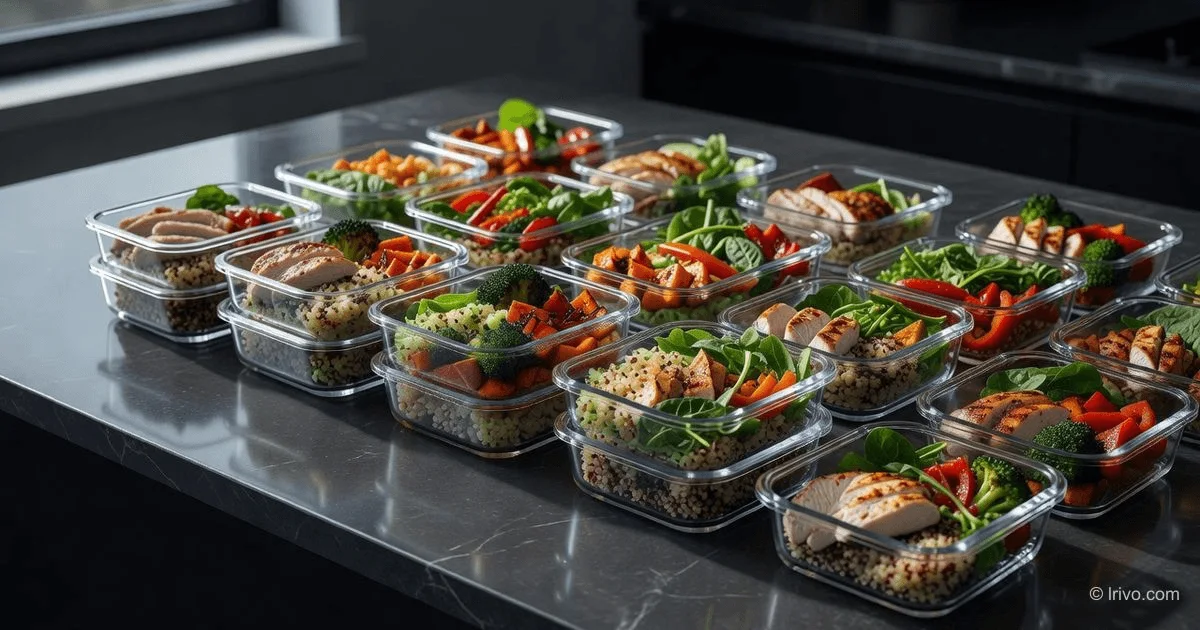
The "component prep" method shines at this stage. To assemble a meal, follow the balanced plate rule: fill half your container with non-starchy vegetables, a quarter with lean protein, and a quarter with a healthy carbohydrate .
Use this table to mix and match your components for different meals:
| Meal | Component 1 (Protein) | Component 2 (Carb) | Component 3 (Veggies) | Flavor Boost |
|---|---|---|---|---|
| Salad Bowl | Chicken, Tuna | Quinoa, Beans | Mixed greens, Cucumber, Bell peppers | Different dressing daily |
| Wrap | Ground Turkey | Brown rice | Sautéed peppers, Onions | Salsa, Greek yogurt |
| Stir-fry Bowl | Shrimp, Tofu | Cauliflower rice | Broccoli, Carrots, Zucchini | Soy sauce, Ginger, Garlic |
| Quick Dinner | Salmon | Baked Sweet Potato | Roasted Green Beans | Lemon juice, Herbs |
The key to making this work for a full week is "sauce rotation." By using different sauces, dressings, or spices each day, you can make the same basic ingredients taste completely different—think Italian vinaigrette one day, a spicy sriracha mayo the next, and a creamy tahini dressing the next .
Frequently Asked Questions
Can I meal prep for a full 7 days? Yes, you can prepare a whole week's worth of meals. For the best quality and safety, refrigerate what you will eat in the first 3-4 days and freeze the rest. Meals like soups, stews, and casseroles freeze particularly well, making them ideal for later in the week .
How do I keep my meal-prepped food fresh all week? Airtight, high-quality containers are your best investment . Use glass containers when possible, as they are more durable and don't absorb stains or odors . Store foods like sauces and salad dressings separately to prevent sogginess. Label and date your containers so you know what to eat first .
What is the best way to start meal prepping for weight loss? Start small to avoid feeling overwhelmed. Instead of prepping every meal, begin by planning and preparing a single meal, like lunches, for just a few days . Choose recipes you already know and love for your first few weeks to make the process easier .
What's the most common meal prep mistake? The most common mistake is trying to do too much too soon and creating a rigid plan with repetitive, boring meals. This often leads to "food fatigue" and abandoning the routine by mid-week . To avoid this, use the component prep method to give yourself more variety in meal assembly.
Will meal prepping guarantee I lose weight? Not automatically. Meal prepping is a powerful tool, but it's not a guarantee for weight loss . It helps you create an environment where healthy choices are more convenient, but you must still focus on building balanced meals with appropriate portion sizes and choosing nutrient-dense ingredients .
Sources
- Baylor Scott & White Health
- Jenny Craig Inspirations
- North Mississippi Health Services
- Weight Watchers Australia
- Wellhub
- Miami Herald (Men's Journal)
- BetterMe.world
- Apple Podcasts
— Editorial Team