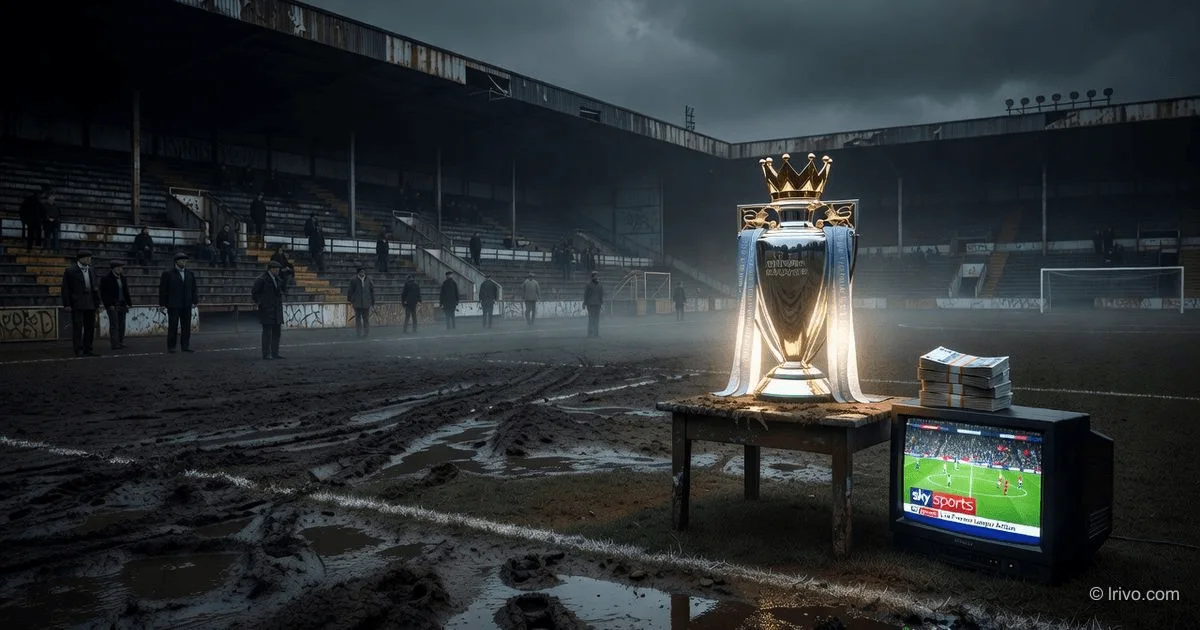
How Money Changed the Game: The Creation of the Premier League
The Premier League is the most-watched football league in the world, a global sporting and financial powerhouse that generates billions in revenue. But its origin story is not one of sporting glory; it is a calculated, high-stakes business breakaway driven by television money and the ambition of England's top clubs. The answer to how was the premier league created and when did it start lies in a pivotal moment in 1992, when the sport's old order was swept aside in favour of a new, commercially independent entity.
What You'll Learn
By the end of this explainer, you'll understand the precise sequence of events that led to the Premier League's creation, the financial motivations behind the split, and its immediate impact on the English game. You'll walk away with a clear timeline of key milestones, from the secret "big five" meetings to the first televised matches, and you'll be able to explain exactly how financial strategy, rather than sporting necessity, reshaped the world's most popular sport.
How It Was Created: The Mechanics of a Breakaway
The creation of the Premier League was a deliberate, phased process, orchestrated by club chairmen and media executives who saw the financial limitations of the old Football League. The old system, established in 1888, shared television and sponsorship revenue across all four divisions. The top clubs felt this was unfairly distributing money they generated, limiting their ability to grow and compete with European rivals .
The first major step occurred in October 1990, when Greg Dyke, the managing director of London Weekend Television (LWT), met with representatives of the "big five" clubs: Arsenal, Everton, Liverpool, Manchester United, and Tottenham Hotspur . Dyke proposed a breakaway to secure a more lucrative television deal for the elite clubs, and the idea gained traction. The Football Association (FA), which had a contentious relationship with the Football League, saw the proposal as a way to weaken its rival's power and threw its support behind the plan . On 17 July 1991, the 22 First Division clubs signed the Founder Members Agreement, establishing the principles of a new, commercially independent league .
The formal break happened on 20 February 1992, when the First Division clubs resigned from the Football League en masse . Three months later, on 27 May 1992, the FA Premier League was officially established as a limited company, operating out of the FA's headquarters at Lancaster Gate . This structure was fundamentally different from the old Football League; it gave the member clubs control over their own broadcast and sponsorship agreements, rather than sharing the wealth with lower divisions . The final piece of the puzzle was the television deal. In a radical and risky move, the new league struck a five-year, £304 million agreement with the pay-TV broadcaster BSkyB, a decision that would prove to be the financial engine for its global expansion .
Why It Matters: The Realignment of Power
The Premier League's creation was a seismic shift that transformed football from a sport into a global entertainment industry. The immediate effect was financial: the "big five" and their counterparts achieved their primary goal of maximising revenue, and the influx of Sky's money allowed clubs to invest in modern stadiums, improve safety standards, and attract the world's best players and managers . This commercial independence also allowed the league to negotiate more lucrative sponsorship deals, further widening the gap between the Premier League and the lower divisions it had left behind.
The power dynamic of English football was permanently altered. The 104-year-old Football League, once the pinnacle of the sport, was reduced to a three-division entity, with its top tier now known as the First Division . The FA, while lending its name and initial support, found itself in a supporting role as the Premier League's commercial success gave it unprecedented influence. The move also had a major impact on the sport's competitive structure. The inaugural season featured 22 clubs, a number that was reduced to 20 at the end of the 1994-95 season . The league's goal was to "promote development and excellence at club and international level" by making the competition more selective . Within a few years, the traditional 4-4-2 formation and muddy winter pitches that defined the old First Division were being replaced by the slick, globalised spectacle we see today .
By the Numbers
| Milestone | Date / Figure | Significance |
|---|---|---|
| Secret Meeting | October 1990 | LWT and the "big five" clubs discuss a breakaway to secure a larger share of TV revenue . |
| Founder Members Agreement | 17 July 1991 | The 22 First Division clubs agree to the principles of a new, commercially independent league . |
| Resignation from Football League | 20 February 1992 | The First Division clubs resign en masse, breaking the 104-year-old structure . |
| Premier League Established | 27 May 1992 | The FA Premier League is formed as a limited company . |
| First Broadcast Deal | 1992 | A 5-year, £304 million deal with BSkyB is agreed, a radical move that guaranteed the league's financial future . |
| Inaugural Season Kick-off | 15 August 1992 | The first Premier League match is played, marking the official start of the new era . |
| Number of Teams | 22 (1992) | The league started with 22 clubs, reduced to 20 from the 1995-96 season . |
| Ever-present Clubs | 6 | Arsenal, Chelsea, Everton, Liverpool, Manchester United, and Tottenham Hotspur have never been relegated from the Premier League . |
Common Myths vs. Facts
| Myth | Fact |
|---|---|
| The Premier League was created to improve the quality of football. | Its primary purpose was economic. It was created "to prevent the top clubs from losing income to the lower leagues" and to maximise their bargaining power for television rights . |
| The FA created the Premier League. | The FA supported the plan to weaken the Football League, but the breakaway was driven by the top clubs and a media executive, Greg Dyke. The clubs resigned from the Football League and established the Premier League as an independent limited company . |
| The Premier League's first season started in May 1992. | The league was founded on 27 May 1992, but the first matches were not played until 15 August 1992, the start of the 1992-93 season . |
| The Football League no longer exists. | The Football League still exists, but it is now known as the English Football League (EFL). It was reduced from four divisions to three following the breakaway . |
| A "super league" was a modern idea. | Talk of an elite English league had been mentioned by football's governing bodies and media since the mid-1980s . |
What You Should Do With This Knowledge
Understanding the Premier League's financial origins gives you a deeper perspective on modern football. When you see a club making a record transfer or signing a lucrative sponsorship deal, you can trace the lineage of that money back to the decision made in the early 1990s to prioritise commercial independence. It allows you to view the sport not just as a game, but as a multi-billion dollar industry shaped by business strategy. Furthermore, the story of the Premier League serves as a case study for any industry facing disruption: it shows how incumbents, like the "big five" clubs and a media executive like Greg Dyke, can reshape a landscape by seizing an opportunity in media rights and restructuring for financial gain.
Frequently Asked Questions
When was the Premier League founded?
The Premier League was officially founded on 27 May 1992, when it was established as a limited company. This followed the signing of the Founder Members Agreement on 17 July 1991 .
When did the first Premier League season start and end?
The inaugural Premier League season, 1992-93, started on 15 August 1992 and ended on 11 May 1993. Manchester United were the first champions .
Why did the clubs break away from the Football League?
The top clubs, led by Arsenal, Everton, Liverpool, Manchester United, and Tottenham Hotspur, wanted to secure a larger share of television revenue. Under the Football League, money was shared across all four divisions. The Premier League gave clubs commercial independence .
How many teams were in the Premier League when it started?
The Premier League started with 22 clubs in the 1992-93 season. This was the same number that had competed in the First Division the previous year. The league was reduced to 20 clubs at the end of the 1994-95 season .
Who scored the first goal in the Premier League?
Brian Deane of Sheffield United scored the first goal in the Premier League. He scored the opener in a 2-1 victory against Manchester United on the league's opening day, 15 August 1992 .
Sources
- Premier League Official Website
- ESPN Singapore
- Wikipedia (1992–93 FA Premier League)
- Wikipedia (Foundation of the Premier League)
- Encyclopaedia Britannica
- DBpedia
- BBC Bitesize
- Wikipedia (1992–93 in English football)
— Editorial Team