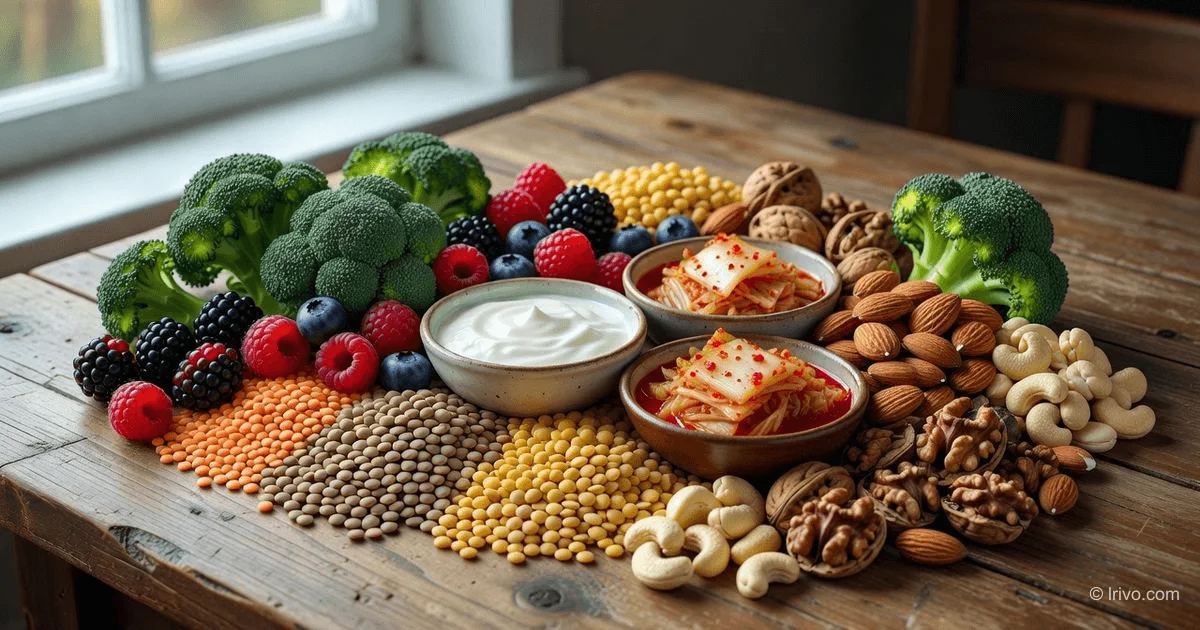
Best Foods for Gut Health
Niche: Health & Medicine Content type: Topic explanation / comparison of options Why it matters: Global trend toward healthy eating and the microbiome; the query is universal and allows for evidence-based international recommendations.
Best Foods for Gut Health: What Really Works
The gut microbiome is a complex ecosystem of trillions of bacteria, fungi, and other microorganisms living in your digestive tract. Their collective genetic code (the "microbiome") is roughly 1,000 times larger than the human genome. How diverse and balanced this community is affects not only digestion but also immunity, mood, weight, and even the risk of chronic diseases.
The bad news: a modern diet rich in processed foods, sugar, and saturated fats destroys the microbiome. The good news: you can feed your "good" bacteria and restore balance with ordinary food. Here's a step-by-step guide.
The Essentials: What You Need to Know First
Gut health rests on three pillars: fiber (prebiotics), fermented foods (probiotics), and polyphenols.
Fiber is not something you digest; it's what your bacteria eat. When they ferment fiber, they produce short-chain fatty acids (SCFAs)—mainly butyrate, propionate, and acetate. These molecules reduce inflammation, strengthen the gut wall, and even help control appetite.
Probiotics are live beneficial bacteria that come from fermented foods. They temporarily colonize the gut, crowding out "bad" neighbors and training the immune system.
Polyphenols are plant antioxidants that your own enzymes cannot break down. Bacteria process them, turning them into anti-inflammatory and even anti-cancer compounds.
Step-by-Step Solution: How to Feed Your Microbiome
Step 1. Eat 30+ Different Plants Per Week (This Is Key)
The most important discovery in recent years: diversity matters more than volume. People with the healthiest microbiomes consume more than 30 types of plants per week. These don't have to be exotic superfoods. Just rotate:
Vegetables (at least 5 different per day):
- Leafy greens (spinach, lettuce, kale)
- Cruciferous (broccoli, cauliflower, Brussels sprouts)
- Root vegetables (carrots, beets, radishes)
- Squash family (pumpkin, zucchini, cucumbers)
Fruits (2–3 different per day):
- Berries (blueberries, raspberries, strawberries)
- Apples and pears (the skin is the main value)
- Citrus fruits
- Bananas (slightly underripe = more resistant starch)
Whole grains (3–4 servings per day):
- Oats, barley, quinoa, bulgur
- Brown rice
- Whole-grain bread
Legumes (4–5 servings per week):
- Lentils, chickpeas, beans, peas
Nuts and seeds (a handful per day):
- Walnuts, almonds, hazelnuts
- Flaxseeds, chia seeds, pumpkin seeds
Life hack: Make it a habit to buy at least one new vegetable or grain you haven't tried before each time you shop.
Step 2. Hit Your Fiber Target (30–40 g per Day)
The average person in a developed country consumes about 15 g of fiber per day—two to three times less than recommended. Men under 50 need 38 g, women 25 g; after 50, the targets are slightly lower.
Here's how much fiber real portions provide (table from Mayo Clinic):
| Food | Portion | Fiber (g) |
|------|---------|-----------|
| Cooked lentils | 1 cup (200 g) | 15.5 |
| Cooked black beans | 1 cup (170 g) | 15.0 |
| Split peas | 1 cup (200 g) | 16.0 |
| Chia seeds | 30 g (~2 tbsp) | 10.0 |
| Raspberries | 1 cup (125 g) | 8.0 |
| Whole-wheat spaghetti | 1 cup (150 g) | 6.0 |
| Cooked broccoli | 1 cup (155 g) | 5.0 |
| Cooked quinoa | 1 cup (185 g) | 5.0 |
| Apple with skin | 1 medium (180 g) | 4.5 |
| Almonds | 30 g (~23 nuts) | 3.5 |
How to reach the target without bloating:
- Breakfast: oatmeal with berries and a spoonful of flaxseeds (+8 g)
- Lunch: leafy green salad with chickpeas (+10 g)
- Snack: an apple and a handful of almonds (+7 g)
- Dinner: lentils or beans (+15 g)
Important: Increase fiber gradually, or you'll experience gas and discomfort for the first few days. Bacteria adapt within 2–3 weeks. And drink plenty of water—fiber without fluid acts like a cork.
Step 3. Add Fermented Foods (Probiotics)
Probiotics are live bacteria that temporarily colonize the gut and help restore balance after antibiotics, stress, or unhealthy eating.
Best sources (in order of ease of adding to your diet):
- Yogurt with live cultures—look for "live and active cultures" on the label or an LAC certificate, which guarantees at least 100 million live organisms per gram. Avoid yogurts with added sugar.
- Kefir—a fermented drink similar to liquid yogurt but with a more diverse mix of bacteria and yeasts. Drink it plain or add to smoothies.
- Kimchi—spicy fermented Korean napa cabbage with garlic and chili. Add to scrambled eggs, rice, or eat as a side.
- Sauerkraut (real, without vinegar or pasteurization). Pasteurized supermarket jars are dead. Look for fresh sauerkraut in the refrigerated section or make your own.
- Miso—fermented soybean paste, the base of Japanese soup. Heat kills the bacteria, so add miso to soup after removing it from the heat.
- Tempeh—fermented soybean "cake" with a firm texture, a great meat substitute.
What about probiotic supplements?
If you don't have a specific issue (diarrhea after antibiotics, irritable bowel syndrome), spending money on supplements isn't necessary. But in some cases, they help.
Best strains with proven efficacy:
- Lactobacillus rhamnosus GG (brand Culturelle)—works against traveler's diarrhea and antibiotic-associated diarrhea
- Saccharomyces boulardii (brand Florastor)—protects against diarrhea, not affected by antibiotics (it's a yeast)
- Bifidobacterium longum 35624 (brand Align)—reduces bloating in IBS
- VSL#3 (by prescription only)—very high concentration, used for ulcerative colitis
Global market prices: quality probiotics cost $17–50 USD per month's supply.
Step 4. Eat Polyphenols—Bacteria's Favorite Food
Polyphenols are not vitamins or minerals, but they work as selective fertilizer. Good bacteria love them; bad bacteria don't.
Where to find the most polyphenols:
- Berries—blueberries, blackberries, raspberries (especially wild varieties)
- Dark chocolate (85% cocoa or higher)—30 g per day is enough
- Green tea—2–3 cups per day. Contains EGCG, linked to reduced risk of colorectal cancer
- Extra virgin olive oil—a tablespoon per day on salad
- Walnuts—a handful per day
Clinical studies show: blueberry polyphenols increase the abundance of Akkermansia muciniphila—a bacterium associated with a better metabolic health profile and less inflammation.
Practical Tips and Important Nuances
Mediterranean Diet—The Gold Standard
If you need to choose one eating pattern that works best, it's the Mediterranean diet. It boosts the production of beneficial metabolites and strengthens the gut barrier. Its essence:
- Olive oil as the main fat
- Plenty of fish (especially fatty fish—salmon, sardines, mackerel)
- Vegetables, fruits, nuts, legumes at every meal
- Minimal red meat and sweets
Omega-3: Fish Oil Works
Fatty fish (salmon, mackerel, sardines), flaxseed, and walnuts contain omega-3s. These fatty acids increase the abundance of Lactobacillus and Bifidobacterium, reduce inflammation, and help maintain gut wall integrity. 2–3 servings of fish per week is sufficient.
Common Mistakes and How to Avoid Them
Mistake 1: "I eat 5 servings of fruits and vegetables a day—that's enough."
New research on healthy adults shows that even 5 servings a day may not be enough for your microbiome to fully ferment fiber. Scientists found that fermentation capacity depends heavily on each person's specific bacterial composition. Bottom line: eat not just a lot, but a variety.
Mistake 2: "I drink kefir, so my microbiome is fine."
Probiotics from food don't colonize the gut permanently. Their effect lasts only as long as you consume them. Stop, and within 2–3 weeks the bacteria disappear. So probiotics are a daily practice, not a treatment course (unless for a specific medical indication).
Mistake 3: "I'll buy the most expensive probiotic with 50 billion CFU."
Quantity (CFU—colony-forming units) isn't the main thing. What matters is that the strain has been studied for your issue. For general health, 5–25 billion CFU from diverse sources is enough. Expensive products like VSL#3 (112 billion CFU, about $150–200 USD per month) are only needed for serious gut diseases and under medical supervision.
Mistake 4: "I'll suddenly switch to a kilogram of broccoli a day."
A sudden increase in fiber causes bloating, gas, and pain because bacteria aren't ready for that workload. Start with +5 g per day from your current level. Add a new portion every 3–4 days. Drink water—fiber without water has the opposite effect.
Mistake 5: "I ignore sleep and stress."
The gut-brain axis works both ways. Chronic stress and lack of sleep shift the microbiome toward pro-inflammatory bacteria. Mayo Clinic doctors' recommendation: 7–8 hours of sleep and stress management practices (meditation, breathing exercises) are as important as diet.
Summary: Key Takeaway and Next Step
You can't directly control the trillions of bacteria in your gut, but you can decide what to feed them. Your goal isn't to find one miracle food but to create an eating system that ensures diversity.
Your next step right now:
- Open your fridge and count how many different types of plants (vegetables, fruits, grains, legumes, nuts, seeds) you've eaten in the past week. Fewer than 20? That's your growth area.
- Make a weekly shopping list of 5–7 new plant foods you haven't had.
- Replace one meal a day with a serving of legumes or whole grains.
- Add one fermented food (yogurt, kefir, kimchi)—literally 100 g per day.
- In a month, you'll notice less bloating, more regular bowel movements, and more energy.
And remember: the microbiome changes quickly—within 24–48 hours of a diet change. You'll feel the first improvements in as little as 2 weeks.
This article is based on data from peer-reviewed studies (BioConferences 2025, Frontiers in Microbiology 2025, Exploration of Drug Science 2025, Food Bioscience 2025), clinical guidelines from Mayo Clinic and Harvard Health, and publications from the U.S. National Academy of Sciences and the National Institutes of Health (NIH).
— Editorial Team