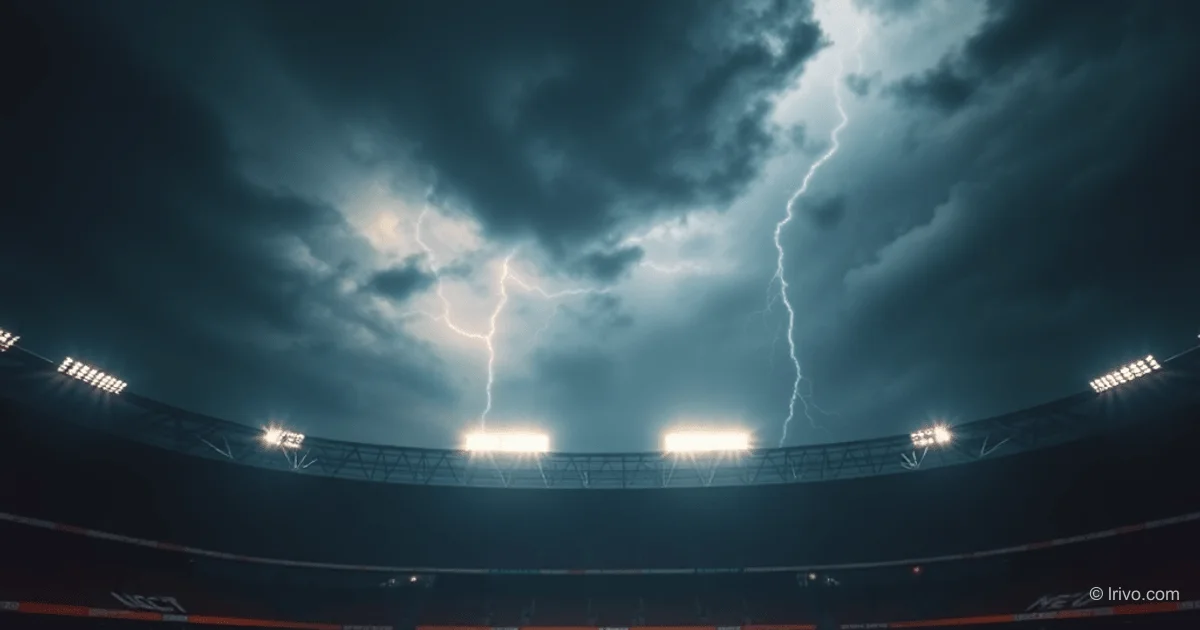
How Summer Storms Could Disrupt the 2026 World Cup Schedule
The 2026 World Cup is just 53 days away, and while fans are buzzing about squads and tactics, there’s a wild card nobody’s talking enough about: summer storms in the United States. With matches spread across 11 U.S. cities — plus venues in Mexico and Canada — weather could seriously mess with the tournament’s rhythm. Especially in the Northeast, where thunderstorms roll in fast and force delays under strict American safety rules.
Why Lightning Is a Bigger Deal Than You Think
It’s not just rain. When lightning strikes within 13 kilometers of a stadium, U.S. protocol demands an immediate stoppage. Fans get evacuated. Players head to the locker room. The clock resets every time another bolt hits nearby. Only after 30 minutes of clear skies can teams warm up for five minutes and restart. Last year’s Club World Cup saw multiple games halted for over an hour — including one in Cincinnati, just a short drive from World Cup host cities like Boston, Philadelphia, and New York.
And yes — MetLife Stadium in New Jersey, set to host the final on July 19, is right in the storm zone. Imagine the biggest match in football grinding to a halt because Mother Nature says so. No trophy lift. No confetti. Just everyone waiting under cover, staring at their phones.
Heat Will Drain Players Before Halftime
Storms aren’t the only problem. June and July in America mean brutal heat and humidity — especially in southern venues. Four stadiums stand out as potential sweatboxes:
- Hard Rock Stadium (Miami) — sticky, tropical air all day
- NRG Stadium (Houston) — known for swamp-like conditions even indoors
- GEHA Field (Kansas City) — Argentina’s base camp, but also a furnace by kickoff
- AT&T Stadium (Dallas) — massive roof helps, but humidity sneaks in
Players won’t just be tired — they’ll be dehydrated, cramping, and slowing down by minute 60. Coaches might rotate more heavily than planned. Substitutions could become survival moves, not tactical ones.
FIFA’s Secret Weather Playbook
After last year’s Club World Cup chaos, FIFA didn’t ignore the warning signs. They’ve reportedly built a city-by-city threat map, working with the National Weather Service to prep contingency plans. That means local organizers know which radar zones to watch, how long evacuations might take, and when to trigger delays before the first rumble of thunder.
But here’s the catch: no amount of planning controls the weather. Delays will still happen. Broadcasters will scramble. Fans with tight travel plans might miss key moments. And if a knockout game gets paused deep into extra time? Good luck predicting when — or if — it finishes that night.
What This Means for Teams and Tactics
Coaches are already thinking about it. Training sessions may shift to early mornings or late evenings in hot cities. Hydration protocols will be stricter than ever. Some teams might even request earlier kickoffs to dodge afternoon storms — though FIFA’s global TV schedule won’t make that easy.
Three things teams can’t afford to ignore:
- Recovery windows — back-to-back games in humid cities could break squads without proper cooling tech and medical support.
- Mental reset — players must stay locked in even after 90-minute delays. Easier said than done.
- Sub depth — if starters wilt in the heat, bench players need to be ready to step in cold — literally and figuratively.
Key Takeaways
- Thunderstorms in Northeast U.S. host cities (NY, Philly, Boston) could cause unpredictable match delays — especially during group stage.
- Heat and humidity in southern venues (Miami, Houston, Dallas, KC) will test player endurance and squad depth.
- MetLife Stadium — site of the final — sits in a high-risk storm zone. A delayed final isn’t just possible — it’s probable.
- FIFA has a detailed weather response plan per city, but nature doesn’t care about schedules.
- Smart teams will adapt training, hydration, and substitution patterns ahead of time — those that don’t may crash mid-tournament.
Bottom line: this World Cup won’t just be decided by goals and saves. It’ll also be shaped by thermometers, radar maps, and how well teams handle being stuck in a tunnel for an hour wondering if the game’s ever coming back.
— Editorial Team