How to Start Running Again After a Long Break: A Medical-Backed Return-to-Run Plan
You used to run regularly, but life—injury, work, family, or simply lost motivation—interrupted your routine. Now, the thought of lacing up your shoes feels daunting, not exhilarating. The good news: starting again is not only possible, but safer and more effective when done systematically. This guide synthesizes medical guidelines from sports medicine professionals to help you rebuild your running habit without injury.
Step 1: The Medical Green Light (Why Your Doctor Matters)
Before you hit the pavement, have an honest assessment with yourself—and potentially your clinician. According to Mayo Clinic Health System, individuals just starting or restarting a running program should meet with their primary care clinician and other health care professionals, such as a physical therapist or athletic trainer. These professionals assess your heart and lung capacity and determine if your body can handle the rigors of running .
This is not mere bureaucracy. A long break often coincides with weight gain, muscle loss, or undiagnosed conditions. Getting clearance ensures you aren't placing an unhealthy load on a cardiovascular system that has detrained.
⚠️ When to See a Doctor Immediately
- You experience chest pain, dizziness, or irregular heartbeat during light exertion.
- You have a known history of heart conditions, asthma, or joint replacement.
- You are restarting after a specific injury (stress fracture, torn ligament, plantar fasciitis) and haven't completed formal rehab.
Step 2: Rebuild Your Foundation with Run-Walk Intervals
Forget your old pace. Your previous 5K time is irrelevant to your current physiology. The safest, most evidence-based method for return is the run-walk method.
While specific return-to-run protocols vary, sports physical therapists recommend starting with short, manageable bouts of running interspersed with walking. A common clinical starting point for a de-conditioned runner is:
- Week 1: 1 minute running / 3 minutes walking, repeated 4-6 times.
- Week 2: 2 minutes running / 2 minutes walking, repeated 5-7 times.
- Week 3: 3 minutes running / 2 minutes walking, repeated 6-8 times.
This graduated approach allows your bones, tendons, and ligaments—tissues that adapt slower than muscle—to catch up to your new workload. Tendons, specifically, require 48 to 72 hours to recover from a novel stimulus. Avoid running on consecutive days for the first two weeks.
Step 3: The 5 Non-Negotiable Components of Your Training Plan
Mayo Clinic athletic trainers emphasize that a successful return involves more than just logging miles. Your weekly schedule must integrate these five pillars :
| Component | Frequency | Why It Matters for Returning Runners |
|---|---|---|
| Strength Training | 2x per week | Reduces imposed loads on joints and prevents overuse injuries like tendonitis and stress fractures. Focus on core and hips. |
| Cross-Training | 1-2x per week | Biking, rowing, or swimming maintains cardiovascular fitness while giving your running-specific tissues a break. |
| Active Warm-up | Before every run | 5-10 minutes of walking or light jogging plus lunges. Improves range of motion and performance. |
| Recovery Days | 2-3 days per week | Consistency is essential, but novice runners should avoid the same exercise multiple days in a row initially. |
| Static Stretching | After running | While static stretching does not reduce injury risk or improve performance, it can improve range of motion and feels good post-run. |
The "No Pain, No Gain" Myth
"The idea of 'no pain, no gain' is incorrect." — Mayo Clinic Sports Medicine Team. If you have swelling or pain that worsens, do not power through. Muscle soreness after increasing distance is normal. Joint pain or sharp pain is not. Be prepared to adjust your plan .
Google AdInline article slot
Step 4: Gear That Actually Matters (Shoes First)
Running is a low-equipment sport, but the one investment you cannot skip is footwear.
How to assess your foot: To determine your arch type (flat, neutral, high), dip your foot in water and step on a piece of cardboard. Examine the footprint. Flat feet leave a full imprint; high arches leave a thin strip connecting the heel and toe .
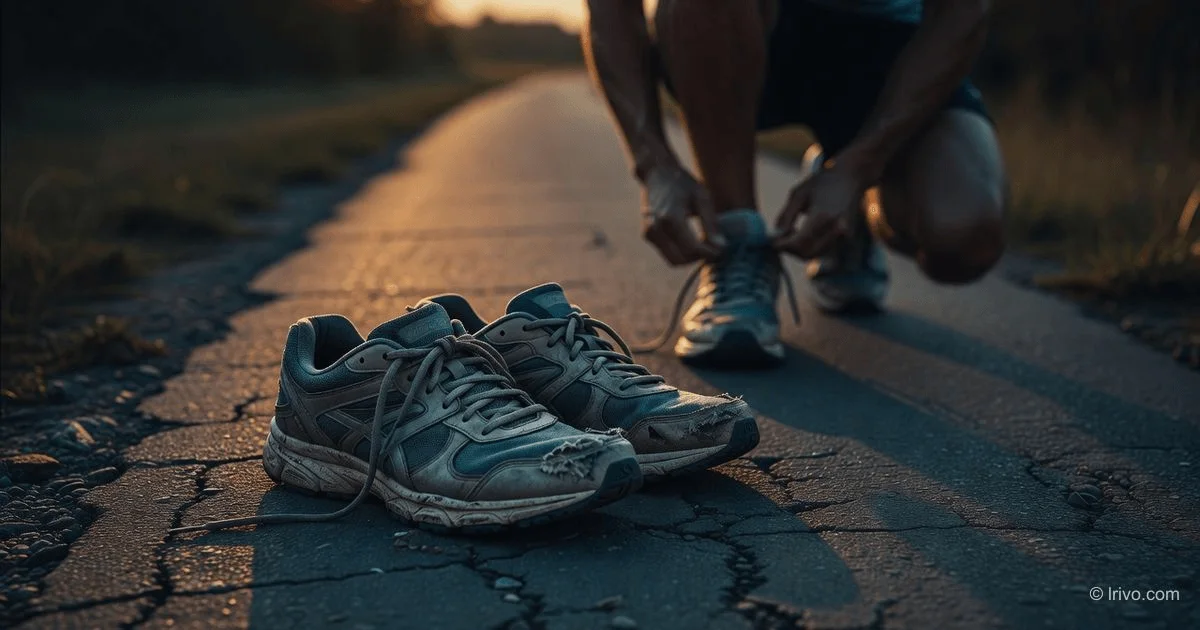
The 300-500 mile rule: A good running shoe typically lasts 300-500 miles. If you are returning after a long break, do not use the old pair you wore three years ago. The midsole foam degrades even when not in use, losing its cushioning properties. Buy new shoes a few weeks before your "goal" run to break them in, not the night before .
Step 5: Realistic Timelines (Manage Expectations)
Based on medical guidelines, your return timeline depends entirely on your goal distance.
- 5K or 10K: You can complete training in a few months with consistent effort.
- Half-marathon: Plan for 4-5 months of progressive loading.
- Full Marathon: For first-timers or those returning after years off, it can take eight to 12 months to go from the couch to a marathon .
If you haven't run in over a year, starting with a marathon is inadvisable. A 5K provides a sufficient physiological stimulus to rebuild bone density and aerobic capacity without the high injury risk of marathon mileage.
⚠️ Important Warning: The 10% Rule is a Minimum, Not a Maximum
While many runners know the "10% rule" (never increase weekly mileage by more than 10%), returning runners are often more fragile than beginners. Based on clinical data from sports medicine, tendons and bone require 3-6 months to fully adapt to new loads.
A reasonable conclusion based on physiological adaptation timelines is: increase your total weekly minutes by only 5-10% each week, and incorporate a "down week" (reducing mileage by 30-40%) every 4th week. This forced rest allows connective tissue remodeling to catch up to muscle strength gains.
Key Takeaways
- Get cleared first: A primary care visit assesses if your heart and lungs are ready for the workload .
- Walk first: Use run-walk intervals to protect tendons and ligaments that adapt slower than muscles.
- Strength training prevents injury: Core and hip work reduces the load on your knees and shins, preventing stress fractures and tendonitis .
- Ignore "No Pain, No Gain": Worsening pain or swelling means stop. Soreness is fine; sharp pain is not .
- Replace old shoes: Do not run in the shoes you used three years ago. They have lost their structural support even if they look new .
Frequently Asked Questions
How long does it take to get back to my old pace?
Based on exercise physiology, expect 4 to 8 weeks to regain conversational pace if your break was less than 6 months. If your break exceeded 1 year, focus on duration (time on feet) before ever looking at pace. Your cardiovascular system returns faster than your musculoskeletal system.
What if I feel pain in my shins during the first week?
Shin pain is common but not normal. Mild soreness that disappears after warming up is acceptable. Persistent, sharp pain on the inside of the shin bone may indicate a stress reaction. Stop running immediately and cross-train (bike/swim) for a week. If the pain returns when you try to run again, consult a physical therapist.
Should I stretch before I run?
No. Static stretching before a run does not improve performance or reduce injury risk . Perform an active warm-up (walking, leg swings, lunges, high knees) for 5-10 minutes. Save static stretching for after the run to improve range of motion.
How do I stay motivated when it feels so hard?
Motivation fades; systems remain. Research on habit formation suggests linking the new run to an existing cue (e.g., "I will put on my running shoes immediately after brushing my teeth"). Additionally, registering for a specific 5K or 10K race creates a deadline that forces planning and adherence. The goal gives the training purpose .
Can I just run on consecutive days immediately?
No. For the first three weeks, running every other day is strongly recommended. Running depletes the energy stores in your muscles and creates micro-tears. 48 hours is the standard recovery period for a de-conditioned runner. Running on consecutive days too early is the primary predictor of return-to-run dropout due to fatigue and shin splints.
— Editorial Team