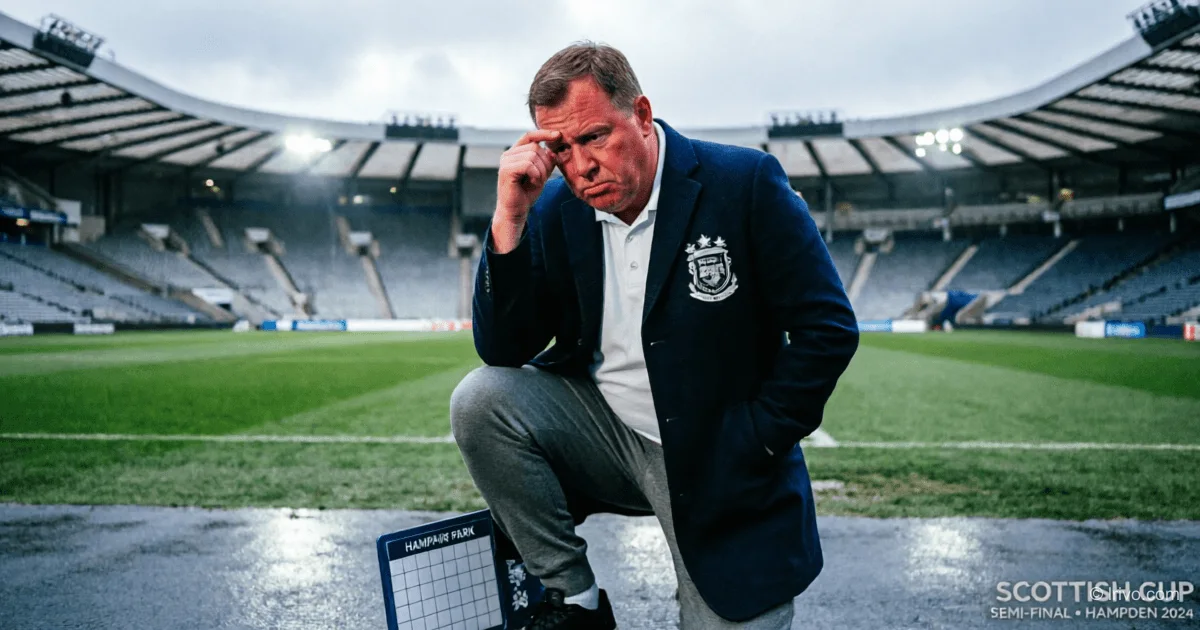
Falkirk's Cup Exit Leaves McGlynn Frustrated by Attacking Failure
Falkirk manager John McGlynn couldn't hide his disappointment after his team's Scottish Cup semi-final defeat. His side, known for scoring freely in recent weeks, failed to find any attacking spark against Dunfermline Athletic over 120 minutes, eventually losing in a penalty shootout. McGlynn pointed directly to a lack of quality in the final third as the reason for their exit, describing the performance as unrecognizable from their usual selves.
Analyzing the Semi-Final Performance
The match at Hampden was a story of missed opportunities and broken momentum. McGlynn acknowledged the game started scrappy but felt his team gained control. However, every promising move seemed to fall apart once they reached the attacking zone. This was particularly puzzling given Falkirk's recent form. Just weeks before, they had put three goals past Rangers, another three against Motherwell, and scored heavily against Kilmarnock and Hibernian. On Saturday, that prolific attack vanished.
McGlynn's assessment was blunt. He suggested both teams could have played until the following weekend without scoring, highlighting the complete absence of the decisive touch needed to win a cup semi-final. The manager also referenced their previous penalty shootout victory over Hearts, noting that relying on that lottery is a risky strategy that ultimately didn't pay off this time.
The Psychological and Tactical Breakdown
A few key factors contributed to the flat performance:
- Early Nervousness: McGlynn admitted his players showed nerves at the start, a natural reaction in a big semi-final at a national stadium.
- Failure to Settle: The team struggled to overcome that anxiety and settle into their usual rhythm, which affected their composure throughout.
- Poor Ball Utilization: Despite having possession and advancing towards Dunfermline's goal, Falkirk simply didn't make enough of the ball. Passes were misplaced, decisions were rushed, and clear chances were not created.
The manager stressed that while nerves are understandable, they cannot dominate an entire match. The failure to transition from a shaky start to a confident, controlling performance was a critical flaw.
Looking Ahead to the League Finish
With the cup dream over, Falkirk's focus shifts entirely to the Scottish Premiership. They sit sixth, five points behind fifth-placed Hibernian. McGlynn called closing that gap "a big ask" but not impossible. He also noted his team has a professional duty to perform in their remaining league matches, as their results will impact other clubs fighting for the title.
The loss means there's no grand finale to look forward to this season, but the league campaign remains. The challenge is to rediscover the attacking quality that deserted them at Hampden and apply it in their final Premiership fixtures.
Key Takeaways
- Falkirk's attack, recently prolific, completely failed to function in the Scottish Cup semi-final.
- Manager John McGlynn identified a lack of quality in the final third as the primary reason for the defeat.
- Early nerves were a factor, but the team failed to overcome them and settle into the game.
- The cup exit leaves the team focusing on a difficult but possible chase for fifth place in the Premiership.
- Falkirk's remaining league matches still hold significance for the wider title race.
— Editorial Team