Miami Grand Prix: Formula 1 Introduces Updated Regulations and a New Balance of Power
After the April break, technical regulation amendments aimed at improving race spectacle and addressing energy management issues came into effect in Miami. Sky Sports F1 experts note that the new rules have dented Mercedes' dominance and intensified the battle in the pack.
Main Event
The Miami Grand Prix, held from May 2 to 4, 2026, at the Miami International Autodrome, was not just the fifth round of the season but a moment of serious upheaval for the entire Formula 1. After a five-week hiatus caused by the cancellation of rounds in Bahrain and Saudi Arabia, the pack returned to the track in a significantly updated form. The FIA implemented a package of urgent amendments to the 2026 technical regulations, and the top teams brought substantial upgrade packages. The result exceeded expectations: Mercedes' long-standing dominance was shaken, and the battle in the pack intensified to the limit.
Details and Statistics
The regulatory adjustments, agreed upon at an online FIA meeting with team principals and power unit manufacturers, came into force just before the Miami weekend. The main changes affected energy management in qualifying and the race. In qualifying, the maximum allowed energy recovery volume was reduced from 8 MJ to 7 MJ, reducing the 'superclip' time by approximately 2–4 seconds per lap. The peak power in 'superclip' mode was increased from 250 kW to 350 kW, allowing drivers to attack laps in a more natural, 'flat' manner without needing to excessively conserve battery charge.
In the race, the Boost system power was limited to +150 kW, reducing sharp speed fluctuations and improving safety. At starts, a system was introduced to detect cars with anomalously low acceleration and automatically activate the MGU-K to prevent dangerous situations. Sky Sports F1 expert Martin Brundle assessed the changes positively, calling them 'a clear step in the right direction,' but emphasized that it's too early for final conclusions, as the Miami track is historically 'energy-rich' and does not pose serious recovery issues.
The numbers confirm a dramatic shift in the balance of power. While in the first three rounds of the season, Mercedes' advantage in qualifying was 0.56 seconds and in race pace 0.53 seconds per lap, in Miami the gap shrank to 0.35 seconds in qualifying and a microscopic 0.02 seconds in the race. Kimi Antonelli's pole and eventual victory should not be misleading: McLaren and Red Bull made a colossal leap forward.
A key factor was the upgrade packages brought by competitors. Ferrari introduced 11 new components, Red Bull and McLaren 7 each. Mercedes limited itself to two minor changes—optimizing the rear end to reduce drag and updating front brake cooling—postponing a major package until the Canadian Grand Prix. McLaren team principal Andrea Stella emphasized that his team's progress is not related to the regulation change but is the result of systematic work started as early as the Japanese round.
Context and Significance
The events in Miami marked a fundamental shift in the season's philosophy. Formula 1's technical director and analysts agree that the season has turned into an 'arms race,' where each round will bring new parts and a redistribution of power. Toto Wolff admitted that rivals 'didn't make life easy' for Mercedes, and the race was won thanks to strategy and Antonelli's brilliant driving, not overwhelming technical superiority.
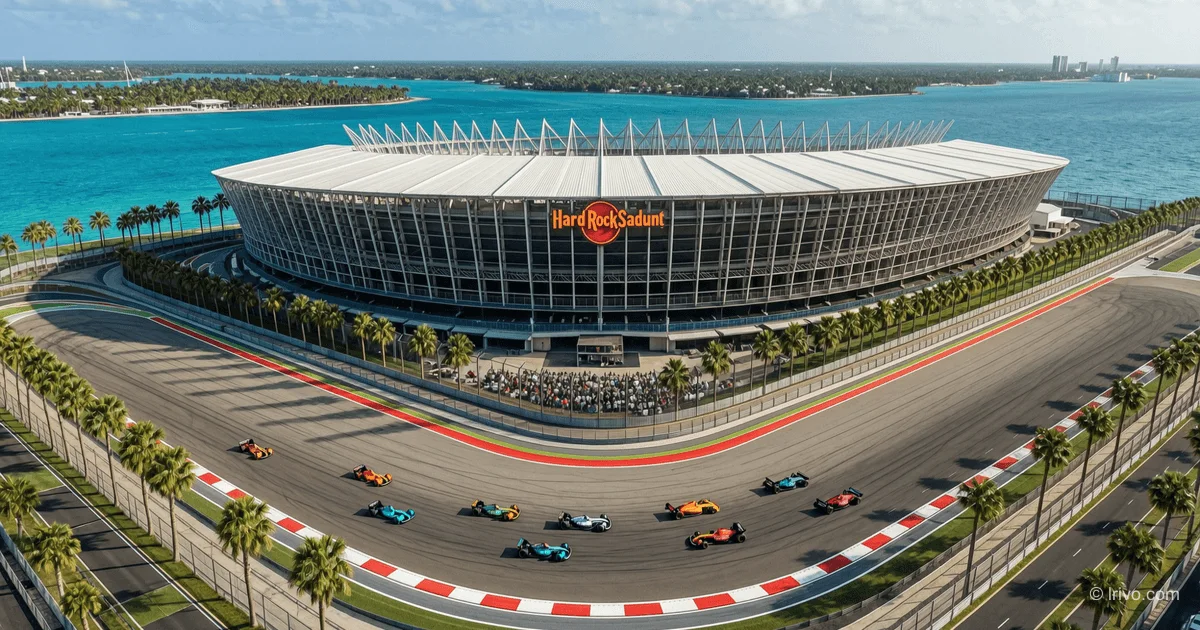
Drivers' reactions to the new regulations remain mixed. Lando Norris and Max Verstappen stated that even after the updates, they feel 'punished' for attacking—the faster you take corners, the slower you accelerate on straights due to lack of battery charge. Norris went further, suggesting 'just get rid of the battery.' Meanwhile, spectators at the Hard Rock Stadium stands welcomed the increased number of overtakes and close racing, creating a peculiar dichotomy between spectacle and driver sensations.
What's Next / Preview of the Next Event
The next round—the Canadian Grand Prix at Circuit Gilles Villeneuve in Montreal—will take place in three weeks, on May 23–25. That is where the next wave of technical updates is expected. Mercedes will bring its first major package for the W17, McLaren has planned a new front wing and a series of refinements, while Red Bull and Ferrari will continue to fine-tune their cars.
Montreal, unlike 'energy-rich' Miami, is a medium-energy track where recovery is less abundant. This will be a serious test for the updated regulations: if in Canada drivers again face the need to lift off the throttle to charge the battery, criticism of the new rules may flare up anew. Betting odds still keep Mercedes as championship favorites, but the odds on McLaren winning the Constructors' Championship have shortened significantly. The 2026 season has received a full reboot, and Montreal will show whether the rivals' burst in Miami was a one-off or the beginning of a full-scale power shift in Formula 1.
— Editorial Team