Champions League Final in Budapest Sets Record Global TV Audience
The decisive match between Arsenal and Bayern Munich at the Puskás Aréna broke several viewership records. Despite the Gunners' defeat, interest in the game was unprecedented, especially on digital streaming services.
Main Event
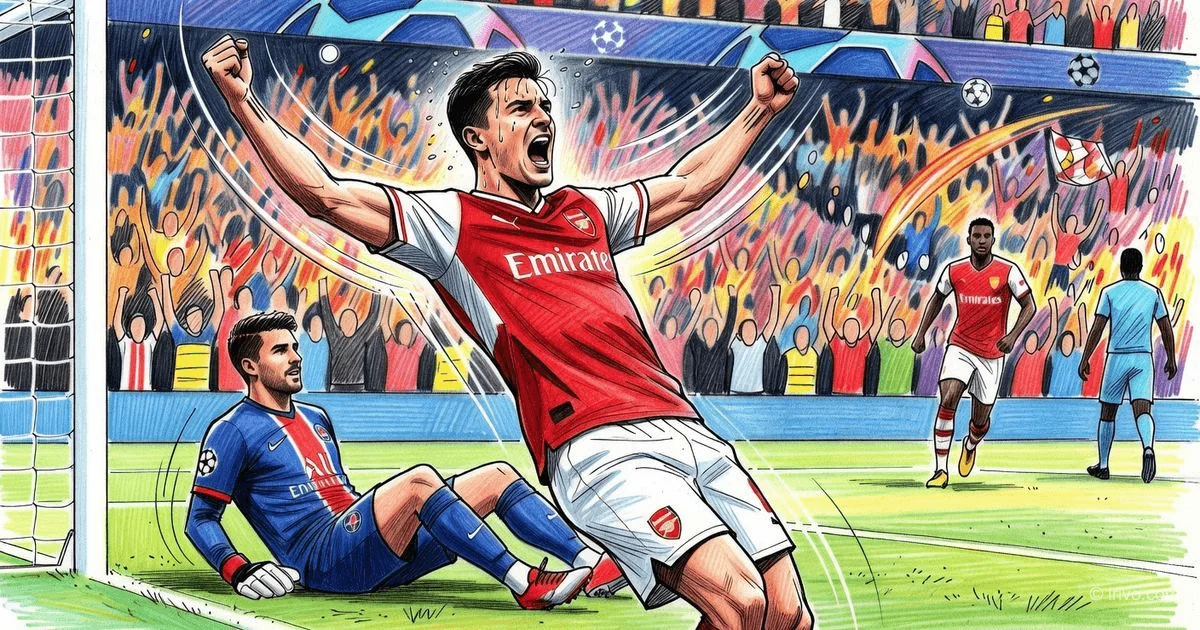
On Saturday, May 30, 2026, the UEFA Champions League final was held at the Puskás Aréna in Budapest, Hungary, featuring French side Paris Saint-Germain and London's Arsenal. The match ended 1-1 in regular and extra time, with Parisians winning 4-3 on penalties, securing the trophy for the second time in club history. However, the biggest news came not from the pitch but from the airwaves: this final broke several global TV audience records, reaffirming its status as the world's premier club tournament.
Interest in the game was unprecedented, especially on digital streaming services. According to international media measurement firms, the total global audience exceeded 500 million people, with historic figures recorded in several countries. The final was broadcast in over 200 countries in 70 languages, and digital platforms, including UEFA's official website and streaming services, reported record numbers of concurrent connections.
A unique aspect of this final was its earlier time slot than usual (6:00 PM CET), making it more accessible to Asian audiences but less convenient for American viewers. Despite this, numbers exceeded all expectations. The final's success can be attributed to a combination of factors: Arsenal's return to Europe's biggest match for the first time in 20 years, PSG's star-studded lineup led by Khvicha Kvaratskhelia and Ousmane Dembélé, and the dramatic penalty shootout.
Notably, the 2026 final was PSG's second consecutive appearance, having beaten Inter Milan 5-0 the previous year to claim their first Champions League title. In 2026, the Parisians confirmed their class despite desperate resistance from the Gunners, who led during the match and lost only in the penalty lottery.
Details and Statistics
TV audience figures in individual countries are impressive. In France, where victory was eagerly anticipated, the final averaged 9.1 million viewers across two channels: 6.2 million on free-to-air M6 and 2.9 million on pay-TV Canal+. The peak audience came during the penalty shootout: 9.8 million on M6 and 3.1 million on Canal+, totaling nearly 13 million French viewers simultaneously watching the dramatic conclusion.
In Italy, the final also delivered strong results. According to Napoli Magazine, the match on Sky Sports channels averaged 1.4 million viewers, representing a 10.9% share. The unique audience reached 2.5 million, with a peak of 1.9 million during the penalty shootout. The evening replay on TV8 attracted an additional 895,000 viewers.
The UK, where Arsenal was the nation's main hope, showed more modest but still impressive figures. TNT Sports, which controversially did not make the final free-to-air, reported 7 million viewers, significantly lower than the 12.6 million who tuned in for the 2022 final when it was broadcast free. Nevertheless, TNT's 25.6% audience share was comparable to the 2023 final featuring Manchester City, and the total viewership for three European finals on TNT platforms exceeded 13 million.
The most dramatic comparison was with the previous year's final. In France, the audience dropped from 11.8 million in 2025 (against Inter) to 9.1 million in 2026. Experts attribute this to several factors: the earlier kickoff time (6:00 PM vs. 9:00 PM in 2025), competition from Roland Garros where France 2 aired a match featuring French tennis player Moïse Kouamé, and the absence of the "first title" effect that PSG had the year before.
Globally, according to L'Équipe and OneFootball, the combined peak audience exceeded 14 million viewers in France and Italy alone. Including Asian, South American, and African markets where the match aired in prime time, the total global audience, according to preliminary UEFA estimates, could exceed 550 million, setting a new record for club football.
Context and Significance
This final went down in history not only for its audience but also for the drama of the match and its symbolic significance. Arsenal reached the Champions League final for the first time in 20 years. The Gunners last played a final in 2006, losing to Barcelona 1-2. The return of the London club to Europe's biggest stage generated enormous interest in the UK and beyond, especially after Mikel Arteta's team won the Premier League for the first time in 22 years, finishing 7 points ahead of Manchester City.
PSG, on the other hand, confirmed their status as a European superpower. A second consecutive final and second title in two years (albeit won on penalties) is an achievement that only a few have accomplished. Paris became only the third club in the 21st century to win the Champions League twice in three seasons (after Barcelona and Real Madrid). Their path to the final was dramatic: in the semifinals, they eliminated Bayern Munich with a 6-5 aggregate score.
The record TV broadcasts of the final have not only sporting but also financial significance. UEFA generates most of its revenue from selling broadcast rights, and record audience figures allow the association to demand even higher sums from broadcasters in the next negotiation cycle. According to experts, Champions League TV contracts for the 2027–2030 cycle could exceed $20 billion, making the tournament the most expensive club competition in the world.
Moreover, this final showed that pay-TV does not kill interest in sports. Despite TNT Sports' decision not to make the match free-to-air, seven million Britons still found a way to watch the game. This proves that audience loyalty to top events remains high even in an era of media fragmentation, as viewers switch to streaming services and social media.
What's Next / Upcoming Match Preview
For the finalists, the season is over, but different prospects lie ahead. PSG, having celebrated the title, will focus on the summer transfer campaign and preparing to defend the trophy next season. Dates are already set: the 2026/27 Champions League final will take place on May 29, 2027, at the Allianz Arena in Munich. Parisians are likely to retain their core squad, including Kvaratskhelia, Dembélé, and goalkeeper Matvey Safonov, who saved the decisive penalty in Budapest.
Arsenal will face a summer of reflection. Losing the final, coupled with winning the Premier League, leaves a bittersweet feeling. Arteta's team proved they can compete with the best, but an extra resource is needed to win in Europe. Rumors already link the Gunners with transfers of several top players, including a striker from RB Leipzig and a central midfielder from Serie A. According to the British press, the club's transfer budget could reach up to €250 million.
The next major event in world football is the 2026 FIFA World Cup, starting in two weeks. The French national team, whose leaders Kylian Mbappé (who missed the Champions League final due to injury) and Antoine Griezmann will travel to the USA to defend their title. England, whose hopes were dashed in the Euro 2024 penalty shootout, will now try to redeem themselves at the World Cup.
Editorial Conclusion
The 2026 Champions League final in Budapest will forever remain in history as one of the most dramatic and spectacular. A 1-1 scoreline, a penalty shootout, Arsenal's return to the top, and PSG's second consecutive title created the perfect narrative for a global audience. However, the real sensation was the TV viewership records, proving that football remains the world's premier entertainment.
Even in an era where young people prefer short videos and streams, the Champions League final can draw billions of eyes to screens. Audience growth in Asia (thanks to the early start) and consistently high figures in Europe suggest that UEFA has chosen the right strategy for globalizing the tournament. Next year's final in Munich will likely break new records, especially if Real Madrid or Bayern Munich qualify.
For fans and media, this final was a reminder: live football cannot be killed by piracy or pay-TV subscriptions. People are willing to pay for emotions, and the match between Arsenal and PSG delivered those emotions in full. One can only hope that UEFA and broadcasters will learn from the success of the Budapest final and continue to make the biggest club match of the year accessible to the widest possible audience. After all, football is a game for everyone, and the audience numbers only confirm that.
— Editorial Team